We face a multi-pronged existential crisis in this country.
A perfect storm of anti-science dumbing down of critical thinking, a growing intolerance for those who may be different than the majority, and an increasingly dangerous march toward an imbalance of power in government.
These phenomena are further inflamed by co-opting normally benign religious faith by Christian Nationalists which is merely a mask worn by those seeking to oppress any other belief system to further their own agenda and is most unchristian in practice.
It is nationalist in the worst sense of seeking domination over all others, is intolerant of any dissension, and is Christian for convenience not doctrinal integrity.
Whatever your faith may be, no true religion seeks to turn their god into a bullet and shoot it into another human’s heart. Claiming that any God has chosen one people over all others is a manmade fallacy whose only purpose is to justify dominance over and oppression of others.
The fact that in the 21st century, the most powerful nation in the world would seek to justify their policies based on primitive beliefs from an age dominated by illiteracy is frightening. That it even enters into the discussion is inexplicable.
The danger of such a course for government policy should be self-evident.
A significant number of Americans firmly believe that God can suspend the immutable laws of physics to perform miracles absent one iota of evidence. They then interpret their success in light of this faith as proof of the dominance of the Christian god.
This religious façade then fuels the most unchristian treatment of their fellow humans, reckless disregard for the sanctity of life of those of different cultures and faiths, and justifies their embracing a philosophy more characteristic of the bloody religious crusades then a pursuit of justice and peace.
“…no true religion seeks to turn their god into a bullet and shoot it into another human’s heart.” Joe Broadmeadow
We are engulfed in a battle for the soul of this country. The hobgoblins representing the worst of what humans can do to their fellow humans are guiding many of our actions. They have attacked the very foundation of this nation. Laws are tools wielded by those in power and ignored when they are inconvenient.
When a sitting President can exhibit callous disregard for the Constitution, and Americans who should know better remain silent because it feeds their prejudice, it is a sign of dangerous times.
There are indications of a growing resistance to this corruption of country. There is still the framework for the balance of government to reassert itself. But we are in a tenuous position.
The dangerous mix of twisting sincere religious beliefs into something that supports intolerance and ignores the Constitution underscores the danger and reinforces the brilliance of the founding fathers in explicitly separating church and state.
If we don’t resist this march into anarchy, we may find ourselves at the point of a gun loaded with bullets under the patina of religious commandments and aimed at our hearts. And they will squeeze the trigger with a smile on their face, certain they are acting as God wants them to.
One of the most striking differences between the United States and Britain is the level of religiosity paraded in the public square.
In England, which has an official church and a monarchy in which the King is the titular head of the church, religion is almost a sidenote in public discourse.
In the United States, which, by our Constitution, is a secular nation ostensibly devoid of any official religion, the faithful seem determined to infect and infiltrate every aspect of our public and private lives.
We are a Christian nation, they shout, apparently never having actually read the writings of the men who crafted the Constitution or noticed that, not once, is the word god in this founding document.
One would think that, if we are a “Christian” nation, god would at least merit an honorable mention. This fallacy of our founding causes unrelenting difficulties in our lives.
Government functionaries demand the right to refuse to perform their duties based on a faith-based objection to other lifestyles.
Companies demand to refuse health care coverage for their employees that provides contraception.
A significant majority of Republicans insist on the Hyde Amendment, which prohibits the use of federal money to fund abortions, being included in any revision of the Affordable Care Act. An objection substantially based on religious grounds.
I believe the government has no business in religion. I would also argue that religion has no place in government.
Joe Broadmeadow
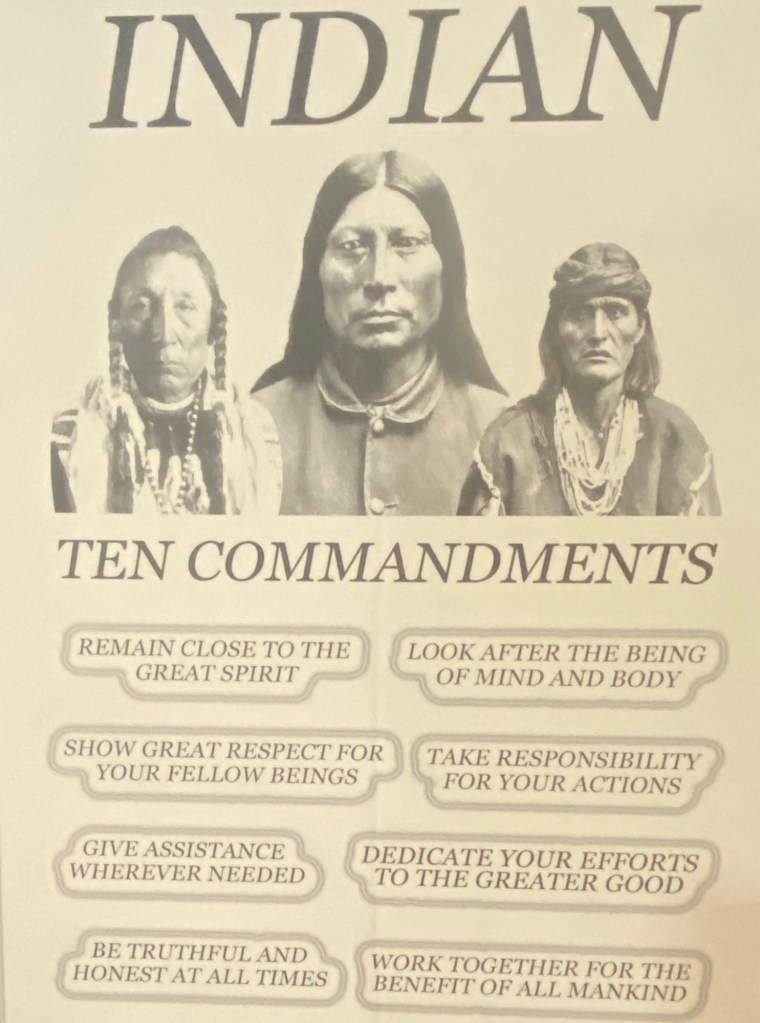
School boards seek to post the Decalogue, a fundamentally Judeo/Christian set of proscriptions by their god, as a sound basis for improving the educational environment.
Those who support these actions see it as their moral duty and an exercise of their First Amendment right to free speech. When the Free Speech argument fails because their speech is tantamount to hate speech and bigotry (God Hates Fags is one example), they rely on the religious freedom argument.
“Congress shall make no law respecting an establishment of religion, or prohibiting the free exercise thereof; or abridging the freedom of speech, or of the press; or the right of the people peaceably to assemble, and to petition the Government for a redress of grievances.”
I believe the government has no business in religion. I would also argue that religion has no place in government.
But what about morality, justice, fairness, the religious might argue? We need religion as a moral guide. I would argue the opposite.
Herein lies the problem.
Every act by the government in enacting laws, defining criminal acts, and ensuring the rights to life, liberty, and the pursuit of happiness should be based on open and frank discussions, empirical evidence, and a sound consideration of the benefits and costs of such legislation.
Yet when it comes to religious practices, we defer to the faithful simply because it is a religion. We offer a presumption of respect for the practice absent any offering of a basis in fact.
Suppose someone believes, as part of their doctrine, that offering a prayer is necessary before engaging in a sports competition or beginning their school day, or that they cannot engage in some aspect of their job because their religion tells them they cannot. In that case, we just accept that without restriction.
Why?
Why is it that we cannot question the validity of a religious doctrine or practice simply because it is part of a religion?
Why is it that we must accept practices or behavior that impact secular existence simply because some religious doctrine demands it from its adherents?
Why is religion never subjected to the same rigorous analysis or dissection of its foundations or presumptions in the same manner as we would question a proposal for a change in the law, or medical treatment, or the tax code when it directly impacts the public?
Why is religion entitled to any respect simply because it is a religion?
Why is it that we cannot ask this question? Can you prove your religious doctrine is the inerrant word of an omnipotent, omniscient, and omnipresent immortal being?
It may well be impossible to offer such proof, which in and of itself should be enough to discount it, but I think this is still a valid question.
By this point, I know the Christians are up in arms, screaming about this as another example of the discrimination heaped upon them. They are joined by the Jews and Muslims in this outrage, although each group believes the others are worshipping a false version of god.
If someone came to a school board meeting and said their son or daughter needed to sacrifice a lamb before they could take to the football field or basketball court, no one would consider denying such a request as prohibiting the practice of religion.
We would consider it a prevention of animal cruelty and curbing insanity.
Or, even more dramatically, if an individual were seen brandishing a knife over their bound child on an altar, preparing to slit their throat because they were instructed to by an unseen voice, would we stand idly by and just say, it is a command from god?
I think not.
Why is praying to an invisible being, variously defined by myriads of sects and faiths in distinct and conflicting ways, any different?
Having traveled quite a bit, I’ve been exposed to a variety of religious practices. In Morocco and Turkey, whenever I saw someone laying out their prayer rug in response to the call for prayer, it seemed strange to me.
When I encountered Buddhist Monks in Thailand and Vietnam, their incantations and manner of dress seemed exotic.
Yet, if I were to encounter a nun or priest wearing the habit or the Roman collar, it would hardly raise a notice. This is just a matter of familiarity and the fortunes of geography, which is more determinative of religious upbringing than any special validity of the particular faith.
Since the Enlightenment, we have made steady, if inconsistent, progress toward a more rational existence. Science has become the sound basis for almost all human progress.
Most religions recognize this, even if a bit reluctantly. They stopped burning heretics for stating the Earth revolves around the Sun, for example. They also update their interpretations of their “holy” texts to accommodate the new information.
The scientific method works because it is based on skepticism, the ability to recreate or refute the contentions of a hypothesis, and the constant verification and validation of any developed theory.
The three primary religious texts in our world, the Torah (or Pentateuch), the Bible, and the Quran (interestingly enough, all essentially plagiarized from earlier texts), are often used as the basis for arguments about the free exercise of religion and its applicability to secular matters.
Yet these works are rarely, if ever, subjected to thoughtful, thorough analysis of their origins or basis before acceptance. Instead, they are offered, with various levels of interpretation, as proof of the religious tenets.
Why?
If a school board wants to post the Ten Commandments in classrooms, shouldn’t we expect a demonstration that these were the word of god?
If a person wants to wear a T-shirt that says “There are Only Two Genders” because their faith demands it, shouldn’t they have to demonstrate the source of such commands?
The case above, L.M. v. Town of Middleborough, is an excellent example of how religion is a form of child abuse. While I admire the stand taken by the fourteen-year-old boy who wore the t-shirt to school, his indoctrination into the Christian faith began long before he was able to make any rational judgment or choice. This practice, taking innocent children and subjecting them to religious indoctrination before they reach the age of reason, is, in my view, an act of abuse.
What would happen to most religions if we let children grow to the age where they can intellectually choose to accept or reject their parents’ religious faith? I think everyone knows the answer to that.
The call to prayer sounds strange yet I often listen to Gregorian Chants, an artifact from my own indoctrination.
I think much of the fervor for these religious positions is the result of this early involuntary indoctrination. We should demand more than fervent belief before we accept something as a valid position.
Suppose a company wants to refuse health care coverage to employees because their faith opposes contraception. Shouldn’t there be something offered as proof for the origin and validity of the contention?
Where is the line in the sand where religious beliefs and practices cross from embracing a harmless philosophy into a dangerous practice capable of causing significant harm?
While sacrificing goats and one’s own child because you believe your god compels you to may be extreme examples, they are all well-detailed, and accepted as fact, in the very texts the religious would have us use as the basis for morality and practices in the public square.
Embrace your religion in any way you see fit. Argue, based on that faith, for the morality or immorality of laws and practices in public life. But if you choose to submit that faith or religious texts as the very foundation of the argument, you should be prepared to offer evidence of their validity, origin, and rational basis.
You may sincerely believe your god is well pleased by the aroma of burnt offerings. I think we need more than your faith before we accept, unchallenged, these practices in our secular world.
Recently uncovered in a hack into Mr. Trump’s campaign is a list of the updated Ten Commandments proposed to be required reading and forced memorization in all schools, workplaces, and the public square.
And Our Lord Trump Doth Declare…
I am who am, the Lord thy real president. Thou shall not have any false presidents before (or after) me. (Vote for me this time and you won’t have to (be able to) vote again Thou shalt not take the name of thy Lord Trump in vain Remember to keep holy my day (everyday) Take possession of all monies and property from thy father and mother despite any will to the contrary and deny thy siblings a rightful share Thou shall not kill (me, all others on a case by case basis) Thou shall not point out my (alleged?) adultery Thou shall not steal elections from me despite any evidence to the contrary Thou shall not bear false witness except in support of my goals. Thou (I) shall not covet my neighbor’s wife unless she is younger and prettier than thou (my) current one Thou (I) shall not covet my neighbor’s goods. Thou (I) shall simply buy them, then fail to pay for them BONUS COMMANDMENT (BECAUSE I’M ALWAYS BIGGER AND BETTER THAN ANY OTHER COMMANDMENT GIVER) Thou shall not point out my plethora of children from multiple women. For I am doing as I commanded you, be fruitful and multiply so as to have dominion over all the world.
JEBWizard Publishing (www.jebwizardpublishing.com) is a hybrid publishing company focusing on new and emerging authors. We offer a full range of customized publishing services. Everyone has a story to tell, let us helpmake your publishing dreams a reality.
I don’t know if there ever was an eleventh commandment although I have seen the video of Moses walking down the mountain from his talk with the burning bush carrying three stone tablets,
He announces “Behold, I bring you the Fifteen…” dropping one of the tablets which shatters, then, without missing beat, announces, “Behold, I bring you the Ten Commandments.”
A little humor for a serious subject
But if there was an Eleventh it would say…
“Thous shall not get caught with your inanity showing.”
Louisiana, a great proponent of the surviving commandments, did just that.
Proclaiming the solution to their dismal performance in one of government’s most sacred duties, Public Education, lies in tacking the (remaining) Ten Commandments onto the wall of every public classroom in the state, they passed a law mandating this.
Apparently they overlook the real possibility that a significant number of students can’t even read them, let alone absorb some magical antidote to ignorance.
I will dispense with the whole separation of Church and State argument, I have found it a waste of time. Blind faith in just that, blind. But let’s consider this.
Louisiana, and I am certain other states, believe that because the founders were predominately Christian, they fully intended everything in government to be guided by Christian doctrine.
What they conveniently forget is the founding fathers were also slave holders, opposed allowing women to vote, and held that the indigenous people who lived here long before Christians came to save them deserved to be driven from their land by force or by death.
Hardly sounds Christian.
But if having a list on the wall would be helpful, might I suggest the following. It almost sound Christian to me.
For those of you who need a refresher, here is one version of the original commandments language. Not quite as Christian sounding as one might expect.
I am the LORD thy God, which have brought thee out of the land of Egypt, out of the house of bondage. Thou shalt have no other gods before me. Thou shalt not make unto thee any graven image, or any likeness of any thing that is in heaven above, or that is in the earth beneath, or that is in the water under the earth: thou shalt not bow down thyself to them, nor serve them: for I the LORD thy God am a jealous God, visiting the iniquity of the fathers upon the children unto the third and fourth generation of them that hate me; and shewing mercy unto thousands of them that love me, and keep my commandments. Thou shalt not take the name of the LORD thy God in vain; for the LORD will not hold him guiltless that taketh his name in vain. Remember the sabbath day, to keep it holy. Six days shalt thou labour, and do all thy work: but the seventh day is the sabbath of the LORD thy God: in it thou shalt not do any work, thou, nor thy son, nor thy daughter, thy manservant, nor thy maidservant, nor thy cattle, nor thy stranger that is within thy gates: for in six days the LORD made heaven and earth, the sea, and all that in them is, and rested the seventh day: wherefore the LORD blessed the sabbath day, and hallowed it. Honour thy father and thy mother: that thy days may be long upon the land which the LORD thy God giveth thee. Thou shalt not kill. Thou shalt not commit adultery. Thou shalt not steal. Thou shalt not bear false witness against thy neighbour. Thou shalt not covet thy neighbour’s house, thou shalt not covet thy neighbour’s wife, nor his manservant, nor his maidservant, nor his ox, nor his ass, nor any thing that is thy neighbour’s. KJV
Implied in the “shall not covet thy neighbor’s manservant or maidservant” is the acceptability of slavery. Perhaps there is the true agenda, absolving the stain of slavery.
A misquote attributed to J. D. Salinger in the book Catcher in the Rye goes something like this.
“If Christ could see Christmas, he’d puke.”
But like many “quotes” attributed to famous people—to give them the weight of intellectual or literary authority—this is not what he wrote as dialog for Holden Caulfield. What Salinger wrote is much more aligned with the rest of this piece. Here’s what Caulfield said in the book after seeing a Christmas show at Radio City Music Hall,
“I said old Jesus probably would’ve puked if he could see it—all those fancy costumes and all.”
J. D. Salinger, Catcher in the Rye.
Those with another purpose then twisted Salinger’s words, that the historical Jesus would have been offended by “those fancy costumes,” into the more erudite, “If Christ could see Christmas, he would puke.”
I think in either case, it misses the mark completely.
Assuming for the sake of argument there was a historic figure, Jesus of Nazareth—leaving aside the whole virgin birth, son of god, risen from the dead elements. And assuming the elements of the faith he preached about doing undo others as you would have them do unto you is an effective summary, I don’t think he’d puke at all.
“I said old Jesus probably would’ve puked if He could see it—all those fancy costumes and all.”
J.D. Salinger, Catcher in the Rye
While one can make an argument about the distortion of consumerism and the glitz of the decorations, that same consumerism puts food on the table of those who produce and sell those goods. And the act of giving gifts to others, paid for by those jobs, meshes pretty well with the elemental spirit of “old Jesus.”
Perhaps if they had just created a few bumper stickers for their camels or roadside signs on the road to Jerusalem instead of writing the bible, more people would have understood the message and not twisted it to their own purposes.
As a young boy, they subjected me to a Catholic upbringing. I became Catholic not by choice but by virtue of the geography and lineage of my birth. Richard Dawkins compares the spread of religion to that of a virus. Your parents, or guardians, are the host spreading the virus onto their off-spring who do the same thing.
In the entire time I attended the Catholic Church and while growing up in Cumberland, RI, I met no one whose religion differed from their parents. It was remarkably consistent.
Which brings me back to the concept of the Christmas Spirit. Inevitably, over the coming weeks, one will see those very effective bumper stickers that say, “Put Christ back in Christmas.”
I would argue he was never out of it. That time and society has drifted away from the purely religious mysticism and turned Christmas into a holiday of Jingle Bells, Ho, Ho, Ho, and Rudolph the Red-nosed Reindeer are a sign of progress.
We don’t need religion to teach us the fundamental philosophy of doing unto others as you would have them do unto you. A fat guy in a red and white suit riding the magic of imagination accomplishes the same thing in a much more effective way.
Now that’s not to say religion, for many, doesn’t have its place. The story of the wise men following the star is so ingrained in my psyche that every year, as Christmas approaches, I often think one star appears brighter than it does other times of the year.
This is not a harmful belief unless I forget it is based on something other than reality. Perhaps back then a supernova shone brightly, coinciding with the myth of the birth of Jesus. Perhaps the lapse of time between the writing of the story—decades after it allegedly happened—wrapped the truth with wishful fiction.
But it doesn’t alter the reality of what Christmas means to many outside of its religious origins.
If one wants to understand the spirit of Christmas, all you have to do is watch Charlie Brown’s Christmas. It covers the gambit of topics from the consumerism and the glitz—Snoopy’s winning the decorating contest—to Linus reciting the story of the Angels announcing the birth of Jesus to shepherds in the field to the whole group singing around the simple Christmas tree Charlie Brown embraced as only a child could.
There are a lot of things that might make “Old Jesus” puke in this world. Many of them are done in his name. But Christmas isn’t one of them.
JEBWizard Publishing (www.jebwizardpublishing.com) is a hybrid publishing company focusing on new and emerging authors. We offer a full range of customized publishing services. Everyone has a story to tell, let us help you share it with the world. We turn publishing dreams into reality.
...There is no virgin willing to conceive in the heat of any bloody Sunday.
You crippled children lying in cries on Derry’s streets,
pushing your innocence to the full flush face of Christian guns,
battling the blame on each other,
do not grow tongues in your dying dumb wounds speaking my name.
I am not your prize in your death.
You have exorcized me in your game of politics.

Go home to your knees and worship me in any cloth,
for I was never tailor-made.
Who told you I was?
Who gave you the right to think it?
Take your beads in your crippled hands,
can you count my decades?
Take my love in your crippled hearts,
can you count the loss?

I in my poverty,
alone without trust,
cry shame on you
and shame on you again and again
for converting me into a bullet and shooting me into men’s hearts.

Richard Harris, There are Too Many Saviors on My Cross
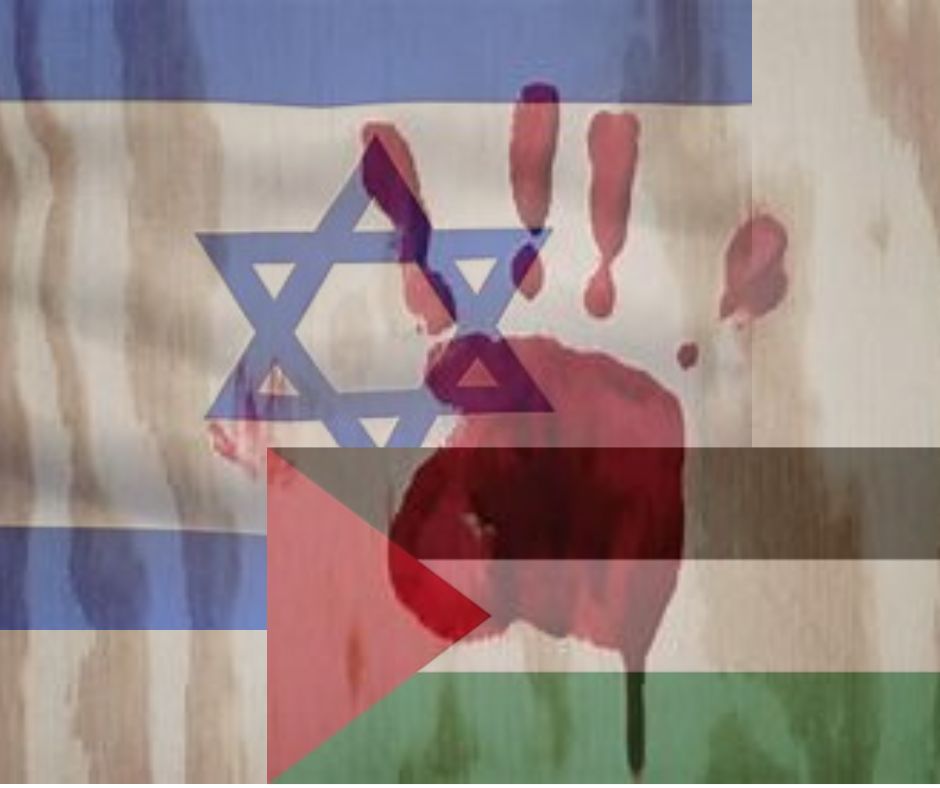
If I thought there was even the slightest chance total devastation of Gaza would be the act ending this centuries long conflict, it would make accepting the consequences and cost in innocent lives easier.
But it won’t.
I would encourage you to read this op-ed by Nir Avishai Cohen. Mr. Cohen, a major in the reserves of the Israel Defense Forces, is the author of the book “Love Israel, Support Palestine.”
That Israel will prevail in this latest war is without doubt, but the sons and daughters of this war’s heroes will also undoubtedly be the heroes and victims of the next…and each generation after them until the matter is settled by words and deeds of reconciliation, not overwhelming firepower or acts of human barbarism.
At this point it would seem, in the face of such carnage, Israel has no choice but to respond militarily. But make no mistake, it is a choice they made long before the first terrorist crossed the border. And what about the next time? Or the time after that?
Understand this, whatever Israel may have done in the past can never justify the barbaric acts of the terrorists, but it will also encourage these same terrorists to commit similar acts in the future. In their minds, they justify it by cloaking it in fundamentalist religious garb.
This is a self-sustaining cycle of terror.
And do not harbor any false joy in an Israeli victory. When this war ends, the balance sheet of innocent people dead on both sides will far exceed the number of Israeli soldiers who will die defending their country or the terrorists killed for triggering the conflict.
To the child killed at the point of a terrorist’s gun or to the one killed by an airstrike or artillery barrage, there is no difference. They are both dead. That is the reality of war. Nothing can ever whitewash this reality.
It is as it has always been.
…shame on you again and again for converting me into a bullet and shooting me into men’s hearts….
Any celebration of victory need be tempered by that reality. When one watches the nightly news coverage with the explosions and missiles screaming in the background, keep in mind those flames likely contain the limbs and viscera of once thriving human beings that fate has placed there and who may bear no responsibility for the cause.
Until we recognize the inherent danger of fundamental religious faiths making secular government policies, on both sides of this issue, nothing but more bloodshed in the name of one god or another—or more frighteningly, the same god interpreted differently—will continue.
Because that is what this all boils down to, an unwillingness to yield absolute belief in the sanctity of this area to one faith and the total rejection of the claims of others.
Both the terrorists and the Israelis made inevitable choices here because they have failed to seek any rational alternatives. They made their choices by eradicating any alternatives. If they have no choice it is of their own volition.
In this instance, it is easy to see Israel as the victim. But a deeper look reveals something infinitely more sinister, and troubling. One must look deep before passing judgement. And keep in mind, one always has a choice of how to act but not whether or not you accept responsibility for those choices. Making a choice is an acknowledgement there will be consequences, and they belong to you.
The real question here is not, does Israel have any choice about how to respond? The real question is what will Israel, Hamas, Hezbollah, or the other involved groups do after this episode ends, all the dead are buried, and all the blood washed away?
We must honestly embrace the philosophy of Never Again!
Please share on Social Media or through any means you like. And feel free to comment, concur, criticize, challenge, or condemn. it is why I do this.
Intelligent design, a version of religious creationism camouflaged as science, has many adherents but little actual science to support it. It is a hypothesis essentially premised on ignorance—we cannot explain something, say the origin of life on the planet, so it must have some intelligent design (aka an omnipotent being) behind it.
Up until recently, the success of trying to teach such babble in public schools has failed and been unmasked for what it is, religion with a fake college degree.
However, I think the time has come to revisit the idea of Intelligent Design because of a recent scientific discovery about the makings of a comet named 46P/Wirtanen. (Link to story)
So why would the appearance of a rather common phenomenon such as a comet support the concept of Intelligent Design? The answer is as simple as it is startling.
You see, Comet 46P/Wirtanen contains a high level of Alcohol in its tail. The comet is a cosmic happy hour streaking across the solar system. Such a phenomenon can only have one explanation, Intelligent Design.
As is with many things in life, there is a misquote attributed to Ben Franklin about God and beer. The actual quote, while a bit long to fit on a t-shirt, still invokes the divine nature of alcohol.
Franklin wrote—the original was in French as he was Ambassador there—to his friend, the theologian, economist, philosopher, and writer André Morellet (1727–1819):
“We hear of the conversion of water into wine at the marriage in Cana, as of a miracle. But this conversion is, through the goodness of God, made every day before our eyes. Behold the rain which descends from heaven upon our vineyards, and which incorporates itself with the grapes to be changed into wine; a constant proof that God loves us and loves to see us happy!”
Memoirs of the Life and Writings of Benjamin Franklin, by his grandson, William Temple Franklin, 1819
While Franklin may have seen a comet in his lifetime he couldn’t have known such a celestial phenomenon would be trailing across the solar system the very essence of what he saw as proof of a superior being.
While we may never be sure if this is the proof many seek, it is certainly an encouraging sign.
I wonder if I will live long enough to raise a class of comet-infused alcohol to the infinite mysteries of the universe.
JEBWizard Publishing (www.jebwizardpublishing.com) is a hybrid publishing company focusing on new and emerging authors. We offer a full range of customized publishing services.
Everyone has a story to tell, let us help you share it with the world. We turn publishing dreams into a reality. For more information and manuscript submission guidelines contact us at info@jebwizardpublishing.com or 401-533-3988.
I have this memory of a Cumberland High School English class in 1972 where the teacher—whose name I do not recall, but was likely just a few years older than the students— in an effort to be “cool,” asked about our thoughts on the lyrics to the song Thick as a Brick performed by Jethro Tull and written by Ian Anderson.
Instead of forcing us to embrace just the classics of literature, she tried to open our eyes with a more contemporary approach.
I recall only one moment, but it has stuck with me all these years. When asked what I thought about the line, “your wise men don’t know how it feels to be thick as a brick,” my answer was quick and without the least bit of thoughtfulness.
I said, “it rhymes and fits the music.”
I can still see the disappointment in her eyes. To this day, I don’t know if the disappointment was with me and my callous response or with herself for not being able to reach us on our level..
Still, it has bothered me since.
I now realize many of the songs I grew up listening to carry more than pleasurable rhythms; they contain a wisdom that escaped me at the moment, all to my diminution. Hindsight being crystal clear, I’d like to apologize to that teacher. Better late than never.
Back then, I was often a shining example of “thick as a brick.”
Really don’t mind if you sit this one out. My words but a whisper – your deafness a SHOUT. I may make you feel but I can’t make you think. Your sperm’s in the gutter – your love’s in the sink. So you ride yourselves over the fields and you make all your animal deals and your wise men don’t know how it feels to be thick as a brick. And the sand-castle virtues are all swept away in the tidal destruction the moral melee. The elastic retreat rings the close of play as the last wave uncovers the newfangled way. But your new shoes are worn at the heels and your suntan does rapidly peel and your wise men don’t know how it feels to be thick as a brick.
Thick as a Brick by Ian Anderson
Ian Anderson’s brilliant writing contained more gems that may have escaped me at the moment, but have since revealed themselves. Over the years, I have struggled with the simplistic, if well-intentioned, indoctrination in the Catholic Faith of my youth. As I expand my appreciation for the almost infinite varieties of religious tenets, I’ve also come to see how they are more similar than different. This similarity precludes any of them from exclusivity with the truth.
The demands of a god for devotion and worship. The claims of physics-defying miracles occurring always absent any independent method of verification except eyewitnesses, the least reliable form of evidence. The almost exclusive male dominance of the hierarchy. The gender-specific rules for what to wear, how to worship, and who can lead a congregation.
Once again, Anderson’s writing offers some answers. In the lyrics of Wind-Up, Anderson wrote,
I don’t believe you: You had the whole damn thing all wrong He’s not the kind you have to wind up on Sundays Well, you can excommunicate me On my way to Sunday school And have all the bishops harmonize these lines How’d you dare tell me That I’m my Father’s son When that was just an accident of birth I’d rather look around me Compose a better song ‘Cause that’s the honest measure of my worth
Wind-Up by Ian Anderson
While most people are sincere in embracing their religion, even if they are somewhat less than consistent in its practice, they seem to miss the point that their faith was indeed “an accident of birth.” If that were not the case, we would offer our children an opportunity to learn about all religions and let them, “Compose a better song, ‘Cause that’s the honest measure of my worth.”
But that’s not what we do. Some have compared religion to a virus. One is exposed and develops the illness, then spreads it to others in proximity. Some find this comparison offensive because they see malicious intent. But nothing could be further from the truth. We have all unintentionally infected others with germs, not through intentional acts but through regular daily interaction.
No different than how religions are spread. While some convert from one religion to another, that happens when they are inoculated from the feverish philosophy of one religion by the vaccine of another.
Religion has its place in humanity. But when one religion is pitted against another, or integrated into government’s secular operation, the potential for religious orchestrated pogroms rises.
In this country, many would claim we are a Judeo-Christian based society with no room for Islam, Buddhism, or any other “foreign” religion. Some would argue we don’t need to include the Judeo part because Christianity is the one true faith. The Catholic faith doctrine is more specific; if you are not baptized, confirmed, and fully committed to Catholicism, you cannot enter heaven.
This seems a bit presumptuous in light of the 4000-plus religions that have claimed to be the only truth at one time or another.
Anderson wrote it, and that teacher put it out there for me to see all those years ago. I just chose to close my mind to the possibilities—something I see in those who refuse to accept other religions’ equal validity.
All those years ago and the disappointment on that teacher’s face still lurks in my memory. I have no idea if she is even still around. But I wanted her to know the seed she planted finally germinated and broke through the brick of my ignorance.
JEBWizard Publishing (www.jebwizardpublishing.com) is a hybrid publishing company focusing on new and emerging authors. We offer a full range of customized publishing services.
Everyone has a story to tell, let us help you share it with the world. We turn publishing dreams into a reality. For more information and manuscript submission guidelines contact us at info@jebwizardpublishing.com or 401-533-3988.
Signup here for our mailing list for information on all upcoming releases, book signings, and media appearances.
“One may safely affirm that all popular theology has a kind of appetite for absurdity and contradiction…. While their gloomy apprehensions make them ascribe to Him measures of conduct which in human creatures would be blamed, they must still affect to praise and admire that conduct in the object of their devotional addresses. Thus it may safely be affirmed that popular religions are really, in the conception of their more vulgar votaries, a species of daemonism.” David Hume, The Natural History of Religion
One comment concerned whether I support abortion on demand. They then launched into the usual macabre reference to third-trimester abortion, which is never merely on-demand besides being the rarest of abortions. Nor would any such rational legislative body seek to make it so.
The comment also included a quote from Mother Teresa.
“America needs no words from me to see how your decision in Roe v. Wade has deformed a great nation. The so-called right to abortion has pitted mothers against their children and women against men. It has sown violence and discord at the heart of the most intimate human relationships. It has aggravated the derogation of the father’s role in an increasingly fatherless society. It has portrayed the greatest of gifts — a child — as a competitor, an intrusion, and an inconvenience. It has nominally accorded mothers unfettered dominion over the independent lives of their physically dependent sons and daughters” And, in granting this unconscionable power, it has exposed many women to unjust and selfish demands from their husbands or other sexual partners. Human rights are not a privilege conferred by government. They are every human being’s entitlement by virtue of his humanity. The right to life does not depend, and must not be declared to be contingent, on the pleasure of anyone else, not even a parent or a sovereign.”
Rather interesting moral pontificating from a woman who, while she certainly accomplished many good and worthy things, did not differ from the missionaries in the past. They came unbidden, sure of their just purpose, wrapped in the best of intentions, and set about converting those who did not embrace the Christian Faith as the priority, using charity and kindness or, when necessary, more direct measures to mask their real purpose.
If forced baptisms and compelled deathbed conversions to Catholicism were not a well-documented element of her mission, I would have a different perspective. But the truth is, she does not differ from every missionary who dragged Native American children to Indian Schools. They were sincere in the fervor, and it blinded them to what amounted to cultural genocide. What they saw as doing God’s work saving souls allowed them to ignore the destruction of one religious philosophy for the sake of another.
Often those who appear saintly turn out to be a mere self-deception by those who would believe. The road to hell is paved with good intentions.
Mundi vult decipi—ergo decipiatur (The world wants to be deceived, so let it be deceived.)
Petronius
So, on to Mother Teresa. First, I have no doubt about her sincerity that she was doing God’s work. But then every missionary believes in the necessity to convert the heathen masses to the Word of (Insert the name of the particular God here.)
People needed saving from the devil’s false gospel and to bathe in the blood of Jesus. The problem is you can substitute any devil and God in the form of an alternate orthodoxy of any faith and still have the pretense of doing good. At the same time, your real purpose is merely conversion.
Mother Teresa needed the poor more than they needed her. Here’s what she had to say in her own words from various interviews, movies, and television appearances.
In an interview for a film documented by Christopher Hitchens in his book, The Missionary Position: Mother Teresa in Theory and Practice, the good sister had this to say about a cancer patient’s suffering.
“She described a person who was in the last agonies of cancer and suffering unbearable pain. With a smile, Mother Teresa told the camera what she told this terminal patient: “You are suffering like Christ on the cross. So Jesus must be kissing you.” Unconscious of the account to which this irony might be charged, she then told of the sufferer’s reply: “Then please tell him to stop kissing me.” (The Missionary Position: Mother Teresa in Theory and Practice pg. 44 Kindle Edition)
While being honored at a luncheon meeting at the International Health Organization in 1989. She had this to say about tolerance.
“During her acceptance speech, she spoke at length of her opposition to contraception and her activities to save the unwanted products of heterosexual activity. She also touched on AIDS, saying she did not want to label it a scourge of God but that it did seem like a just retribution for improper sexual conduct. (The Missionary Position: Mother Teresa in Theory and Practice location pg. 52 Kindle Edition)
While one can argue she inspired many to dedicate their lives to helping the poor and downtrodden, it is a legitimate criticism that her primary purpose was not to alleviate the suffering but to frame it in the context of her fundamentalist Catholic Doctrine.
Many former sisters, volunteers, and medical personnel questioned her rationalization for resisting using pain medications—even in hospice situations—because, she insisted, God sent the suffering and we must be willing to accept his decisions.
Her opposition to abortion aside, arguing against contraception, the one inexpensive and non-invasive method of population control, family planning, and effective means of eliminating overburdened families in poverty, cannot be rationalized.
It is based on interpretations of ancient texts, rewritten and revised by Popes, Kings, and Priests with vested interests in their promulgation and maintaining male dominance of the religion.
It is nothing but the antithesis of compassion.
There are also many questions about her handling millions of dollars in donations that remain unanswered. These are well documented and available for anyone to inquire about. Her close association with brutal governments, albeit supported by Catholic clergy, questions her judgment.
That some in America would point to her as a beacon of morality is troubling. Leo Strauss, who had a profound influence on the Republican Right-wing majority, said this.
“Christian America cares for people before they are born and after they are dead but is only interested in clerical coercion for the years in between.”
Leo Straus
This perfectly sums up the good sister’s intentions. While she was the founder of a worthy order and can be admired for inspiring many to serve the poor, unmasking her motivations reveals a darker, troubling side. Suffering that can be eliminated or minimized should always be the goal. To subvert that worthy cause in pursuit of some egomaniacal claim to understanding God’s will is abhorrent.
That in the 21st Century, we have people who still believe in beings who can operate outside the laws of physics astounds me. In the debate over morality, if one wants to use religious tenets and the actions of those who embrace them as a justification for holding certain beliefs, one must be willing to scrutinize them.
Like many myths, they rarely survive the inquiry.
But here’s something that is not a myth and can stand up to scrutiny. One of the most effective ways to reduce abortions is access to birth control and medical care.
Organizations like Planned Parenthood, whose primary purpose is not to encourage abortions but to provide sound medical advice and options to women of childbearing age, is one such entity.
In the philosophy of Mother Teresa, contraception is against the Word of God and thus equal to abortion in moral terms. Such archaic morality flies in the face of human sexuality. The tongue-in-cheek title of Hitchens’s book, The Missionary Position, illustrates this well. And there is little need to mention the duplicitousness of the Catholic Church’s moral stance in the sexual abuse scandal.
Here’s another myth needing to be dispelled. Third-trimester abortions are common and made at the whim of the mother. Nothing can be further from the truth.
Third-trimester abortions are the rarest of events, always done for medically sound reasons, and are among the most heartbreaking decisions a woman has to make. That anyone would believe this is an appropriate place for external governmental or religious doctrinal intrusion is ludicrous.
Mother Teresa may become a Saint one day in the Catholic Church. Part of that process will include the advocatus diaboli, the Devil’s Advocate. It would be interesting to hear how those arguments are framed.
In the mythical realm of Saints and Sinners, we are all just human. No evidence exists to the contrary.
As always, I await the onslaught of criticisms, recriminations, condemnations, castigations, and accusations. I shall prepare another coffee and await my fate…
In Muslim culture, they greet one another in this way.
“As-salaam Alaykum,” meaning “Peace be
upon you” and answered by “wa ʿalaykumu s-salām” meaning “and peace be upon you
too.” (Apologies if I got the spelling wrong)
What’s wrong with that? Almost
sounds Christian.
In the America of today, using such
a greeting might prompt a visit from the FBI when your fellow Americans suspect
you of being a terrorist. We fear the unfamiliar despite our claims of embracing
all colors, creeds, and cultures.
Freedom is relative in America these
days. While most Americans support Freedom of Speech and Freedom of Religion,
many attach a condition to these cherished rights.
Look to the headlines and the
evidence of conditional toleration is everywhere.
Opinion pieces are rife regarding the
newest members of Congress, Muslims. Where is the religious toleration and why
is their religion significant? I mean what could happen next, Atheists?
Religious toleration only goes so far, we tolerate Christian faiths, perhaps
even Jews-but not too many, you know what happens when they take over-but
Muslims? There goes the neighborhood.
We can’t have it.
Freedom of religion, as enshrined in
the Constitution, is unambiguous. The 4000 plus religions in the world are free
to practice their faith as long as they harm no one or refuse to tolerate the
different religious practices of others.
Simple, right? It would seem not.
Intermixed with Freedom of Religion, which includes Freedom from
Religion, is Freedom of Speech.
Once again there is a difference
between what we say, or point to in the Constitution, and what we practice in
our daily lives. Professional athletes take a knee to highlight persisting
racism within this county and we rebuke, threaten, and call them un-American.
What is more American than taking a stand
to right a wrong? What is more emblematic of American courage than to stand
against evil? But even if you disagree with their method, which I found ineffectual,
you must support their right to such expression.
If you argue that everyone must
stand for the National Anthem out of some sense of respect for the hard-fought
freedoms most of us enjoy, you’ve missed the point.
Being a product of the 60s, I lived
through the years of violent antiwar protests, antigovernment upheavals, and
civil rights riots. My parents’ generation looked on those protesters as
un-American. Yet President Lyndon Johnson saw the need for sweeping civil
rights legislation, the Great Society, to right many wrongs highlighted by the
protests.
Despite Dr. Martin Luther King’s
plea for nonviolence, decades of rage over racial disparity coupled with an
ill-conceived and unnecessary war in Viet Nam drove the country to the boiling
point.
Yet we survived.
Today, conditional toleration threatens
Freedom of Speech. We need zealously guard free expression, even when we find
ourselves in complete disagreement with the message.
Think about this for a moment.
During the war in Viet Nam, many considered antiwar protesters to be anti-American.
If that’s the case, then to be pro-American is to be Pro-War? Such sentiments
carried over to the endless conflict in Iraq.
I find that opposing war is
un-American to be false on its face. Americans should fight only when necessary
and vigorously oppose policies to the contrary. Had such a philosophy existed
in 1954, when American military advisers first went to South Viet Nam, 56,000
more Americans might be enjoying their freedoms.
To be American is to hold a wide
variety of political, religious, and cultural perspectives. To be American is to
accept differences in others and work together for the benefit of all.
If we want to set standards for the
religion or speech we will tolerate, it is a slippery slope to losing our
freedoms.
Look to the headlines and the evidence of conditional tolerance is everywhere.
Opinion pieces are rife with references to the newest members of Congress, Muslims. Where is the religious tolerance and why is their religion significant? I mean what could happen next, Atheists? Religious tolerance only goes so far, we tolerate Christian faiths, perhaps even Jews-but not too many, you know what happens when they take over-but Muslims? There goes the neighborhood.
We just can’t have it.
Freedom of religion, as enshrined in the Constitution, is
clear and unambiguous. The 4000 plus religions
in the world are free to practice their faith as long as they harm no one or refuse to tolerate
the different religious practices of others.
Simple, right? It would seem not. Intermixed with Freedom
of Religion, which includes Freedom from Religion,
is Freedom of Speech.
Once again there is a difference between what we say, or
point to in the Constitution, and what we practice in our daily lives. Professional
athletes take a knee to highlight the persistence of racism within this county
and they are castigated, threatened, and called un-American.
What could be more American
than to take a stand to right a wrong? What could be more emblematic of American courage
than to stand against evil? But even if you disagree with their method, which
truth be told I found useless and ineffective, you must support their right to
such expression.
If you argue that everyone must stand for the National Anthem
out of some sense of respect for the hard-fought freedoms most of us enjoy, you’ve missed the point.
Being a product of the 60s, I lived through the years of
violent anti-war protests, anti-government upheavals, and civil rights riots.
My parents’ generation looked on those protesters as un-American. Yet President Lyndon Johnson saw the need for
sweeping civil rights legislation, the Great Society, to right many wrongs highlighted by the protests.
Despite Dr. Martin Luther King’s plea for non-violence,
decades of rage over racial disparity coupled with an ill-conceived and unnecessary
war in Viet Nam drove the country to the boiling point.
Yet we survived.
Today, Freedom of Speech is threatened by conditional tolerance. We need zealously guard free expression, even when we find ourselves in complete disagreement with the message.
Think about this for a moment. During the war in Viet Nam,
anti-war protesters were considered anti-American. If that’s the case, then to
be pro-American is to be Pro-War? Such sentiments carried over to the ongoing
conflict in Iraq.
I find the idea that opposing war is un-American to be false on its face. Americans should fight only
when necessary and vigorously oppose policies to the contrary. Had such a philosophy
existed in 1954, when American military advisors first went to South Viet Nam, 56,000
more Americans might be enjoying their freedoms.
To be American is to hold a wide variety of political,
religious, and cultural perspectives. To be American is to tolerate and
appreciate the differences others may have and to work together to bring the best
of these to the benefit of all.
If we want to set standards for the religion or speech we
will tolerate, it is a slippery slope to losing our freedoms.
In the Arabic world, the majority of which is Muslim, they
greet each other in this way.
“As-salaam Alaykum,”
meaning “Peace be upon you” and answered by “wa ʿalaykumu s-salām” meaning “and
peace be upon you too.” (apologies if I got the spelling wrong)








 The Writing of Joe Broadmeadow