A Happy “New” Year

“For in that sleep of death what dreams may come?”
Shakespeare, Hamlet, Act 3, Scene 1

Once again, we face the changing of the numbers, assigning an artificial appellation to the passage of time.

2026. Two thousand and twenty-six years marking the passage of time, for the US-European centric world at least, since an event that may or may not have occurred in an obscure town, in a distant area of the Roman Empire, in a time before mass communication or widespread literacy.

Yet here we are adjusting all our calendars to show the change to this new 365-day cycle.

Depending on the number you use, some 80-90 generations have been born since the start of the Common Era (C.E., formerly known as Anno Domini, Year of our Lord, when the church ruled the world), with most, but the last 4 or 5, long since deceased.

Now my generation, born in the 1950s, passes into another stage of life. Since our arrival, three more generations have arrived, and we are hurtling towards what will likely be the last arrival of a generation in our lifetime.

And that is the way of the universe.

We are made of the atoms forged in the nuclear fires of the first stars and will, in our time, return to that form. We, all of us and the things we are made of, have existed for billions of years and will continue to exist long after this current form disintegrates.

This is nothing to fear, nothing to dread. Not that one should look forward to it. There are so many things to experience in this life before it returns us to our original form. But it is an inevitability we all share.

These numbers are meaningless when seen against the timelessness of the universe. Most of us live to about 80 to 100 years, and that should be enough if one remembers to “always look on the bright side of life,” as Monty Python put it.

Shakespeare, of course, found a way to define the human lifespan. A bitter-sweet telling of the seven stages of man.

All the world’s a stage,
And all the men and women merely players;
They have their exits and their entrances,
And one man in his time plays many parts,
His acts being seven ages. At first, the infant,
Mewling and puking in the nurse’s arms.
Then the whining schoolboy, with his satchel
And shining morning face, creeping like snail
Unwillingly to school. And then the lover,
Sighing like furnace, with a woeful ballad
Made to his mistress’ eyebrow. Then a soldier,
Full of strange oaths and bearded like the pard,
Jealous in honor, sudden and quick in quarrel,
Seeking the bubble reputation
Even in the cannon’s mouth. And then the justice,
In fair round belly with good capon lined,
With eyes severe and beard of formal cut,
Full of wise saws and modern instances;
And so he plays his part. The sixth age shifts
Into the lean and slippered pantaloon,
With spectacles on nose and pouch on side;
His youthful hose, well saved, a world too wide
For his shrunk shank, and his big manly voice,
Turning again toward childish treble, pipes
And whistles in his sound. Last scene of all,
That ends this strange eventful history,
Is second childishness and mere oblivion,
Sans teeth, sans eyes, sans taste, sans everything
— William Shakespeare, As You Like It, Act II, Scene VII

Since much of my time is (joyfully) occupied by entertaining two energetic members of the latest generation, I’ve morphed into the childishness of the last stage but still hold fast to my teeth, my eyes, my taste, and everything else this life offers.

I came into this world amazed at the wonder of it all and will leave, in my time (decades from now, I hope), with the same sense of wonder. If you think about it, getting to journey among the stars and galaxies of this universe has an attraction to it. To return to be among everything that came before us and all that will follow seems fitting.

A reward for a life well lived.

Happy New Year, and however many years you get to number, may they all be filled with a sense of wonder.

See you in the stars.

Joe Broadmeadow
July 25, 1956-TBD

Shakespeare’s God and Ghost

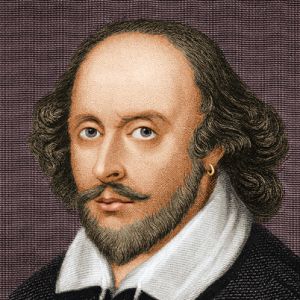
Whenever I write something that challenges (or perhaps outright denies the validity of) religious beliefs, I am often reminded by one of my favorite teachers from years ago (apologies Mr. Walsh) of this quote from Hamlet by William Shakespeare (Act 1, Scene 5)

william-shakespeare-194895-1-402

HORATIO
    O day and night, but this is wondrous strange!
HAMLET
    And therefore as a stranger give it welcome.
    There are more things in heaven and earth, Horatio,
    Than are dreamt of in your philosophy.

This quote is often used to counter such arguments by implying there are things we don’t, and perhaps cannot, know for certain.

The existence of an omnipotent god being the big one.

I would argue the opposite. The quote comes when Horatio sees the ghost of Hamlet. He denies what is right in front of him. Hamlet’s line is as much a criticism of the limitations of our beliefs as an argument that we can’t know everything.

I would suggest that Hamlet is pointing out that, in the presence of new information, long-standing beliefs change.

In Shakespeare’s time, the Copernican theory of a heliocentric solar system was still being met with death by fire at the hands of the Catholic Church. Today, we have found over 3000 extra-solar planets orbiting other stars.

Galileo, a contemporary of Shakespeare, was under house arrest for confirming the Copernican theory. Today, only the lunatic fringe cling to such ideas of an earth-centered universe.

Isaac Newton, born shortly after Shakespeare’s death, began developing Newtonian physics that held sway until the introduction of Quantum physics. Even those who study such things have barely scratched the surface of the strange world of quantum entanglements. Einstein’s characterization of “spooky actions at a distance’ now is accepted a fact.

My point being that much of the most dominant religious dogmas, Judaic, Christian, and Islamic, have their roots in times of limited scientific knowledge with widespread misunderstanding of natural phenomenon.

A first grader today has a more in-depth understanding of the reality of the physical world than the most educated Roman or Greek or Islamic intellectual at the time of the founding of these religions.

Professor Tom Nichols of the Naval War College writes in his book, “The Death of Expertise” about the demise of our ability to question things and seek knowledge. We have lost our ability to think critically. We’ve been “Googled” into relinquishing analysis and discourse.

He writes, “The United States is now a country obsessed with the worship of its own ignorance,” He laments that many Americans are “proud of not knowing things. Americans have reached a point where ignorance, especially of anything related to public policy, is an actual virtue.”

The idea that most Americans believe in Angels is astounding. They may argue that something inexplicable must have been an Angelic intervention but it doesn’t establish that as fact. All it does is illustrate that there are some things we do not yet understand.

Yet being the important word in that sentence.

I do not claim to have the answers, no one can. But I think history teaches us with each passing moment long-held beliefs based on faith alone have fallen to the inevitable progress of human inquiry.

By falling back on Shakespeare’s quote as a means of saying we must accept things because we can’t explain them or disprove them flies in the face of the progress of knowledge.

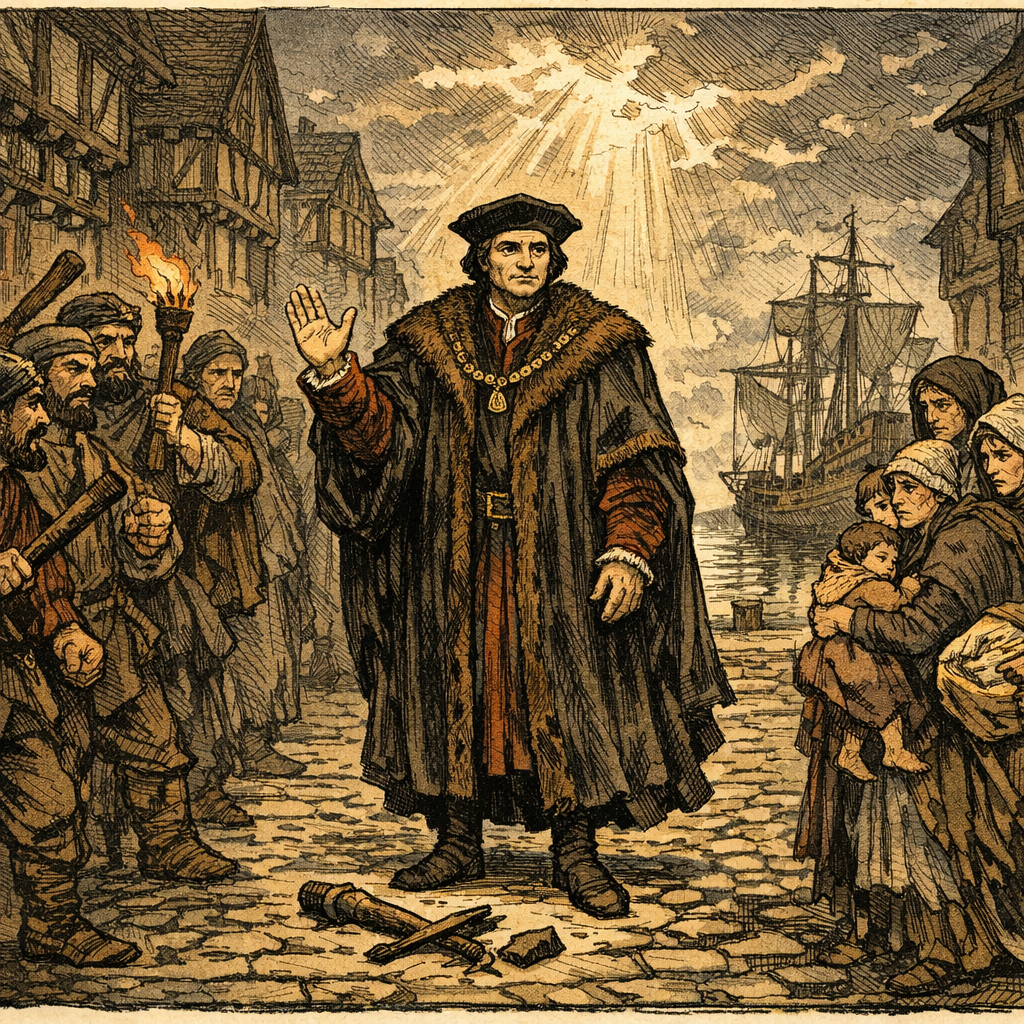
In Shakespeare’s time, there was disagreement at the point of a lighted torch on whether the earth circled the sun. Some four hundred years later, a man stood on the moon. Over the next decade, man will stand on Mars.

Not that science alone can offer all the answers, but the scientific method does offer a roadmap of how to get there. By questioning hypothesis, by repeating experiments, by continually adding to the sum of human knowledge we will grow our rationality.

All one need do is look around at the world today to see the risk of faith-based politics. Those who subscribe to mystical messages from unseen gods as a guide to managing human affairs are as much a threat as a terrorist bomb. Not one of the “inspired word of god” texts leaves out some cataclysmic end to the world with the saving of the faithful and the utter destruction of the unbelievers. Ever wonder why such blind faith is so important to an omnipotent, omniscient, omnibenevolent being?

If you believe in hell and the promise of everlasting torment for those who are not “bathed in the blood,” or any other such dogma that is a true threat to the peaceful existence of humanity.

By thinking, we grow. “Cogito ergo sum” I think, therefore I am. The more we think and learn and investigate, the better we will live.

And that is why, despite Hamlet’s words, I question and doubt.