A Greatness Clouded in Innocence

But I know a place where we can go
That’s still untouched by men
We’ll sit and watch the clouds roll by
And the tall grass waves in the wind
You can lay your head back on the ground
And let your hair fall all around me
Offer up your best defense
But this is the end
This is the end of the innocence

Don Henley, The Age of Innocence

Ever since the phenomenon of Making America Great Again took root with many Americans, I’ve been trying to figure out when, exactly, America was “greater” than it is today, by what definition, and when the decline began.

For the first few years, we were a loosely affiliated collection of former colonies whose primary goal was subjugating or eliminating the indigenous people who were here long before anyone “discovered” America.

We’d fought a war for independence, assisted by the centuries old competition between France and Great Britain, then largely ignored by both. We fought another war with England in 1812-1814 that resulted in no significant territorial changes, contributed to the demise of the Napoleonic era, and yet, on a positive note, started two centuries of a strong partnership with England.

After the War of 1812, we committed on a grander scale what amounted to genocide of Native Americans and, tragically, continued our policy as a slave holding nation unlike most of the western world.

Not much greatness so far.

In 1860, the slavery issue reached a boiling point and plunged us into the most destructive war ever fought in this country. 450,000 Americans died in the war with over a million wounded. But this country was also the site of even more horrendous acts of violence. One almost never mentioned in high school history classes.

Depending on various sources—actual numbers are difficult to determine—somewhere between 10-114 million Native Americans died because of US Government action (note: most historians estimate between 6-11 million deaths during the Holocaust because of actions by the German Government, thus making the Nazi Holocaust the second largest mass murder in history. Let that sink in for a moment.)

Certainly not much greatness here, but at least there was a glimmer of hopeful things to come with the end of slavery. Although the road to freedom traveled the treacherous territory of Jim Crow Laws, the rise of the KKK, and almost universal discrimination against those of African descent. Yet it was a start.

We fought a war with Spain. “Remember the Maine” was the battle cry when the ship exploded in Havana, Cuba Harbor. But unlike the looming attack in Pearl Harbor some years later, questions arose as to the validity of the incident. While initially blamed on a mine or torpedo, and trumpeted by an outraged media deluge, subsequent investigation determined it was more likely a coal bunker fire aboard ship.

As a result of the war, Spain ceded the Philippines, Puerto Rico, and Guam to the US (which many agree was the entire purpose of the zealous claim of attack even though evidence to the contrary was known to those in command.)

Geopolitics at its best, but I wonder if one can claim that as indices of greatness.

In 1941, the Japanese would attack Pearl Harbor and thrust the US actively into the war, although we had been providing matériel to England since the war’s inception.

Here perhaps America took on the mantel of greatness. But the history taught to many of us, me included, gave the impression that the US won the war single-handedly. But if one examines the reality of the war and takes into consideration the number of dead resulting from it, it becomes clear that no one nation was responsible for victory.

History would show it took English Intelligence, American Steel, and Russian Blood to defeat the enemy. We certainly became the dominant power after the war, and if by greatness one uses military might as a measure, no country on earth could challenge us.

Then, with the Marshall Plan, America showed true greatness. Rather than harsh treatment of the Japanese or German people, we tried those responsible for the war and helped rebuild the infrastructure of the defeated countries.

Clearly, we showed signs of how great we could be. Yet the undercurrent of racial discrimination still pulled us down.

We stood firm in Korea against a communist invasion, albeit defending a section of a country arbitrarily divided after World War II, and fought to a stalemate that technically exists today. It would be just prior to this war that President Truman desegrated the military over the objections of many military commanders and public outcry.

It was another glimmer of hope,

In Vietnam, we attempted to recreate the Korean situation, failing to recognize the significant differences between the circumstances. In Korea, there was little local resistance supporting the communist aggression. In Vietnam, the Viet Cong, once known as the Viet Minh, with a long history of resistance to foreign invaders, offered significant military challenges throughout all of Vietnam.

The American military fought with bravery and determination but were left floundering because of the limitations of the US policy on the war (not directly invading the north) and the level of determination by the Viet Cong and their supporters.

Vietnam changed America, for many reasons. Draft deferments for those in college created a chasm between those drafted and sent to Vietnam and those who could avoid it. While significant numbers of those who could avoid service volunteered, there remained a divide within American society. And during this war, simmering racism contributed to tensions among the troops.

On the home front, riots rocked major cities as racial tensions flared.

The 1990s saw the first Iraq War. We liberated Kuwait after the Iraqi invasion and ended the war when it turned into a massacre. Some would argue we should have kept going, but the UN mandate deemed otherwise and we showed great restraint in following it (as we would expect all UN nations to do.)

With 9/11, America was again challenged and rose to the occasion. Afghanistan was both justified and necessary under any measure of international law.

But then the wheels came off with our misadventure into Iraq. Once again, the American military performed flawlessly. While incidents of prisoner mistreatment tarnished our reputation, it was not representative of the overall actions of our men and women in uniform.

Using torture to extract information, however, was more than a blemish. It contradicted everything this country represents. Despite many more rational people calling for abandoning such practice—one that anyone with any common sense will realize is the least effective way of obtaining information—the reality was we as a nation forgot the moral standards we demanded from everyone else because we could.

More has been written in the last few days about some picture on a beer can than about two people shot—one fatally and one seriously wounded—for going to the wrong address or innocently getting into the wrong car.
That is hardly an indication of a great nation.

Joe Broadmeadow

Along with the troubling international escapades came a new antagonism and abandonment of compromise in the political world. We were no longer a people of different opinions working toward a common goal. We demanded absolute loyalty to one perspective and ignored, or actively thwarted, any who disagreed.

If one looks at history just from this perspective, it is difficult to see exactly when America was great and when the decline began.

Yet it is important to remember we also put humans on the moon and made enormous strides in science and medicine. All examples of America’s greatest asset, its people.

What I think our problem has always been is that we forget the details of history, particularly the horrors and tragedy of warfare, and embrace the elements that place us in the best light. Our memory is like an old war movie, devoid of the blood-drenched horrors of lost limbs, horrendous wounds, and the screams of dying soldiers calling for their mother.

In school, much of the history I learned about colonization of the US and the western expansion ignored what amounted to a genocide on a scale that exceeded the Nazi Holocaust.
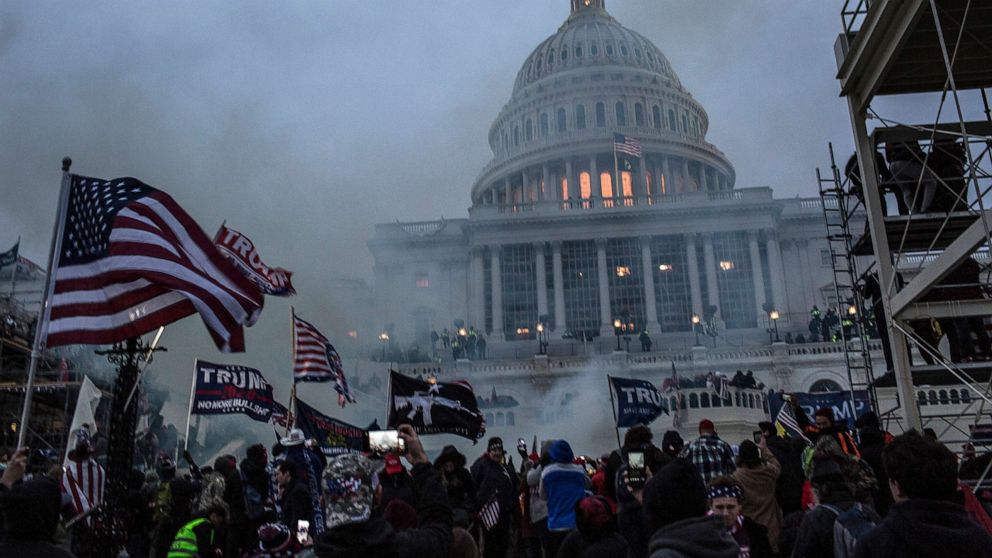
Not Making America Great

What they taught about slavery amounted to a few Lincoln speeches, the Emancipation Proclamation, and Reconstruction told in a Cliff Notes manner.

The Civil War brought an end to slavery and replaced it with the shackles of discrimination.

Time and reading more developed studies of history have put things in a better perspective. The Civil Rights Act happened in my lifetime. Brown v Board of Education was only two years before I was born. Integrating Boston schools happened the year I graduated from high school. The last school desegregation case, in Mississippi, happened in 2019. 2019!

One cannot claim to be a great country when such inequality exists. What one can claim is these same examples are signs of our great potential. We have risen to the occasion in times of war. We need to do the same when we can focus on domestic issues.

Now we face another crisis. One of violence, particularly gun violence. It is not just a question of bad people with guns, or simply a mental health issue. It is infinitely more complex than that.

The United States has a murder rate eight times higher than any other of the high-income countries. The rate for murders by guns is twenty-five times higher. (https://publichealth.jhu.edu/departments/health-policy-and-management/research-and-practice/center-for-gun-violence-solutions)

Thus, even if one argues guns don’t kill people, people kill people, people are still dead in the end because of violence. Nobody is better at killing Americans than their fellow Americans, with guns or otherwise. But the comparison to other nations should still shock everyone. We are an inherently violent nation for reasons we refuse to even try to investigate.

We went to war when terrorists killed 3000+ Americans on 9/11. Yet we are willing to ignore the senseless violence within the country that takes almost eight times that number on an annual basis. We wring our hands, wrap ourselves in the Second Amendment like some security blanket, and sigh.

We may learn that placing more controls on who has weapons may not make any difference, or we might discover the opposite is true. But in either case, ignorance just allows this senseless violence to continue. If America seeks to be a great country, wouldn’t determining a solution be a sign of such a goal?

Yet our focus is on matters with little potential for harm to others.

More has been written in the last few days about some picture on a beer can than about two people shot—one fatally and one seriously wounded—for going to the wrong address or innocently getting into the wrong car.

That is hardly an indication of a great nation.

This is a public health crisis of the most significant kind and one which, until we resolve it or at least dedicate ourselves to finding solutions, will forever taint any claim to greatness, past or future. That Congress refuses to even fund research into the fundamental reasons behind the level of violence in such an advanced society is beyond me.

It casts an enormous shadow over any claim to greatness. It is almost as if we don’t want to know the answer.

What we suffer from is a longing for the innocence of our past, albeit a nostalgic past whitewashed of reality. It is time we end the innocence of our ignorance and seek a lasting legacy of greatness that is well within our grasp if we only open our eyes, dig deeper into ourselves, and listen to each other.

Please take a moment to share my work on social media. The more who read this, the bigger the opportunity to share with others. It would be greatly appreciated. Thanks

JEBWizard Publishing (www.jebwizardpublishing.com) is a hybrid publishing company focusing on new and emerging authors. We offer a full range of customized publishing services.

Everyone has a story to tell, let us help you share it with the world. We turn publishing dreams into a reality. For more information and manuscript submission guidelines contact us at info@jebwizardpublishing.com or 401-533-3988.

The Albatross (or Cuckoo Bird) Around America’s Neck

The events of the last few months—the classified document hoard recovered by search warrant at Mar-E-Lunacy, the indictment (indicatament) from NYC decades in the making if one knows anything of history, and the more than likely upcoming indictments of a much more severe nature if there is any justice in this world—have led me to a cataclysmic decision (to borrow the wise words of the Wizard of OZ.)

I will not waste another moment, make any brain effort, construct another syllable, or expend even one iota on writing about the albatross around America’s neck, the permanently Ex President Donald J. Trump. Mr. Trump, more accurately represented as a cuckoo bird, acts similarly by placing his ideas and deranged concepts in the nests that are the fertile minds of America’s uneducated, uninformed, false patriots and bigots, in the hopes they would nurture them as their own and abandon any rationality to the infectious and dangerous rhetoric. Sadly, many did. But things are changing.

Mr. Trump has had his moment. He took four years and forever demeaned and destroyed any semblance of rationality and honor in politics. He sullied the once imperfect but admirable reputation and political process that served this country well. He destroyed our international reputation for reliability and gave an opening to our enemies in the fascist and communist governments that have always sought to weaken us.

Instead of Making America Great Again—we had never lost our greatness until 2016—he made us vulnerable.

But he also may have inadvertently done us a service. America’s youth as a country is over. We are no longer the new democracy leading the world as we became after World War II. We are now transitioning from the self-centered hormone-ravaged puberty of the country into adulthood. We now have to face the reality of a global economy where other countries follow what used to be almost exclusively American; scientific and intellectual innovation and domination.

Those who still bask in Mr. Trump’s orange glow will soon realize—except, perhaps, the hardcore delusional—the light is fading. The Tsunami of 2016, the MAGA movement, crashed on the rocky shore of Justice and shattered into fragments of itself.

Whether or not Mr. Trump serves even a moment in prison if convicted of these charges will not matter. History is a cruel and merciless judge, and the judgment of Mr. Trump’s place in history will not be kind.

And even if Mr. Trump finds a way to “walk”on these charges, those who truly care about this country will accept the verdict yet holdfast to the reality that ‘not guilty’ does not mean the same thing as innocent.

So, take this to heart. Even though I know it will be hard to ignore the trial antics, grammatically error-prone rants, and the death throes of the MAGA infection, I will not write another word about the man.

It is a very good riddance, sir. Time for us to Move On!

The Mariner, whose eye is bright,
“Whose beard with age is hoar,
Is gone: and now the Wedding-Guest
Turned from the bridegroom’s door.

He went like one that hath been stunned,
And is of sense forlorn:
A sadder and a wiser man,
He rose the morrow morn.”

Samuel Taylor Coleridge, The Rime of the Ancient Mariner

JEBWizard Publishing (www.jebwizardpublishing.com) is a hybrid publishing company focusing on new and emerging authors. We offer a full range of customized publishing services.

Everyone has a story to tell, let us help you share it with the world. We turn publishing dreams into a reality. For more information and manuscript submission guidelines contact us at info@jebwizardpublishing.com or 401-533-3988.

Nationalism, Militarism, Patriotism, Government, and a Social Market Economy

The United States faces a crisis of conscience in the coming years. Our turn toward isolationist policies lacking any consideration for global impact places us in a precarious position. We lost much of our international influence by exchanging it for almost total dependence on overwhelming military superiority.

While the ability to defend oneself is critical, the use of such strength as a bludgeon against both allies and enemies to bend to our will is a near-sighted policy. The rallying cry of the “patriot” is often the first step towards disaster.

We are smarter than that.

This confluence of “isms” in the US culminated with the election of Donald Trump and a sharp turn away from what this country once represented; strength wielded with compassion. While labels can only go so far in defining individuals and policies, they are generally used in a derogatory way or, when meant as a positive attribute, often absent a full understanding of their meaning.

It is important to know what one is promoting before embracing a myth.

Nationalism: identification with one’s own nation and support for its interests, especially to the exclusion or detriment of the interests of other nations. (Oxford Dictionary definition)

Militarism: the belief or desire of a government or people that a country should maintain a strong military capability and be prepared to use it aggressively to defend or promote national interests. (Oxford Dictionary definition)

Patriotism: the quality of being patriotic; devotion to and vigorous support for one’s country. (Oxford Dictionary definition)

64 Best Patriotism Quotes And Sayings Of All Time

Former Commandant of the United States Marine Corps and Medal of Honor recipient for Gallantry during the Battle of Tarawa in World War II, General David Monroe Shoup, had this to say about such philosophies.

“The battle successes and heroic exploits of America’s fine young fighting men have added to the military’s traditions which extol service, bravery, and sacrifice, and so it has somehow become unpatriotic to question our military strategy and tactics or the motives of military leaders.”

He went on to say about the growing American involvement in Vietnam,

 “militarism in America is in full bloom and promises a future of vigorous self-pollination — unless the blight of Vietnam reveals that militarism is more a poisonous weed than a glorious blossom.”

One can easily see how those prescient words were both correct about our involvement in Vietnam (which Shoup opposed) and about our situation today.

The most mystifying thing about it is how a man like Mr. Trump, who avoided the draft, ridiculed those who serve, and denigrated those who died in the service of their country, became the poster child for all three, nationalism, militarism, and patriotism.

While each has a place in building and securing a nation, they also pose a danger when left uncontrolled by reason, rational policies, and compassion for our global society.

It is time for Americans to take a long, hard look at themselves before they lockstep off a cliff singing God Bless America in pursuit of a greatness that is a sham.

Then there are labels like socialism which are often thrown out as a threat to our capitalist system. A more thorough examination of the American form of government, one which reveals the true genius of the founding fathers, shows our government and economy are not pure capitalism.

Much of our success came from governmental intervention into the excesses of capitalism. Labor laws, workplace safety laws, collective bargaining, product liability, antitrust laws, all had a negative impact on profits for the higher purpose of protecting workers, consumers, and the environment.

The words “collective” bargaining itself carries socialist tendencies since it levels the playing field between the wealthy business owners and those whose labor makes the companies successful.

Social Security, Unemployment benefits, Disability benefits all provide support derived from the profits of a capitalist economy which otherwise would have been denied.

Our economy, like it or not, is a blend of capitalism and socialism. And Democratic Socialism–a philosophy that seeks to balance the downsides of a free market economy with fair treatment of labor–is not opposed to capitalism. It opposes excesses and provides a balance.

Here’s how the Oxford Dictionary and other sources describe it.

A social market economy is a free-market or mixed-market capitalist system, sometimes classified as a coordinated market economy, where government intervention in price formation is kept to a minimum, but the state provides significant services in areas such as social security, health care, unemployment benefits and the recognition of labor rights through national collective bargaining arrangements.

The social market economy refrains from attempts to plan and guide production, the workforce, or sales, but it does support planned efforts to influence the economy through the organic means of a comprehensive economic policy coupled with flexible adaptation to market studies. Combining monetary, credit, trade, tax, customs, investment and social policies as well as other measures, this type of economic policy aims to create an economy that serves the welfare and needs of the entire population, thereby fulfilling its ultimate goal (http://germanhistorydocs.ghi-dc.org/docpage.cfm?docpage_id=3415)

The fact is there are many countries who enjoy higher standards of living, better educational opportunities, better access to medical care, lower infant mortality (which relates to access to health care), and other benefits through social democratic reforms.

Norway, Finland, Sweden, Denmark, Great Britain, Canada, the Netherlands, Spain, Ireland, Belgium, Switzerland, Australia, Japan, and New Zealand are just a few examples.

The American Experiment, an appropriate analogy since experiments adjust to new evidence, faces a critical moment. Do we revert to the harshness of a government that turns a blind eye to abuse of labor? Do we ignore the health needs of Americans because of pressures from those who place profits over people? Do we let the paroxysms of nationalism and militarisms mask the true nature of the American soul? Do we ignore the scientific evidence of climate change for the sake of profiteering from the demise of our world?

It is time for Americans to take a long, hard look at themselves before they lockstep off a cliff singing God Bless America in pursuit of a greatness that is a sham.

************************************************************************

JEBWizard Publishing (www.jebwizardpublishing.com) is a hybrid publishing company focusing on new and emerging authors. We offer a full range of customized publishing services.

Everyone has a story to tell, let us help you share it with the world. We turn publishing dreams into a reality. For more information and manuscript submission guidelines contact us at info@jebwizardpublishing.com or 401-533-3988.
Signup here for our mailing list for information on all upcoming releases, book signings, and media appearances.

When in the Course of Human Events…

When did America become a country of people who say “we can’t?”

When did America become a country where our children… our children… cannot afford the medicine we invented?

When did America become the country where we shake our heads at gun violence, wring our hands, and say there’s nothing we can do?

When did America become the country incapable of separating the needy and desperate from those who seek to take advantage?

When did America become the country that runs away from a challenge?

When did America become the country that once put a man on the moon, at the cost of the lives of several willing American heroes, yet is now afraid of risk?

When did America become the country hiding behind the most powerful military in the world instead of projecting that power to protect those who need us?

When did America become the country of people who only listen to others with whom they agree?

When did America become the country where the value of the media is questioned but random, inarticulate social media postings are taken as the truth?

When did America become the country of people whose idea of analyzing a problem consists of Google searches and Facebook polls?

When did America become the country of people who do not have even a basic concept of the separation of powers or the process behind our government?

When did America become the country that hands the power of government over to the highest bidder?

When did America become the country that is a shadow of it’s former self?

And, most importantly, when will America return to the path of greatness tempered by wise and merciful justice?

______________________________________________________________________________

As always thanks for reading, thanks for sharing the posts, and I welcome all to comment and post their own thoughts here.

Click here to check out my books on Amazon

Follow Your Dreams

Americans used to be dreamers. But we did more than just dream, we acted.

We dreamed of building a canal connecting the Atlantic to the Pacific. And did it.

We dreamed of a railway across the entire country. And did it.

We dreamed of a GI bill to offer some compensation for the sacrifice of World War II. And did it.

We dreamed of building the most advanced scientific research center in the world. And did it.

spaceWe dreamed of going to the moon. And did it.

We dreamed many things once thought impossible and turned them into a reality.

To borrow, and alter a bit, the line from Anne Hathaway’s lyrics in I Dreamed a Dream,

“We dreamed a dream in times gone by…”

It would seem now we no longer dream of things we can accomplish but instead retreat into fear from things we don’t understand and the winds of change.  Like it or not, this is a global community in which we play an important, but not exclusively dominant, role.

Instead of focusing our efforts on what we can do, we focus on what we fear we cannot do. This mantra of making America great again misses the point of what American greatness is. It is our willingness to lead by example, not protect ourselves at all costs. To take risks for the greater good, not insulate ourselves from failure.

We used to be the country that learned from mistakes and turned them into success.

George Bernard Shaw wrote several apropos lines. “We are made wise not by the recollection of our past, but by the responsibility for our future.“ I wonder what historians will say about this time in America. Will it reflect the best in us or the worst?

Shaw also wrote, “You see things; and you say “Why?” But I dream things that never were, and I say “Why not?”

I agree.

Why not find a way to offer a path to citizenship for innocent individuals who wish to do nothing more than embrace what for many is the only country they’ve ever known?

Why not find a way ensure every single American has access to the best healthcare in the world without the threat of financial ruin?

Why not pursue every available diplomatic solution to international problems before resorting to a military option?

Why not pursue green energy and reduce the undeniable impact of human activity on Climate Change? Even the Secretary of Defense, James “Mad Dog” Mattis when he was an active duty Marine recognized the threat to national security Climate change posed. He begged for an alternative to his armored forces being tethered to their fuel supply, primarily for strategic purposes of course, but coupled with the Defense Department’s long-held recognition of the threat of Climate Change.

If spending twenty-five billion dollars of American taxpayer money on a wall (with no contributions from Mexico as promised) makes you feel better, then have at it. I think it may be a wall ultimately proven ineffective.

I think, given the expertise and competence within the criminal justice system, the experience and input from the border states who’ve lived with the problem, and some rigid deportation enforcement for illegal aliens who commit crimes, the same amount of money could be spent in more efficient ways.

We Americans are dreamers.  Those of us lucky enough to be born here often forget the fortunes of birth. Those who dream to come here, or remain here, may see things in a much different light.

But let me be clear about one thing, a path to citizenship reflects the best American has to offer.  It is not unconditional. Commision of a crime, no matter how trivial it may be perceived, should negatively affect your chances. Serious crimes negate it entirely.

Break the law, leave the country, or we will show you the way out if you refuse.

The promise of America remains a bright beacon. One we should strive to preserve. We all have a responsibility to that promise.

In the words of Robert Frost,

The woods are lovely, dark and deep,   

But I have promises to keep,   

And miles to go before I sleep,   

And miles to go before I sleep.


Frost may have been talking about death, but these promises are our daily efforts to fight for what we believe in and against those who would seek to return America to darker times of racial divide and isolationism. To live a life in pursuit of one’s ideals is a life well-lived.

The night of the President’s State of the Union, the line I remember most is this.

“Politicians may be judged by the promises they make, America is judged by the promises we keep.” Here’s a hint, he didn’t say it.

Once again we as a country have reached a point where the torch must be passed to a new generation. New ideas, new dreams, new goals, not some foggy clouded memories of former greatness. America doesn’t need to be great again; we never stopped being great in the first place.

A former Vice President once said his father told him that this country was so big, so strong, so resilient that no President could ever do permanent harm.  Let’s hope he was right.