How Many Dead Americans?

“War does not determine who is right, only who is left.” – Bertrand Russell

Since we seem to be stumbling toward regime change in Iran, something Mr. Trump was very clear about opposing as a presidential candidate (and likely, at least partially motivated by taking Epstein off the headlines), it might do well to remind people of the potential US casualties we will endure.

Sometimes war may be inevitable, but it is never necessary.
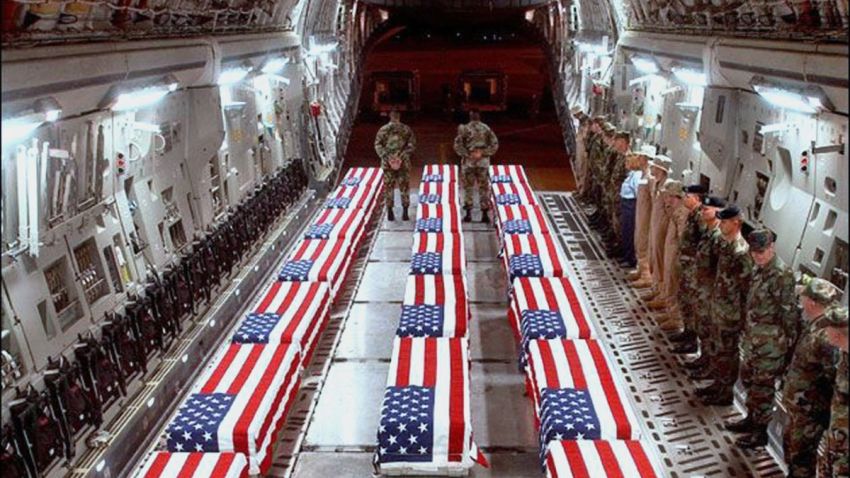
“In war, there are no unwounded soldiers.” – José Narosky” and the horrors of war are not confined to the battlefield.

So how many dead Americans are we likely to see?

There is no single, authoritative public number for “realistic American casualties” in an all‑out U.S.–Iran war. Most credible assessments treat casualties as highly scenario‑dependent—driven by how long the war lasts, whether it stays mostly air/naval or becomes a ground fight, how effectively Iran’s missiles and proxies hit U.S. forces, and how well U.S. bases/ships are defended and dispersed.

What we can say realistically, based on what’s publicly documented about prior Iranian strikes and Iran’s strike capacity, is:

  • Limited, short, mostly standoff fight (days–weeks) could plausibly mean dozens to low hundreds of U.S. casualties if escalation stays managed and defenses hold.
  • Regional, sustained fight (weeks–months) in which Iran and its partners repeatedly strike U.S. bases/ships could plausibly mean hundreds to several thousand U.S. casualties.
  • A major ground war/occupation (least likely, but “all‑out” could imply it) is the kind of scenario that can push casualties into the many thousands to tens of thousands over time.

Those ranges are order‑of‑magnitude illustrations, not “the” forecast—because the publicly available sources rarely publish a single consolidated U.S.-casualty estimate.


What public evidence does tell us about likely casualty dynamics

1) Iran has shown it can strike U.S. bases—but outcomes vary sharply with warning/defense

Two modern data points show how widely casualties can swing depending on warning, dispersal, and base defenses:

  • In January 2020, senior U.S. military leadership emphasized that defensive measures and preparedness prevented loss of life during Iran’s ballistic missile attack on bases in Iraq, describing sirens, bunkers/barriers, and defensive procedures as critical in avoiding deaths at the time. [war.gov]
  • In June 2025, a UK parliamentary research briefing notes that Iran launched missiles at a U.S. base in Qatar in retaliation for U.S. strikes, and “there were no reported American casualties.” Contemporary reporting similarly described no reported deaths or injuries following the missile attack on Al Udeid Air Base. [commonslib…liament.uk] [cnbc.com], [military.com]

Why this matters: these episodes demonstrate a key point for any “realistic casualties” estimate: even sizable missile attacks can produce low immediate casualties if telegraphed and well-defended—but that does not guarantee low casualties in an “all‑out” war where surprise, volume, and multi‑axis attacks could be greater.

2) Iran’s missile inventory and ability to fire salvos is the biggest direct driver of U.S. casualties

A major “all‑out” scenario is less about U.S. troops meeting Iran’s army head‑on, and more about Iran attempting to inflict costs via missiles/drones on fixed sites and regional infrastructure.

A current reference on Iran’s missile forces notes that Iran’s arsenal has been described as very large, citing a past CENTCOM statement that Iran possessed “over 3,000” ballistic missiles (as of that cited timeframe) and describing ongoing efforts to rebuild stocks after exchanges. [iranwatch.org]

Implication for casualties: more missiles + more launches + lower intercept success = higher U.S. casualties, especially at concentrated bases. Conversely, dispersal, hardened shelters, and layered missile defense strongly reduce casualties.

3) “All‑out” likely means proxies and terrorism risk as well—not just missiles

RAND commentary after U.S. strikes on Iranian nuclear sites underscores that Iran has multiple response options, including mobilizing proxies and potentially attempting terrorist actions (and that how Iran responds remains uncertain). [rand.org]

Implication for casualties: proxies expand the battlefield (Iraq/Syria, Gulf, Red Sea, etc.), adding risk of:

  • rocket/drone attacks on smaller U.S. outposts,
  • attacks on logistics nodes and regional partners,
  • maritime incidents (mines/anti-ship missiles),
  • and potentially attacks outside the immediate theater.

A practical way to think about “realistic casualties”: 3 scenario bands

Below are scenario bands that analysts commonly use when thinking about U.S. exposure. I’m labeling these clearly as scenario logic, not a sourced “official estimate.”

Scenario A — “Short, mostly standoff” (days to a few weeks)

What it looks like: U.S. air/naval strikes; Iran retaliates, but in a constrained way; heavy base hardening, dispersal, and missile defense limit hits.
Casualties: plausibly dozens to low hundreds (killed + wounded).
Why: the 2020 and 2025 episodes show that when attacks are anticipated and defenses work, casualties can be limited. [war.gov], [commonslib…liament.uk], [military.com]

Scenario B — “Regional campaign” (weeks to months)

What it looks like: repeated Iranian missile/drone salvos + proxy attacks across multiple countries and maritime routes; U.S. responds over an extended period; some attacks get through.
Casualties: plausibly hundreds to several thousand.
Why: duration + repeated exposure creates more “rolls of the dice,” and even high interception rates still allow occasional damaging hits—especially if Iran prioritizes saturation, mixed missiles/drones, and timing against defenses (this is general operational logic; public sources typically don’t publish a single number).

Scenario C — “Truly all‑out, including major ground operations” (months to years)

What it looks like: large U.S. ground presence, extended combat operations, occupation/security missions, insurgency conditions, plus ongoing missile/proxy threats.
Casualties: can rise into many thousands to tens of thousands over time.
Why: historically, the wars with the highest U.S. casualty totals are the long, manpower‑intensive ones; CRS maintains comprehensive U.S. war casualty statistics across major conflicts, illustrating how sustained ground wars accumulate far more casualties than short standoff operations. [congress.gov]


Below is a direct, apples‑to‑apples comparison between your 30‑day Iran‑war estimates and what actually happened in the first ~30 days of the 2003 Iraq invasion (Operation Iraqi Freedom), using official U.S. casualty data where available.


1. What happened in Iraq, March–April 2003 (first ~30 days)

Scope

  • Major combat operations: 20 March – ~18 April 2003 (≈30 days)
  • Nature of war: Large‑scale ground invasion, armored thrusts, urban combat, air dominance
  • U.S. force size: ~150,000–170,000 troops in theater

U.S. casualties (first ~30 days)

Using DoD / Defense Casualty Analysis System monthly tallies:

  • Killed
    • March 2003: 65
    • April 2003: 73
    • Total deaths (≈30 days): ~138
  • Wounded in action
    • March 2003: 202
    • April 2003: 340
    • Total wounded (≈30 days): ~542
  • Total U.S. casualties (killed + wounded): ~680

These figures are consistent with DoD‑compiled monthly casualty summaries for Operation Iraqi Freedom. [globalsecurity.org], [dcas.dmdc.osd.mil]

Bottom line for Iraq 2003 (first 30 days):
~140 killed, ~540 wounded, ~680 total casualties


2. Side‑by‑side comparison

Table: First‑30‑Day Casualties

Conflict (first 30 days)KilledWoundedTotal Casualties
Iraq 2003 (actual)~140~540~680
Iran war – low estimate~50~300~350
Iran war – mid estimate~150~900~1,050
Iran war – high estimate~300+~1,500+~1,800+

3. Why Iraq 2003 was comparatively low in casualties

Despite being a full‑scale ground invasion, Iraq 2003 had unusually low U.S. casualties because:

  1. Overwhelming conventional superiority
    • Iraqi air force and air defenses collapsed quickly
  2. Poor Iraqi command cohesion
    • Limited coordinated resistance after initial engagements
  3. Minimal standoff strike exposure
    • Iraq lacked long‑range precision weapons to hit U.S. rear bases
  4. Short duration of major combat
    • Baghdad fell within weeks

These factors kept U.S. casualties in the opening month well under 1,000 despite heavy maneuver warfare.


4. Why a 30‑day Iran war could match or exceed Iraq 2003

Even without an invasion, Iran differs from Iraq 2003 in ways that directly affect casualties:

Key differences

FactorIraq 2003Iran (today)
Long‑range missilesMinimalExtensive arsenal
Ability to strike U.S. basesLimitedProven capability
Proxy forcesWeakRegional network
Maritime threatLowHigh (mines, ASMs)
Urban ground fightingHighLikely avoided early

Iran can impose casualties without losing territory, which means:

  • Casualties accumulate via missiles, drones, and proxies
  • No need to defeat U.S. forces tactically to cause losses

This is why a non‑invasion Iran war can still rival or exceed Iraq 2003 casualties in 30 days.


5. Key takeaway (the comparison in plain English)

Iraq 2003 shows that even a ground invasion can produce relatively low first‑month casualties if the enemy collapses fast.
Iran is the opposite problem: it doesn’t need to collapse, and it can hurt U.S. forces at range.

  • If an Iran war stays limited and well‑defended, casualties could be below Iraq 2003 levels
  • If Iran sustains pressure for 30 days, casualties could match or exceed Iraq 2003 despite no invasion

I’ve yet to see any solid case for launching an attack on Iran. Over the past few decades, surgical strikes by the Israelis and the US has consistently kept nuclear weapons from being developed or deployed.

So why now? And why at all?

The American people are owed a reasonable and defensible reason for sacrificing young Americans in the service of toppling the Iranian government. And to consider restoring the Shah to the throne is substituting a Theocratic dictatorship for an equally evil secular one.

Do the people of Iran deserve freedom? Of course. So do North Korea, China, Russia, Syria, and a host of other countries, some of whom do have nuclear weapons. Do we just make a list and start identifying targets?

Ask yourself, after you stop pounding your chest and raving about killing commies and bad guys, what number of Americans are you willing to sacrifice for a President who cannot even articulate one valid reason for their deaths?

And include your son or daughter, grandson or granddaughter, brother, sister, aunt, mother, or father who may be in the service, or called into service, when you decide how many you are willing to sacrifice.

An Enemy of the People

A recent piece I wrote called The Price of War (https://joebroadmeadowblog.com/2020/01/13/the-price-of-war/) drew some interesting comments and criticisms; the responses were markedly disparate.

The majority agreed with the sentiment of the article but had serious doubts we will ever eliminate war as human condition.

Many of the concerns were sincere yet tainted by resignation to something I believe within our power to change.

There was a significant number who focused on one or two negative comments directed at the President. In a nutshell, I find him ill-suited for dealing with complex geopolitics issues. His usual act is saber rattling the power of our military. Creative and nuanced solutions elude him. He plays to some of his supporters like a character on WWF, not the President occupying the Oval Office. Latching on to these criticisms, they tagged me as a progressive leftist liberal.

Leftist I am not, but I am guilty of the other charge. No one has yet explained the negative value of being progressive or liberal. It seems the founding fathers of this country were very progressive and liberal about their continued allegiance to the King. British loyalists considered them terrorists and an enemy of the crown.

However, some went full bore, wishing me an unhappy, painful, and imminent demise. I am an enemy of the people. In light of such threatening behavior, I must poke the dragon once more.

I will dispense with the history aspect I so painstakingly wrote, play the role of “advocatus diaboli,” and argue for a more aggressive response to the perceived threats to this country. Since we will never, in the eyes of many, eliminate war, let us prosecute it with vigor and resolve.

Do unto others before they do unto you.

Perhaps my new found militancy will improve my reputation and earn me an upgrade me to plain liberal or, god willing, a conservative.

But I must set the stage with a small bit of history. Growing up a child of the sixties, I knew the godless Russians and the Chinese hated us. They wanted to either kill us or enslave us all. I knew this despite having never actually met a “Chinamen” or a “Ruskie.”

Yet all the adults seemed to know and accept this as fact, which is why many supported spending much of their tax money on building nuclear weapons. Enough to kill every human six or seven times over.

Of course, what they might have thought was to kill all of “those” people twelve or fourteen times over and keep us god-fearing Americans alive to repopulate the world.

Better dead than red, I always say.

What I don’t understand is, if the Russians and Chinese hated us, and for a time we had the advantage in nuclear weapons, why didn’t we strike then and be done with it?

As Madeline Albright, Secretary of State under Bill Clinton, once said, “Why have all these nuclear weapons if we can’t use them?”

Perhaps she has a point.

Instead, we waited and hoped the Russians and Chinese would see the fallacy in Mutually Assured Destruction.

They have so far. But the world has changed. Can we afford to take the same chance?

Now it is the Muslims who hate us. And we do not want them to get nuclear weapons, so maybe we should not risk it again. Give the command. Turn the launch keys. Send them to their god, It might be a smarter choice.

One more historical point. Allah, the God of Islam, is the same Abrahamic God of Judeo-Christian tradition but why get hung up on a technicality. As a good Christian Crusader once said, “Kill them all, God will recognize his own.”

Iran is the devil of the moment. The country that hates us the most. It was North Korea for a while, but they’ve dropped into second place. They have a better chance of nuking themselves before they get us. Iran is the “Raison du moment” we are playing chicken with armed conflict. But I do not understand something.

Pakistan has nukes. They harbored Osama bin Laden, the hall of infamy star of Islamic terrorism. They are supposed to be our ally and we could not tell them we were coming to kill Osama. Why haven’t we nuked them?

Saudi Arabia supplied nineteen of the hijackers. If we were keeping score, the Saudis are responsible for more American deaths than that Iranian General we spread all over the tarmac. Once again, an ally in name only. Why haven’t we nuked them?

Since Mr. Trump and his BFF, Mr. Putin, control thousands of nukes, and seem to be engaged in a mutual admiration society, perhaps a return to the alliance we shared in defeating the Nazis is in order with our target the new enemy, Iran.

Oh, wait, Russia backs Iran. Perhaps there’s a reason for Mr. Trump’s confusion with allies and friends like these. There’s that pesky geopolitics again.

I would suggest we approach China, considering our new trade deal, but they may be too busy enjoying their 6.1% economic growth. Why can’t we have that? Maybe we can learn something from them on that front.

Let’s just keep this simple.

Here is my plan.

  1. Recall all American military personnel to the US. Notify all Americans living abroad now might be a good time to visit the homeland. Advise them to sell all their furniture or find a solid storage facility.
  2. End all foreign aid to everybody except other nations based on a Christian tradition
  3. Hold a referendum on exempting the Israelis from this requirement. They are not Christian but, in all likelihood, Jesus was Jewish so that bodes well in their favor.
  4. Ask each nation to support what we do. Make a list of all who agree, add to the target list all who refuse.
  5. Start the countdown.

It makes about as much sense as our current covfefe foreign policy.

The Price of War

“My first wish is to see this plague of mankind, war, banished from the earth.”

George Washington

Since the beginning of the 20th century, the United States has engaged in seven wars. There have been other minor skirmishes and short engagements (although they were hardly minor to those killed or wounded), but for my purposes, let us focus on the seven big ones and the cost in lives.

In two of these engagements, World War I and II, we had a clear and well-understood purpose; to defeat Germany and her allies. We achieved both missions, but the cost was high.

The number of Americans killed or wounded during the First World War was 320,518. During the Second World War, the number was 1,076, 245. Nevertheless, at least these wars had a defined goal.

Dwight David Eisenhower, Supreme Allied Commander during the war, had this to say of his experiences during both these wars.

“I hate war as only a soldier who has lived it can, only as one who has seen its brutality, its futility, its stupidity.”

Dwight D. Eisenhower

The end of World War II brought with it atomic (soon followed by nuclear) weapons and the Cold War. Faced with a growing number of nuclear-armed nations, some under Communist or Socialist dictators such as Stalin and Mao, Americans taught their children to “duck and cover” and prayed the nuclear winter never came.

Nevertheless, we continued to build more weapons of increasingly devastating power. So powerful, man could destroy himself and the planet.

“I know not with what weapons World War III will be fought, but World War IV will be fought with sticks and stones.”

Albert Einstein


In Europe and America, there’s a growing feeling of hysteria
Conditioned to respond to all the threats
In the rhetorical speeches of the Soviets
Mister Khrushchev said, ‘We will bury you’
I don’t subscribe to this point of view
It’d be such an ignorant thing to do
If the Russians love their children too

How can I save my little boy
From Oppenheimer’s deadly toy?
There is no monopoly of common sense
On either side of the political fence
We share the same biology
Regardless of ideology
Believe me when I say to you
I hope the Russians love their children too

Russians by Sting

Nevertheless, the threat of such powerful weapons did little to slow the often gleeful rush to war. Particularly when halting the spread of communism.

1950 brought us the North Korean invasion of South Korea. Two countries artificially created after the Second World War by the victors dividing the spoils. We rushed to aid our side in the south.

It would cost us 128,650 dead or wounded Americans. We fought the North Korean army to the Chosen Reservoir, where China, fearing US troops on her border, entered the war.

In thirty-degree below zero weather, 30,000 Marines, surrounded by 150,000 Chinese soldiers, fought their way to the coast taking all their dead and wounded. My father was one of those Marines. He earned three Purple Hearts, two Bronze Stars, and a Silver Star during his time in Korea.

He bore the physical scars with pride. The psychological scars remained buried, something for his family (and thousands of other families of veterans) to deal with alone.

That war is still officially in a state of truce. No one won. However, we had somewhat of a clear intent in entering the war, just no clear picture of how it would end. It was the beginning of a dangerous trend in foreign policy.

In August 1964, Congress passed one of the most significant, misunderstood, and troubling Joint Acts ever, The Gulf of Tonkin Resolution. Abdicating its Constitutional authority to declare war, Congress allowed the President to send troops into combat.

The act, predicated on the report of an attack on US warships in the Gulf of Tonkin by forces of North Vietnam, started us down the routes of involvement in the war in Vietnam.

The attack never happened.

In 1965 President Lyndon Johnson privately confided in an aide, “For all I know, our Navy was shooting at whales out there.”

Vietnam cost 211,454 Americans killed or wounded.

In 1973, after eighteen years of American military personnel assisting the South Vietnamese (1955-1973) and eight years of active combat, we declared victory and left.

The North Vietnamese and Viet Cong never won a significant battle against the American forces, achieved no measure of military success, yet when the smoke cleared, the North Vietnamese flag flew in Saigon.

Our purpose in entering the war was unclear, our goal undefined, and the results underscore the error of this policy.

Which brings us to the wars in Iraq and Afghanistan.

(1990-1991 First Gulf war Iraq) 1,143 dead or wounded Americans.

Afghanistan (2001- still there) 22,266 dead or wounded Americans.

Iraq (part II 2003-still there) 36,710 dead or wounded Americans.

One would be hard-pressed to define the goals in these conflicts.

One million, seven hundred ninety-six thousand, seven hundred, eighty-six (1,796,786) dead or wounded Americans in wars so far.

To put this in the crude terms of a sports record, we are

Two Wins

One Tie

One Forfeit

Two in never-ending overtime.

However, nothing is sporting or glorious about war.

The troubling part is that we made those decisions while being led by many who had experienced war upfront and personal. We are not in the same circumstances today and we live in a much different geopolitical environment.

One requiring more in-depth deliberation.

Asymmetric warfare, religious zealotry driving suicidal crusades, the proliferation of nuclear material, an immense world-wide arms industry eager to exploit any market all contribute to the complexity.

We have a President who loathes outside advice, operates on “gut” instinct, and has shown by his ADHD-like foreign policy efforts to be ill-equipped for the complexities of the moment.

No one would accuse Mr. Trump of in-depth anything except self-delusion.

President Trump boasts that Saudi Arabia is paying for the presence of our troops in their country. That has to be one of the most astoundingly idiotic things ever said by a President (a fantastic accomplishment), let alone the most indefensible use of the American military.

The American military’s sole purpose is to protect the interests and the people of the United States and our allies. They are not for rent. They never should defend or support the government of a country that funds extremist forms of Islam and motivates much of the unrest in the Middle East.

Remember nineteen of the 9/11 hijackers were Saudi’s. They are not our friends. If we are energy independent, as the President claims we have become on his watch, why do we need Saudi oil?

The clamoring, almost joyful, call for war against Iran when considering our well-established history of wasting American lives in wars with no sense of purpose or goal, should sound a warning.

“It is forbidden to kill; therefore, all murderers are punished unless they kill in large numbers and to the sound of trumpets.”

Voltaire

1,796,786 Americans killed or wounded in wars. We have spent trillions of dollars arming our country. Shattered families, shattered bodies, and shattered dreams are never a reasonable price to pay for the vainglorious pursuit of flawed policies wrapped in patriotic fervor to conceal the cowardly nature and history of the man in the Oval Office.