…Where Credit is Due

If one seeks to be fair in criticizing others, one must acknowledge when you agree with someone as quickly as you are to disagree. To act otherwise is contrary to the spirit of open debate.

While I see little redeeming value in this President’s policies, performance, or persona, sometimes he says something that borders on correctness.

It was during a rambling and wide-ranging interview with the New York Times. Trump waxed on in his customary manner about his rejection of Diversity, Equity, and Inclusion (DEI) and managed to say something quite profound, albeit unintentionally, about the Civil Rights movement.

“Well, I think that a lot of people were very badly treated. White people were very badly treated, where they did extremely well, and they were not invited to go into a university or college.”

He then added,

“I think it was unfair in certain cases. It accomplished some very wonderful things, but it also hurt a lot of people. People that deserve to go to a college or deserve to get a job were unable to get a job. So it was; it was a reverse discrimination…”

Now if you muddle through the poor sentence construction and convoluted logic, there is an element of truth here. And before you take angrily to the keyboard and claim I have joined the opposition, let’s think about what he said.

“White people were very badly treated.”  This is a true statement.

They were very badly treated when they marched alongside their black brothers.

They were very badly treated when they fought for the right of blacks to vote.

They were very badly treated when they were killed for supporting actions such as boycotts, voter registration programs, and sit-downs to bring attention to rampant discrimination against minority Americans.

But their treatment doesn’t even approach the level of horrendous treatment afforded minority Americans (and women!) throughout this country’s history. Not even close!

Some argue this level of racism lies in the past, and that is true to some extent. But hidden, less overt, racism is alive and well and we now see evidence of a reemergence of the more overt version.

But this President wants to “whitewash” it.

The best we get from this President is a statement made in support of his disastrous, ill-conceived, and counter-productive attack on DEI that, when examined, shows signs of a truth, by way of his ignorance, not in the way he intended it to be. Many white people were treated badly when they supported civil rights legislation and those who fought against it now seek to repeal the progress.
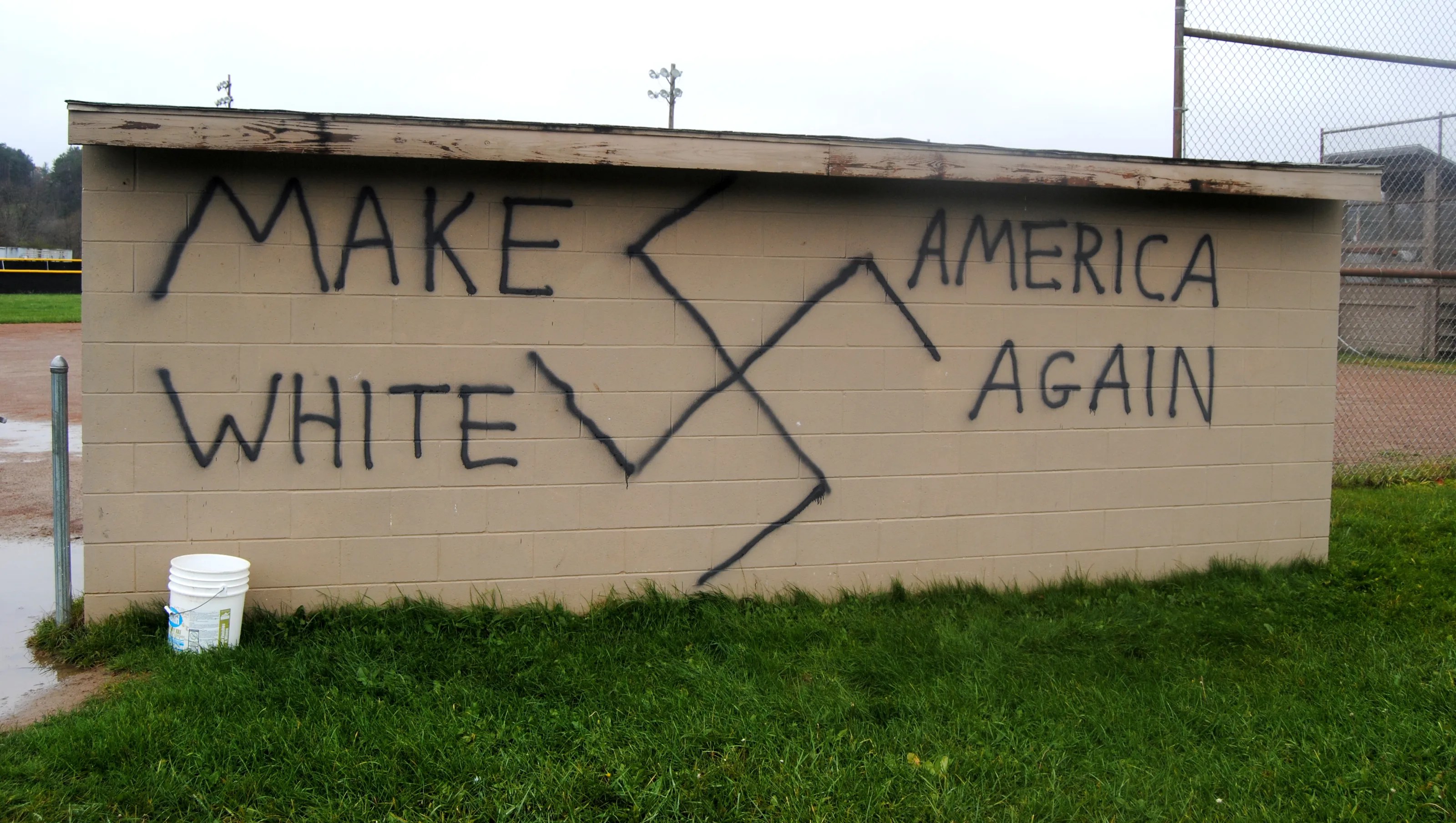
That a sitting President can ignore the history of slavery, Jim Crow laws, segregation, racial violence, denial of basic human right, and reinvigoration of white supremacy movements and claim “whites were very badly treated,” is abhorrent.

The 1964 Civil Rights Act and the Voting Rights Act of 1965 were some of the most effective laws ever enacted to right the wrongs of the past. These equal opportunity laws balanced the inherent unfairness in hiring, housing, voting rights, and educational opportunities seems to have been lost on this man.

Have we made progress? Of course. Have we eliminated the ignorance, inhumanity, and inequity of racism? Clearly not. We may never become color blind, but we can become more aware of our own innate prejudices and work to overcome them.

This President sees a black man placed in a position that once would have been denied that black man and given to a white man because of the color of their skin as unfair. That such discrimination against blacks was acceptable in this country draws no criticism or rational analysis. And his “it did some wonderful things” hardly qualifies as acknowledging both the need and value of the legislation.

His lack of basic historical context and understanding is embarrassing. The fact that any American either supports this or sits idly by and ignores it is tragic. I fear for the very survival of this country.

All you have to do is nothing.

Balancing Equality and Fairness in American Law

Civil rights legislation in the United States has played a pivotal role in promoting equality and protecting individuals from discrimination based on race, color, religion, sex, or national origin. These laws, most notably the Civil Rights Act of 1964, were enacted to address systemic injustices and ensure all citizens have equal access to opportunities. However, as these laws have evolved, so too debates whether certain policies, particularly affirmative action, lead to what some call “reverse discrimination.”

The Civil Rights Act of 1964 is the cornerstone of modern civil rights protections, prohibiting discrimination in employment, education, public accommodations, and more. Subsequent legislation, including the Voting Rights Act of 1965 and the Fair Housing Act of 1968, further advanced the cause of equality by aiming to eliminate barriers to full participation in American society for historically marginalized groups.

To address persistent inequalities, affirmative action programs were developed to proactively seek the inclusion of minorities and women in education and employment. Supporters argue these measures are necessary to correct historical disadvantages and foster diversity. Critics, however, claim that such policies can result in “reverse discrimination,” where individuals from majority groups feel they are unfairly treated or denied opportunities because of their race or gender.

The term “reverse discrimination” refers to the perception or reality that affirmative action or similar policies discriminate against members of a dominant or majority group. Legal challenges have reached the Supreme Court, with notable cases such as Regents of the University of California v. Bakke (1978), where the Court ruled that while affirmative action was constitutional, strict racial quotas were not. The debate continues, reflecting differing views on justice, fairness, and the best way to achieve an equitable society.

Civil rights legislation remains essential for protecting individual freedoms and promoting equal opportunity. The ongoing discussion about reverse discrimination highlights the complexities involved in creating laws that are both effective and fair. As society continues to evolve, so too will the legal and ethical considerations that surround these important issues.

One inevitably sees this attack on DEI and Civil Rights laws as a ploy to return to the good old days when whites weren’t “very badly treated.” All that was missing from his diatribe was “the South will rise again.”

If you’ve ever wondered what happened in Germany that gave rise to Nazism, you are a but a step away from experiencing it. He’s given you an enemy. He’s made you fear them. He’s put the blame for all the country’s problems on them. And he will paint all who oppose his actions to “save” the country as anarchists.


The Inequality of Equity

A troubling new trend is gaining ground across this country. While the goal—equal access to quality education—is both laudable and crucial, the means to achievement is disingenuous and fraught with contradiction.

It seems in pursuit of equity in education, some schools are eliminating honors programs. The argument that minority students are underrepresented in proportion to their numbers in the general population is irrefutable yet proponents of eliminating the programs twist these numbers to suit a pre-conceived concept as a solution.

Here is an excerpt from a Wall Street Journal report.

“Parents say academic excellence should not be experimented with for the sake of social justice,” said Quoc Tran, the superintendent of 6,900-student Culver City Unified School District. But, he said, “it was very jarring when teachers looked at their AP enrollment and realized Black and brown kids were not there. They felt obligated to do something.

Culver City English teachers presented data at a board meeting last year showing Latino students made up 13% of those in 12th-grade Advanced Placement English, compared with 37% of the student body. Asian students were 34% of the advanced class, compared with 10% of students. Black students represented 14% of AP English, versus 15% of the student body.”

Wall Street Journal

Clearly, the underrepresentation of Latino students is an issue worth addressing, but eliminating the classes at the expense of those other segments of the student body seems short-sighted. There would be no difference in arguing for the elimination of these programs if one claimed the overrepresentation of Asian students justified the programs demise. But I bet the cries in opposition would be different.

Advanced classes cultivate high achievers. The programs recognize the differences in learning abilities, drive, and innate intelligence and serves to offer those students a more challenging learning environment. While everyone deserves an equal opportunity, we shouldn’t penalize those who embrace these opportunities because others do not. And, if there is something systemic preventing some from achieving their full potential, we need address the problem not the symptom.

Rather than eliminating the program because some groups are underrepresented, perhaps resources need to be allocated to determine why this is so evident and how to address it. While the data represented in this article only deals with one school district, a more comprehensive study of these programs nationwide seems called for.

And wouldn’t better question to ask be Why this is happening rather than eliminating programs which merely masks the problem?

While everyone deserves an equal opportunity, we shouldn’t penalize those who embrace these opportunities because others do not. And, if there is something systemic preventing some from achieving their full potential, we need address the problem not the symptom.

Joe Broadmeadow

I wonder if the demographic makeup of athletic programs also reflects any disparity. And even if it does not, athletics culls out those of lesser ability. Not everyone can hit a fastball, dunk a basketball, or run for a touchdown.

I’ve heard no discussion about eliminating athletics because certain groups are underrepresented. When it became clear there was discrimination in college athletics against women, schools improved program access and increased funding for women’s athletic programs.

text on shelf
Photo by Pixabay on Pexels.com

They didn’t eliminate the programs—and one still had to compete based on your athletic skills—they improved the system.

At the risk of sounding prejudicial, in the district represented in the article Latino students are clearly underrepresented. Wouldn’t it be a more effective and lasting solution to put our efforts into improving the opportunities for these underrepresented students rather than denying it to others?

We often abuse the use of the term racist when dealing with human differences. we deem any problem between one class of people and another racial when the very definition of race would contradict such depiction. Not every decision or difference that arises between different groups or individuals is racially motivated. To define it as such, is to gloss over the fundamental issue and drive us further apart.

One can safely assume that this is one factor in the flight of many students from public to private or charter schools. Many of these schools don’t have to deal with the problems inherent in public education. Cities and states struggle to fund education, but it is difficult to compete in an environment where those who can afford it can buy a better system.

I don’t blame any parent for making that decision. We did it with our daughter, but as a society failing to provide minimal funding for public education is “penny wise and dollar foolish.” And, diminishing the availability of the very programs the offer public education students the opportunity to compete equally with private schools is a choice to embrace equity masquerading as mediocrity.

Public education should be challenging, welcoming, and available to every student willing to take advantage of it. As a country, our very survival depends on it. Otherwise, let’s just give everybody a 4.0 average, a trophy, and a diploma and declare victory.

JEBWizard Publishing (www.jebwizardpublishing.com) is a hybrid publishing company focusing on new and emerging authors. We offer a full range of customized publishing services.

Everyone has a story to tell, let us help you share it with the world. We turn publishing dreams into a reality. For more information and manuscript submission guidelines contact us at info@jebwizardpublishing.com or 401-533-3988.

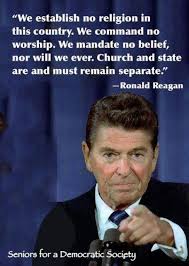
But I Thought This Was a Christian Nation?

(Reposted from October 2016. One of the candidates referred to has now become President, the other is just a convenient dead horse her opponents like to beat.  The issues I pointed out back then have not just come to pass, they have grown and expanded.)

So once again I ask, But I thought this was a Christian nation?

Reagan

If this is indeed a Christian nation, wouldn’t that imply we have God on our side? Aren’t those words an inference of our superiority because of this religious faith?

Yet, upon examination, what do we find?

Politicians spend their time and taxpayer money trying to control panhandling by the homeless. They spend no time finding solutions to the underlying problem.

But I thought this was a Christian nation?

We consider the poor to be the problem rather than a symptom of the problem.

But I thought this was a Christian nation?

Candidates propose closing borders.  They would expel innocent children because their parents sought a better life here. They support blocking entry based on religion or place of birth.

But I thought this was a Christian nation?

Admittedly, I am not up to date on the latest Catholic Christian doctrine. But, as best I understood it, marriage was for better or worse. Created by God and not for man to put asunder. One candidate has tried three times and another stayed in one marriage. Yet, for many, the choice is clear.

But I thought this was a Christian nation?

Is not the saying, “Judge not lest ye be judged?”, part of this Christian philosophy?

But I thought this was a Christian nation?

We talk of destroying a civilization based on differences and misunderstandings. We would kill others since they worship a different God.

But I thought this was a Christian nation?

Many would embrace the call for a new crusade. Echoing the words of Pope Urban in calling for the first crusade;

O what a disgrace if such a despised and base race, which worships demons, should conquer a people which has the faith of omnipotent God and is made glorious with the name of Christ!

But I thought this was a Christian nation?

We consider the assassination of a candidate as a viable solution to political differences.

But I thought this was a Christian nation?

We are among an exclusive group of nations. China, Iran, Saudi Arabia, Iraq, Pakistan, Yemen, North Korea, and the USA that all practice executions.

But I thought this was a Christian nation?

We are number two in the world in incarceration rates. (Behind the Seychelles of all places?)

But I thought this was a Christian nation?

We are 37th in health care for our people according to the World Health Organization. (Saudi Arabia and the United Arab Emirates take better care of their people.)

But I thought this was a Christian nation?

We are 29th in education in the world. Vietnam has a higher rated educational system.

But I thought this was a Christian nation?

We scream and yell that we are number one in the world. The best country in the world. Our enemies hate us because of our freedom. It is our Christian traditions that have made us what we are.

Is it?

Perhaps the end of times will come at our own hands. We may choose to launch our nuclear weapons against those with whom we disagree. After all, why have the weapons if you’re not going to use them?

But I thought this was a Christian nation?

Turns out, I may be right. I’m just not sure how it has helped us.

Counting Out America

First, it was Johnny can’t spell. Then Johnny can’t read. Now, Johnny can’t count. Why has education in America failed?

Recently, we stopped at one of those local farm stands to pick up some fresh vegetables. We’ve been going to this same stand for many years. It’s one of those family owned farms where generations of the family all work.

After picking out a few items, we placed them on the counter. The young, high-school aged girl gave us the price.  Seeing another item we wanted, we added that to the pile.

Instant panic appeared on the girl’s face. She looked at the collection of vegetables then told us her phone wasn’t working right and she couldn’t figure out the total.

Now, we’re not talking about very complicated math here. We’re talking adding $3.50 and $1.75.

Couldn’t do it.

She was not some immigrant from a third-world country who suffered from a lack of educational opportunities. She was early teens and could not do basic math.

She could manage texting and Facebook I assume.

This was in a small town with a well-established school system. This particular town brags of being the birthplace of public education in America. Apparently, it has now reached the end of its life.

Everyone is quick to jump on the blame the school system bandwagon. In particular, those union teachers who do not educate kids or care about them. If this young girl couldn’t add it must be the teacher’s fault.

It is not.

This is a basic life skill. The ability to do simple math is critical in one’s day-to-day life. Understanding things like 10% off or what the cost of one apple is if it’s $1.00 for four is a common task.

Something a parent should instill in their children.

Yet, it would seem this girl’s family is satisfied with their child’s inability to do the most basic of tasks. They’re comfortable letting her rely on the increasingly pervasive cell phone.

Education is not something you send your children out to get, it is something you participate in and reinforce in your daily lives. Sending your children out unprepared and ill-equipped to do basic things is nothing less than child abuse.

Perhaps there will come a time when we can do away with education. Just have a one-day class on how to use a smartphone. Find all the answers in a Google query.

Who needs an education? We have a handheld surrogate.

It was evident in that farm stand that the future of America is on its final countdown to failure.

Trigger Warnings (Not what I thought they were)

I read an article about the 248th Brown University Commencement and learned something new. (http://www.providencejournal.com/news/20160529/brown-university-commencement-a-force-to-be-reckoned-with)

One of the commencement speakers, Sabrina Imbler, in touting the accomplishments of the Class of 2016, pointed to their demand for “safe spaces” and “trigger warnings” as a significant accomplishment.

Here’s a definition I found for safe spaces,

“…anyone can relax and be able to fully express, without fear of being made to feel uncomfortable, unwelcome, or unsafe on account of biological sex, race/ethnicity, sexual orientation, gender identity or expression, cultural background, religious affiliation, age, or physical or mental ability…” (http://safespacenetwork.tumblr.com/Safespace)

I thought that was the guarantee of the Constitution and the Bill of Rights?

There are those who disagree with others by the use of threats and intimidation. The Constitution and the law are there to prohibit that. It is the foundation of this country.

If the reality doesn’t match the ideal, shouldn’t pursuing it be our goal?

Safe spaces do not bring us closer to the ideal. They are the equivalent of burying one’s head in the sand.

Yet, the Class of 2016 is proud about convincing the school to create these safe spaces. Available, of course, only to Brown students. Sort of a private safe club.

Apparently irony is lost on them. As is reality.

It would be better if they set out to be the example for others. Demonstrate tolerance in their daily interactions, not save it for display in a space barred to keep out the rest of the (real) world. That would be a worthy accomplishment.

Trigger Warnings were new to me. So I did some research. Here’s a definition,

…a statement at the start of a piece of writing, video, etc., alerting the reader or viewer to the fact that it contains potentially distressing material (often used to introduce a description of such content). (http://www.oxforddictionaries.com/us/definition/american_english/trigger-warning)

Originally intended to warn sexual-assault victims that certain writings, which detailed other victim’s experiences, could trigger traumatic memories. Certainly a worthy goal and yet now twisted into something else.

It’s become a rating system for classes that may make you question your beliefs. “Warning this class may challenge your naiveté. You may realize you are misinformed or worse. Attendance may cause you to learn something.”

Now, course content which may clash with a student’s political, religious, or other beliefs must contain warnings that someone might disagree with them.

Are you kidding me?

I disagree with them. This is nonsense. I would expect someone will disagree with me on this article. I don’t fear their disagreement, I welcome it.

I might learn something.

I know full well violence is how some irrational people deal with those who hold a different perspective. But legitimate debate from differing perspectives is not a risk to a complete education, it is a key element of it.

On this Memorial Day, we remember the men and women who paid the ultimate sacrifice for this country. Willing to die to uphold the ideals of this great nation, they paid the tab for the Bill of Rights.

There were no signs on the beaches of Normandy, “Warning. Soldiers with a different perspective ahead who may strongly object to your presence. Seek a safe place.”

We are not a perfect nation.

We have not yet fully achieved the goals of the founders.

The sad state of affairs in this country is, in the eyes of many, not all are created equal or entitled to the same respect.

We let our differences cloud our commonality as Americans and as human beings.

These attitudes arise from ignorance. An ignorance that, if left insulated from debate and criticism, persists. If part of that means making someone feel uncomfortable about their cherished beliefs, so be it.

If the Class of 2016, after four years of study, is proud of successfully demanding “safe spaces” and “trigger warnings” but not of helping chip away at the very attitudes they most fear, then they have not been well-served by Brown University.

I disagree with your point, dear speaker, get over it.

Joe Broadmeadow, of Lincoln, is an author and a retired captain in the East Providence Police Department.