By Joe Broadmeadow
In two decades carrying a badge—working narcotics and a stint on an FBI task force—I learned a lesson that outlasted the pension: suspicion is not evidence. A hunch gets you a look. It does not get you a conviction. Any detective who confused the two washed out fast, because judges and juries demand the difference. President Trump’s primetime address Thursday night was built entirely on the wrong side of that line.
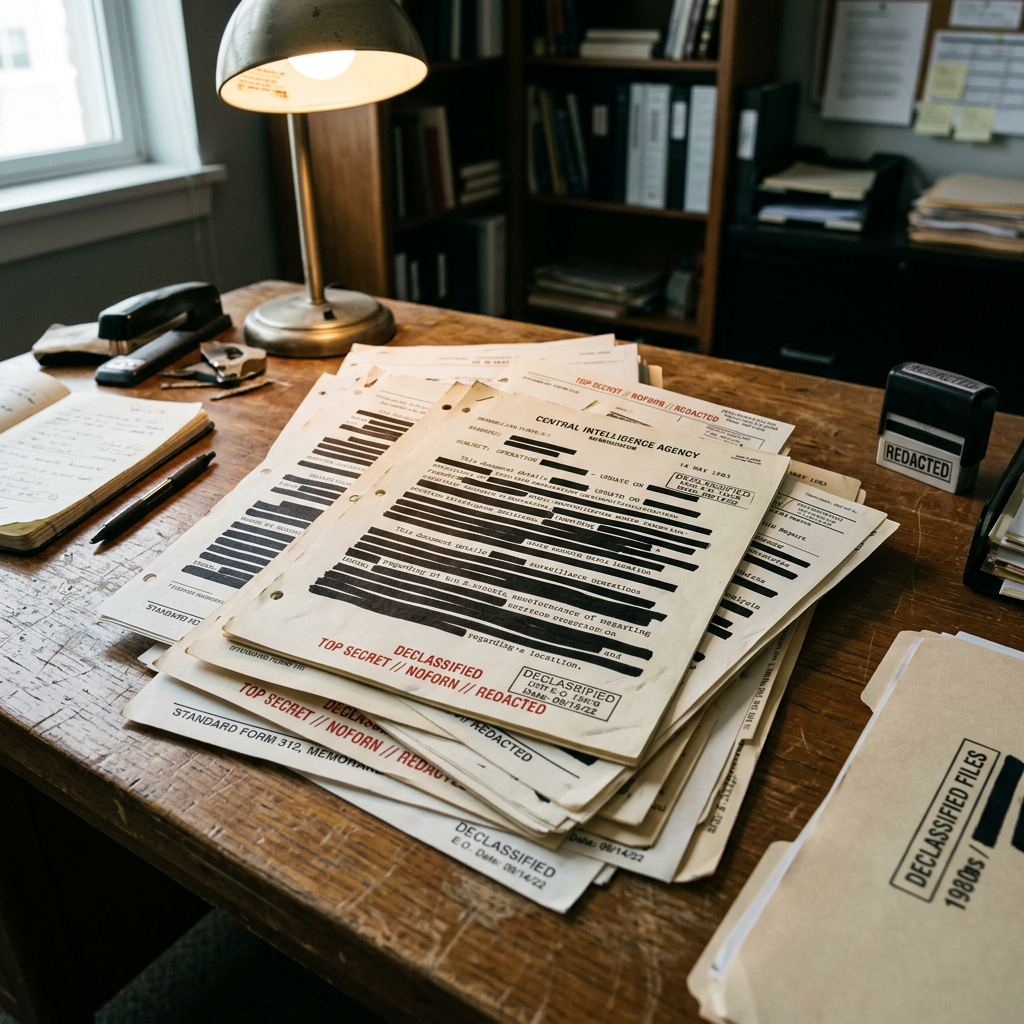
Teased for days as a bombshell, the speech delivered what Arizona’s secretary of state—a man who counts votes for a living—called “zero new facts.” Trump recycled four familiar grievances: that voting machines can be hacked, that China acquired American voter data, that 270,000 noncitizens sit on the rolls, and that a 2020 registration scheme in Michigan proves the system is rotten. Strip away the staging and the declassified-document theater, and none of it clears the bar I was held to on the smallest narcotics case.
I took the time to read the “declassified” reports. I was immediately struck by the lack of substance, lack of actual evidence, and lack of transparency in the sources of this so-called “classified” material. The sinister actions of the Chinese turn out to be something quite different, as I detail below.
Start with the machines. Yes, computers are vulnerable—every honest security expert has said so for years. That is precisely why nearly every American now votes on a paper ballot you can hold in your hand and recount by candlelight if the power goes out. Rhode Island runs exactly that system. A hackable machine that still leaves a paper trail is a machine whose work can be checked, and in every close race, it is. Vulnerability is not compromise. My cruiser could have been stolen; that never meant it was.
The China claim collapses on contact. Trump suggested a hostile power “acquired” the data of 220 million voters. Here is the part he left out: most voter data is public. Anyone can buy it—a campaign, a pollster, a curious citizen, Beijing. As one Wisconsin election official put it, if China bought the voter file, so can you. That is not a breach. That is a public record.
The 270,000 noncitizens? When his own Homeland Security Department was pressed for the math, officials in the states named could not reconcile the number, and the federal tool used to generate these lists has a documented habit of flagging actual citizens—so many that a Republican secretary of state in Texas wrote Washington to complain, and a federal judge blocked the program over privacy and voting-rights violations. Every audit, red state and blue, keeps finding the same thing: noncitizen voting is vanishingly rare, and it is a felony that ends in deportation. People do not risk prison and exile to cast a single ballot in a race decided by tens of thousands.
Then there is Michigan—and this is the tell. In 2020, a contractor submitted a stack of bogus registration forms in Muskegon. A local clerk noticed the irregularities and flagged them before a single fraudulent vote was cast. Michigan’s attorney general called it “a perfect example of the system working exactly as it should.” Trump calls it fraud. I call it a clerk catching a crook. That is not a scandal; that is the alarm system doing its job.
Here is what an investigator does with a theory: he tests it against every other explanation, and he asks who else has looked. On the 2020 election, everyone has looked. More than sixty lawsuits, thrown out by judges Trump himself appointed. His own attorney general, William Barr, finding no fraud that could have changed the outcome. His own cybersecurity agency calling it the most secure election in American history—right before he fired the man who said so. Republican secretaries of state certifying their own results. When every independent check, including the ones run by your allies, comes back the same way, an honest investigator updates his theory. He does not fire the lab.
So why give the speech at all? The timing answers the question. We are months from the 2026 midterms. The address closed not with an arrest or an indictment but with a sales pitch for the SAVE Act, a bill to impose new identification and paperwork hurdles on every voter in the country. Critics call it voter suppression. I would put it more plainly: when you cannot win the argument on the evidence, you change the rules of admissibility.
I spent my career backing the people who actually stand between order and chaos. In an election, those people are the sixteen hundred bipartisan clerks and the thousands of poll workers who log every ballot with the same chain-of-custody discipline I used on evidence bound for a courtroom. Impugning them without proof is not law and order. It is the opposite.
I do not need to like who wins to respect how we count. Neither should the president. Bring the evidence or drop the case.
Now I know many of the President’s supporters are already foaming at the mouth, screaming this is all bullshit from a liberal left-wing nutcase with TDS (which would make an excellent T-shirt)
So, here’s the link to this declassified treasure trove of “evidence.”
https://www.whitehouse.gov/election-integrity/
Read it yourself; you’ll be as underwhelmed as I am. Or not, probably not. You’ll just ignore it.
For those of you who may have issues navigating the government’s less-than-transparent data dump, here’s an image from the “Chinese acquisition of voter data” file


Leave a Reply