It is the way of the world that nothing ever stays the way it was in the mind of most people. Time, people, and most importantly, technology change in the blink of an eye.
In the year I was born, not every home had a telephone. In the first house my parents bought, the phone line was a party line. To make a call, one had to lift the receiver (connected by a cord to the base) and listen to make sure no one was on the line. In the immediate area where we lived you only had to dial the last four numbers (on a rotary dial!)
Today, I can carry on a video conversation with a person on another continent while riding (never driving!) in a car. And almost every person carries such a device with them.
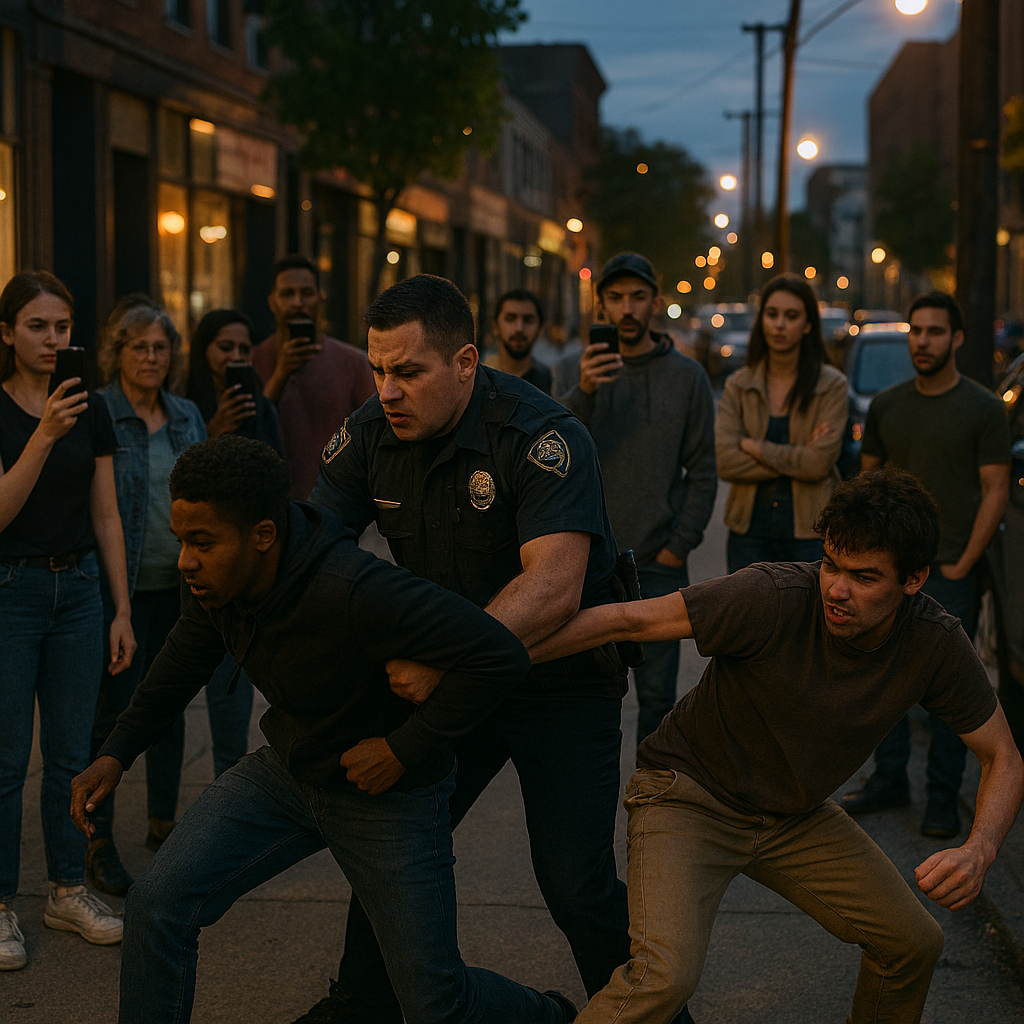
Which brings me to the subject of today’s rant (raving mad rants as my many critics like to claim); video recording of police officers.
Now I will freely admit that I am grateful the such devices were not around when I was a police officer. Not because of any desire to conceal questionable behavior, but because such videos absent context are fraught with complications.
Here is a hypothetical situation similar to several I experienced, but before the advent of cellphones with cameras.
An officer encounters two individuals breaking into cars. He attempts to place the two under arrest and a struggle ensues. The officer radios for help. Now every officer will tell you that an officer needs assistance call is the highest priority. And, there is no slower moment in time than when you are the officer needing assistance, thirty seconds feels like an hour.
But back to the story, as the first assisting officer arrives, the officer being assaulted yells, “their trying to get my gun!”
At that point the second officer, seeing one suspect’s hand on the grip of the officer’s weapon, begins to strike the suspects with his baton, opening up one suspects’ head requiring forty or so stitches and breaking the other one’s arm.
Now, a person standing twenty or thirty feet away, coming upon the scene just after the arrival of the second officer, whips out his video camera and records what, from his point of view, appears to be two officers beating these suspects. The video is posted without context, without referencing the reports or charges filed in this matter, and without a full explanation of the circumstances.
This is fraught with misinformation and likely to be twisted into something it is not by those with an agenda.
This is the result of people pretending to be competent journalists without the requirement or obligation to tell the full story.
But with that said, the First Amendment is clear. As long as they are not interfering with law enforcement they can record the officers actions. Trying to criminalize actions or rights afforded under the First Amendment is inherently more dangerous than the results of such protected activities.
With the proliferation of cameras everywhere, trying to prevent such recordings, absent a showing of criminal interference with the officers, is frutiless.
Keep the following in mind if you choose to video officers.
You have a First Amendment right to record local, state, and federal law enforcement officers (FBI, ICE, Marshals) performing duties in public, provided you do not interfere with their work. While seven federal circuits uphold this right, some federal agencies, including DHS, have sometimes contested it, making it important to remain at a safe distance.
Key Guidelines for Recording Law Enforcement and Federal Agents:
- Public Space: You may record in public spaces; however, recording inside secure federal facilities, courts, etc. is generally prohibited.
- No Interference: You must not physically interfere with arrests, stop-and-frisk, or searches.
- Safety Zone: Maintain a reasonable, safe distance from agents (e.g., several feet away) to avoid accusations of obstruction.
- No Mandatory Deletion: Officers cannot legally force you to delete footage or confiscate your device without a warrant.
- Document Everything: Capture badges, vehicles, and incident details.
- Officer Retaliation: Be aware that some officers may wrongly threaten or arrest you, despite the legality of filming.
More importantly, keep this in mind when you watch these videos.
The officers actions on the recording most likely do not tell the full story. Context, full review of the circumstances preceding and leading up to the action recorded, and review of any reports and charges resulting are necessary to form an informed opinion.
These officers deserve to have the whole story told, not become pawns in some political struggle.
A picture may be worth a thousand words but, if the words do not contain the full story, they can be deceptive and counterproductive.
 The Writing of Joe Broadmeadow