We have the pleasure of hosting our grandsons at, as they call it, “Grandmother and Grandfather’s hotel,” a couple of days a week here in Warren in the old American Tourister Mill. Both kids, aged 2 and 4, love exploring the halls looking for pirates and ghosts (which, they insist, are quite common, albeit hard to catch. But they have seen them!)
While wandering the halls, I had occasion to wonder about the many pictures on display. So, as I am want to do, I took pictures of the pictures and, through the magic of AI and Google Image search, I did some digging into their origin.
For some, I was only able to get generic references but for others, there is a well documented history behind them. Several of the images were taken by a man named Lewis Hines in the late 19th and early 20th century.
Here is the Wikipedia listing for him.
Lewis Wickes Hine (September 26, 1874 – November 3, 1940) was an American sociologist and muckraker photographer. His photographs taken during times such as the Progressive Era and the Great Depression captured young children working in harsh conditions, playing a role in bringing about the passage of the first child labor laws in the United States.
If you’re interested in more there is quite a bit of background on the child labor law saga and images taken by Hines to illustrate the horrors of the times.
But for now, I just wanted to give you a flavor of these images on display and, perhaps, incite an interest in admiring the history
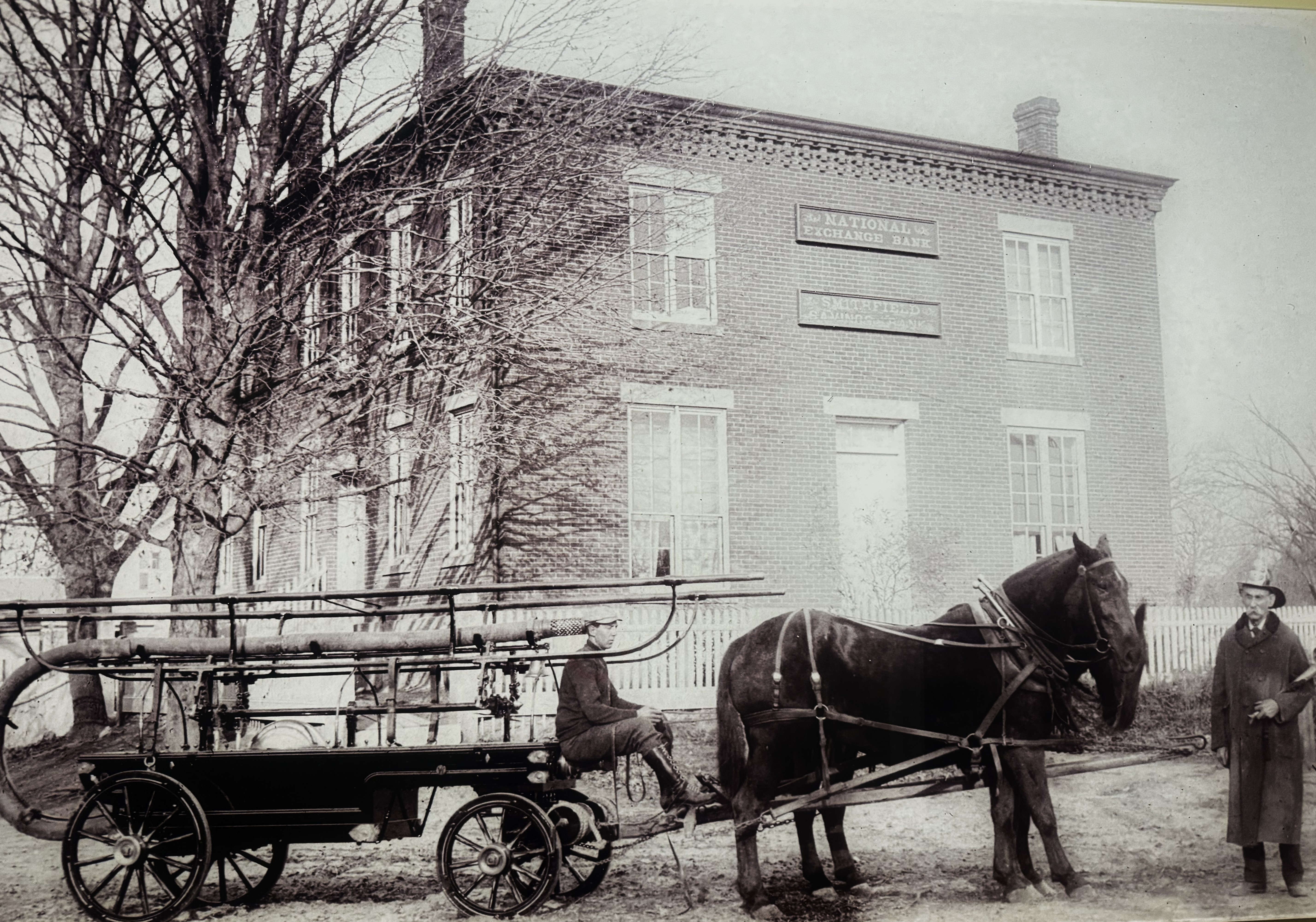
Between 1876 and 1924, Greenville’s best defense against fire was this antique hand-pumper affectionately named the “Water Witch”. It took quite a few men, and a lot of stamina to operate it. (Photo courtesy of Priscilla W. Holt.)
Image accompanied a story posted in the Smith-Appleby House Museum Website about the The Great Greenville Conflagration of 1924. It was an intense blaze that broke out on a cold winter’s night in the very heart of Greenville, at an hour when most citizens were snug in their beds. When it was over, two prominent landmarks had been destroyed, six businesses and the post office were gone, and three families were left homeless. Had it not been for the brave efforts of volunteer firefighters, it could have been much worse.
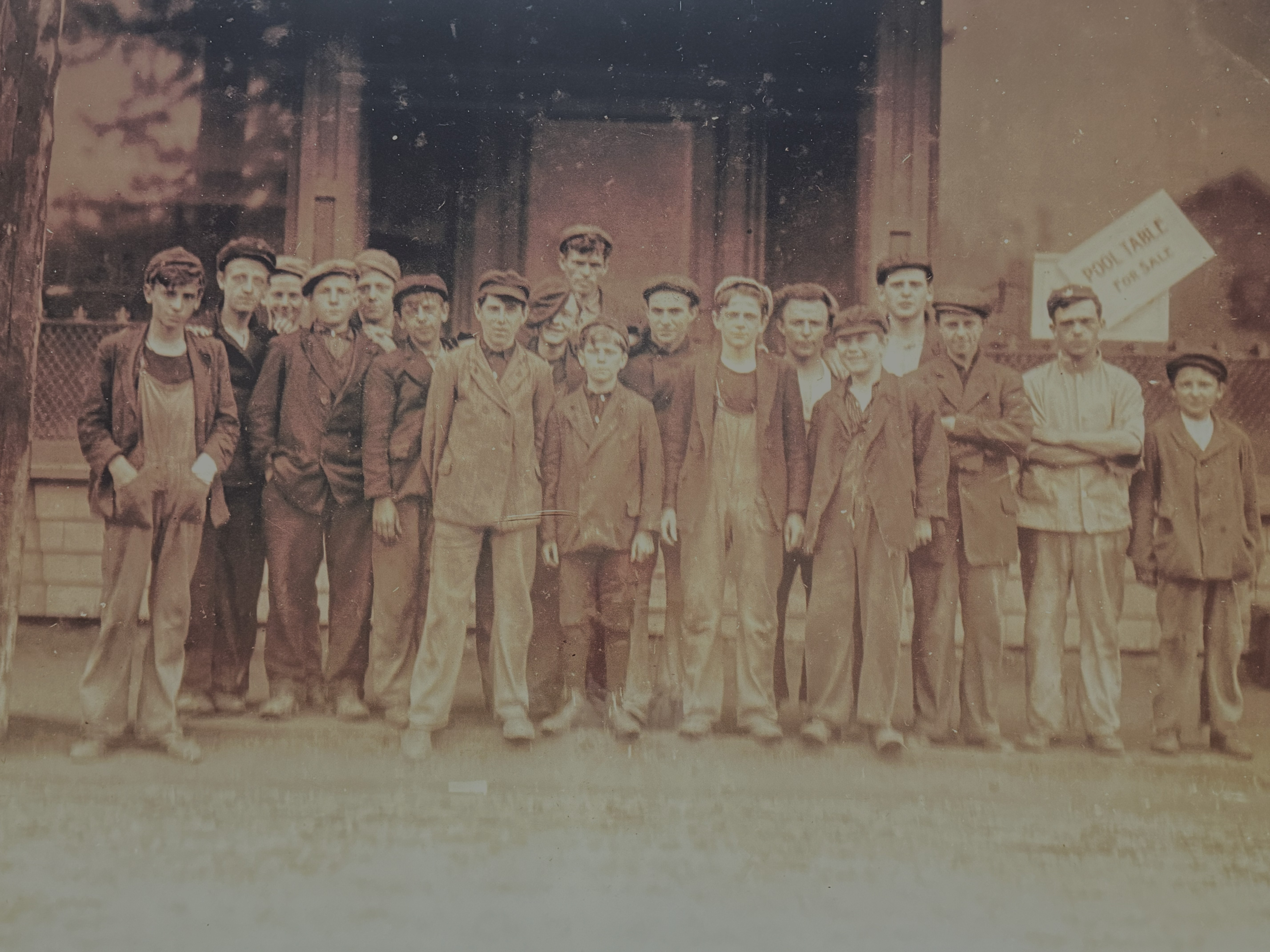
This vintage photograph captures a group of young workers, likely child laborers, posing in front of a building in the early 20th century.
- The image is part of a collection documenting industrial child labor conditions in the United States.
- Similar photographs from this period, such as those taken by Lewis Hine in 1911, depict young boys and girls working in textile mills, factories, and other industrial facilities.
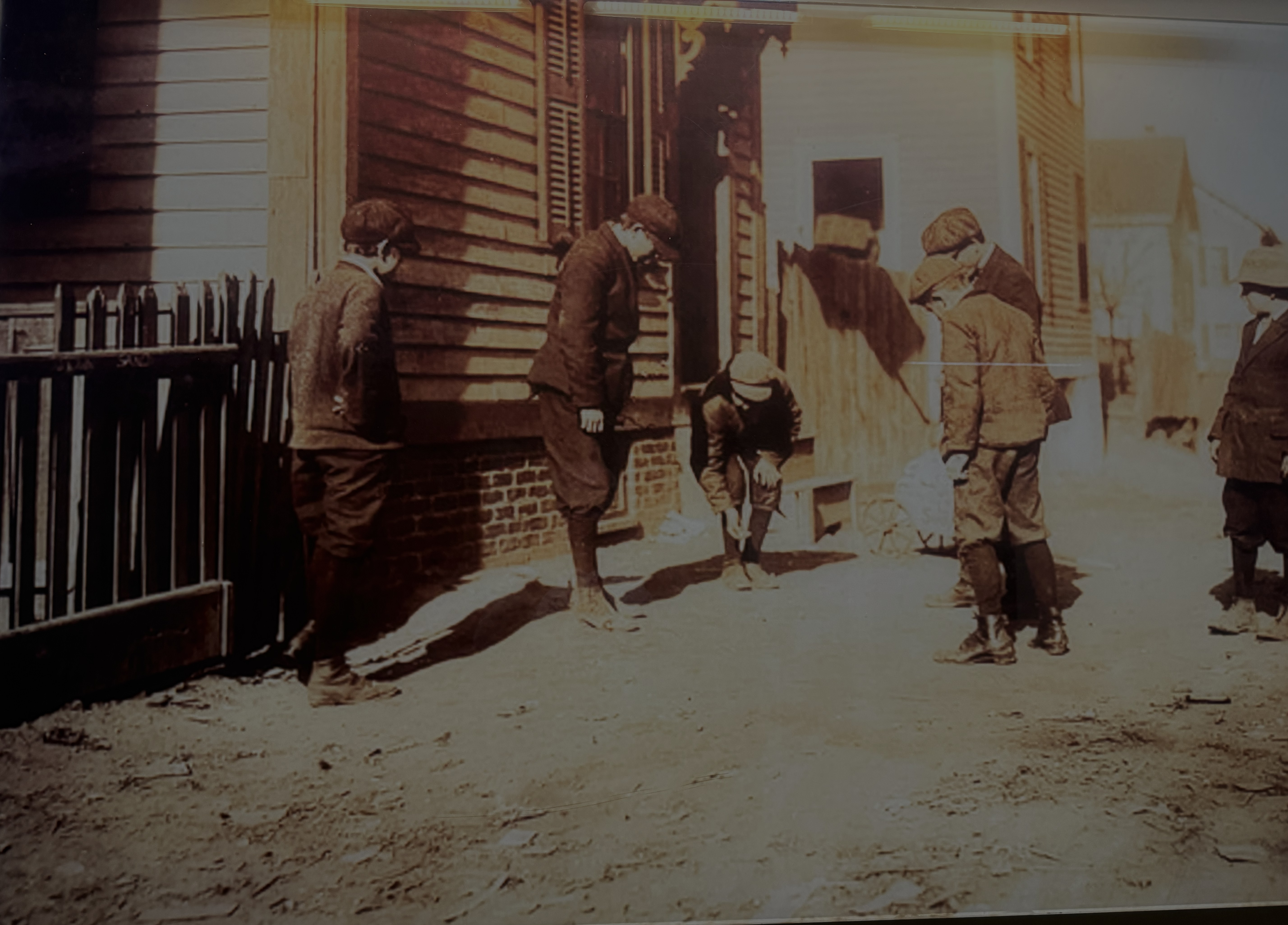
- The clothing style, including caps and jackets, suggests a late 19th or early 20th-century time period.
- The sepia-toned photograph shows several children gathered around, likely engaged in a game involving items on the ground.
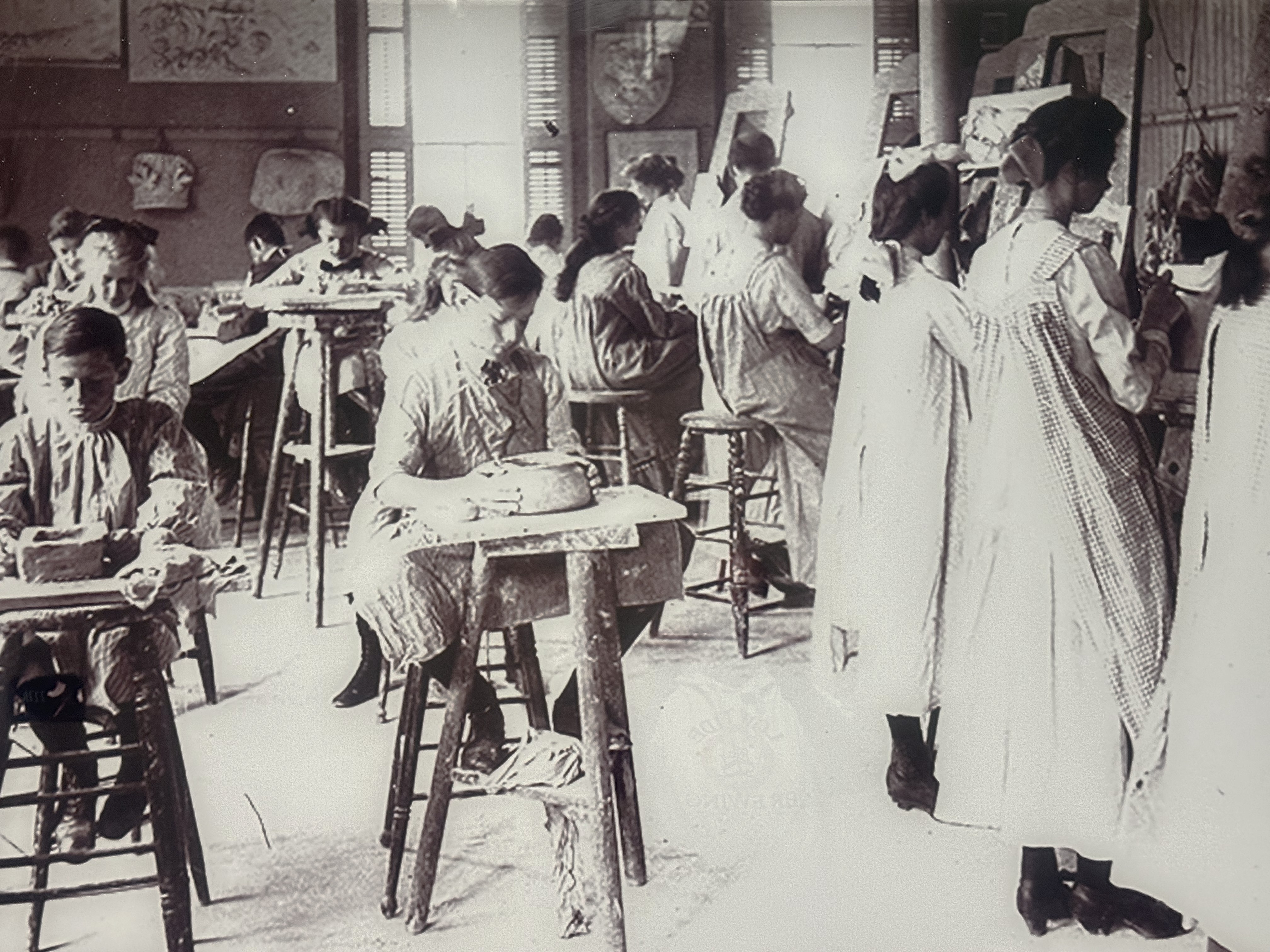
This image depicts an early classroom at the Rhode Island School of Design (RISD).
Historical Context
The photograph likely dates back to the early years of the institution, which was founded in 1877. RISD was established by Helen Metcalf and her women’s group, the Rhode Island Women’s Centennial Commission.
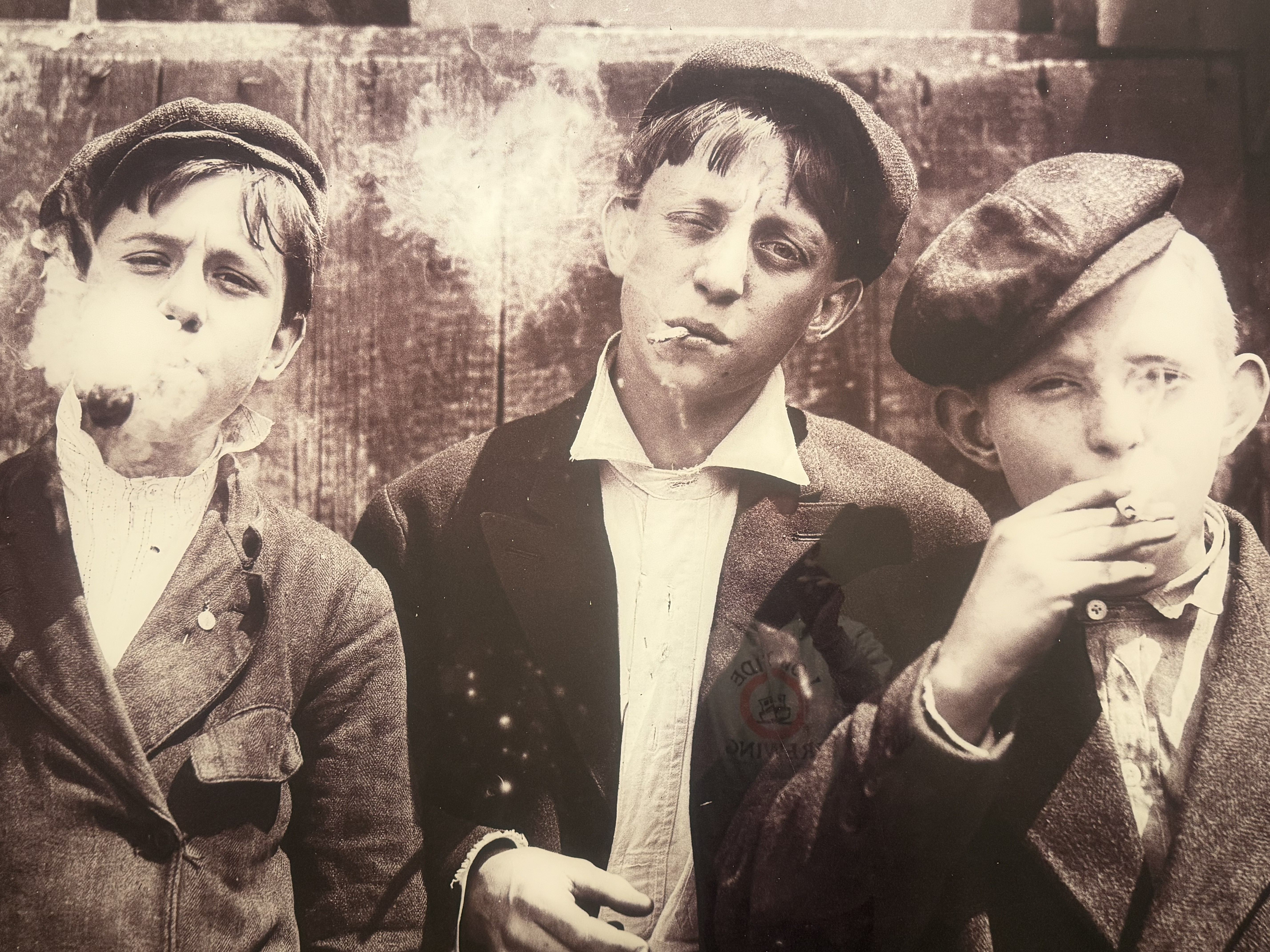
- Photograph Title: Newsboys Smoking, 1910.
- Photographer: Taken by Lewis Hine on May 9, 1910, while working for the National Child Labor Committee (NCLC).
- Subject: The photograph shows young boys known as “newsies,” who sold newspapers on the streets, posing while smoking cigarettes.
- Location: The scene was shot at Skeeter’s Branch in St. Louis, Missouri.
Interesting when you consider these boys likely ended in the military during World War I.
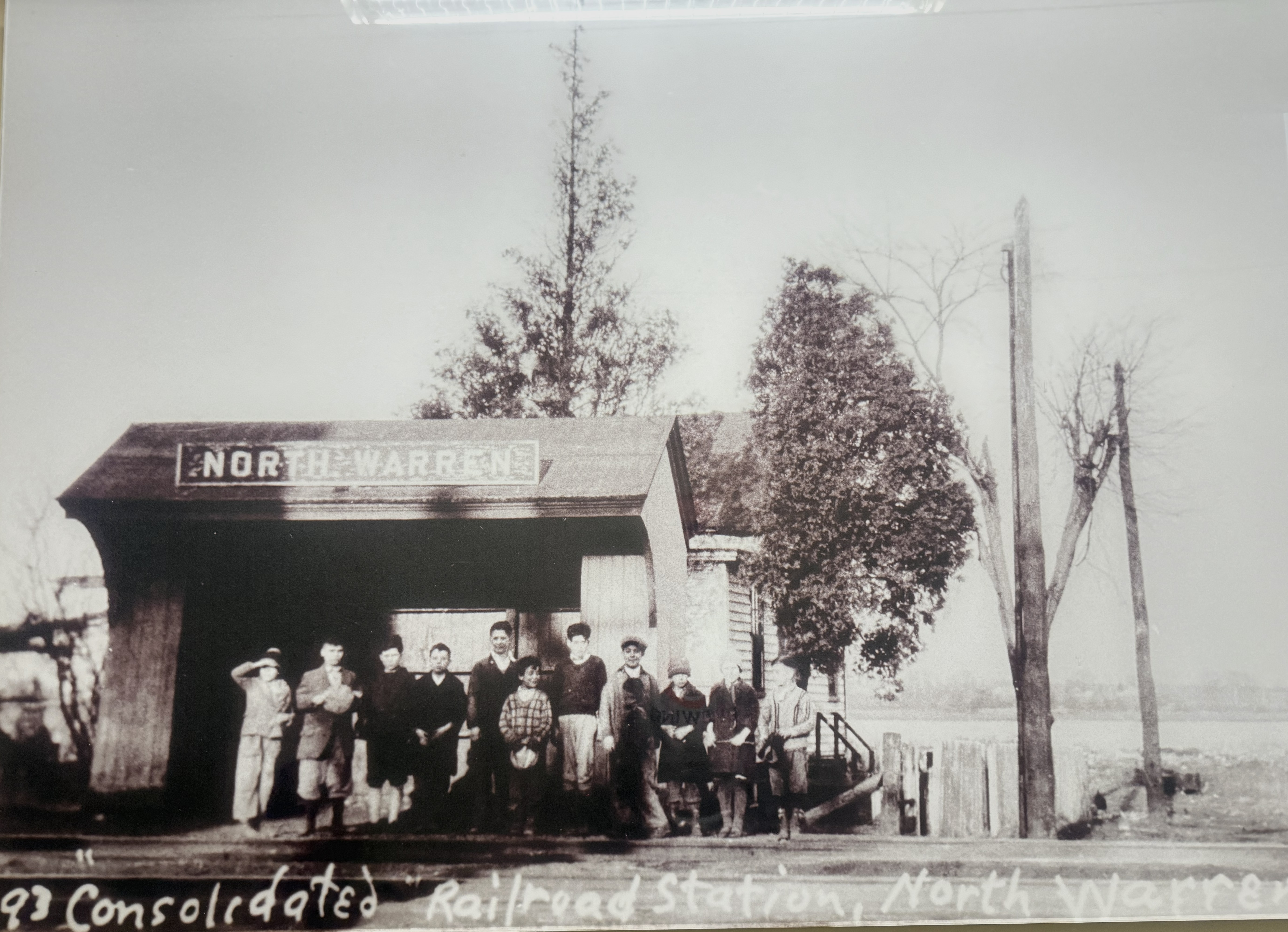
This image captures a historical moment featuring the North Warren Consolidated Railroad Station.
- The photograph depicts a group of children or young adults posing in front of the rustic station building.
- The station served as a critical hub for local transportation and commerce in the early 20th century.
- Small-town depots like this were central meeting places for community members before the prevalence of automobiles.
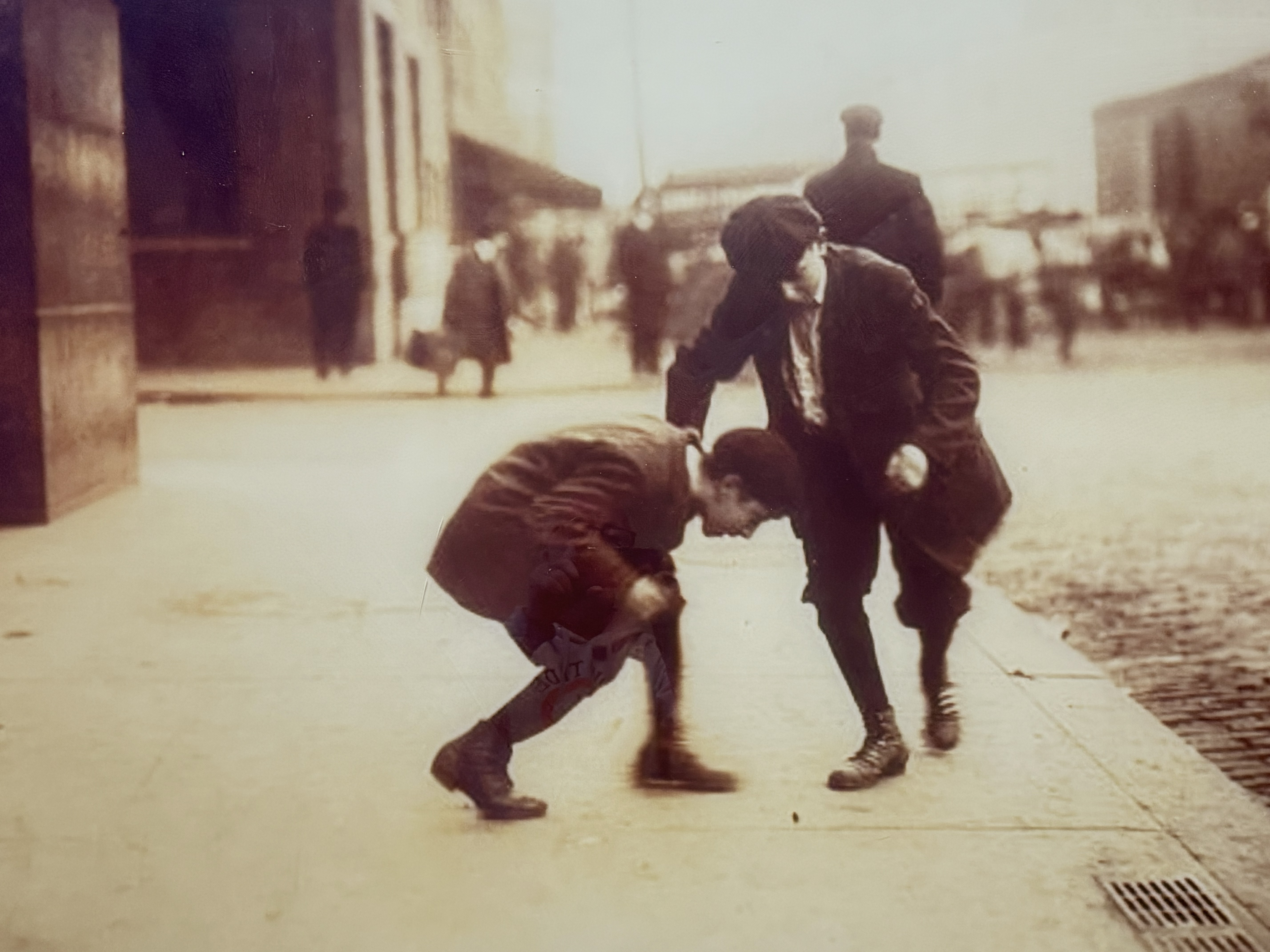
This image captures a moment in time featuring children playing a game known as “pitching pennies” on a city sidewalk.
- Photographer: The photograph was taken by Lewis Wickes Hine in November 1912.
- Location: The scene was recorded in Providence, Rhode Island.
- Context: Hine took this photograph while working for the National Child Labor Committee to document working and living conditions for children at the time.
- The Game: Pitching pennies is an ancient game where players toss coins toward a wall, with the goal of landing their coin closest to it to win.
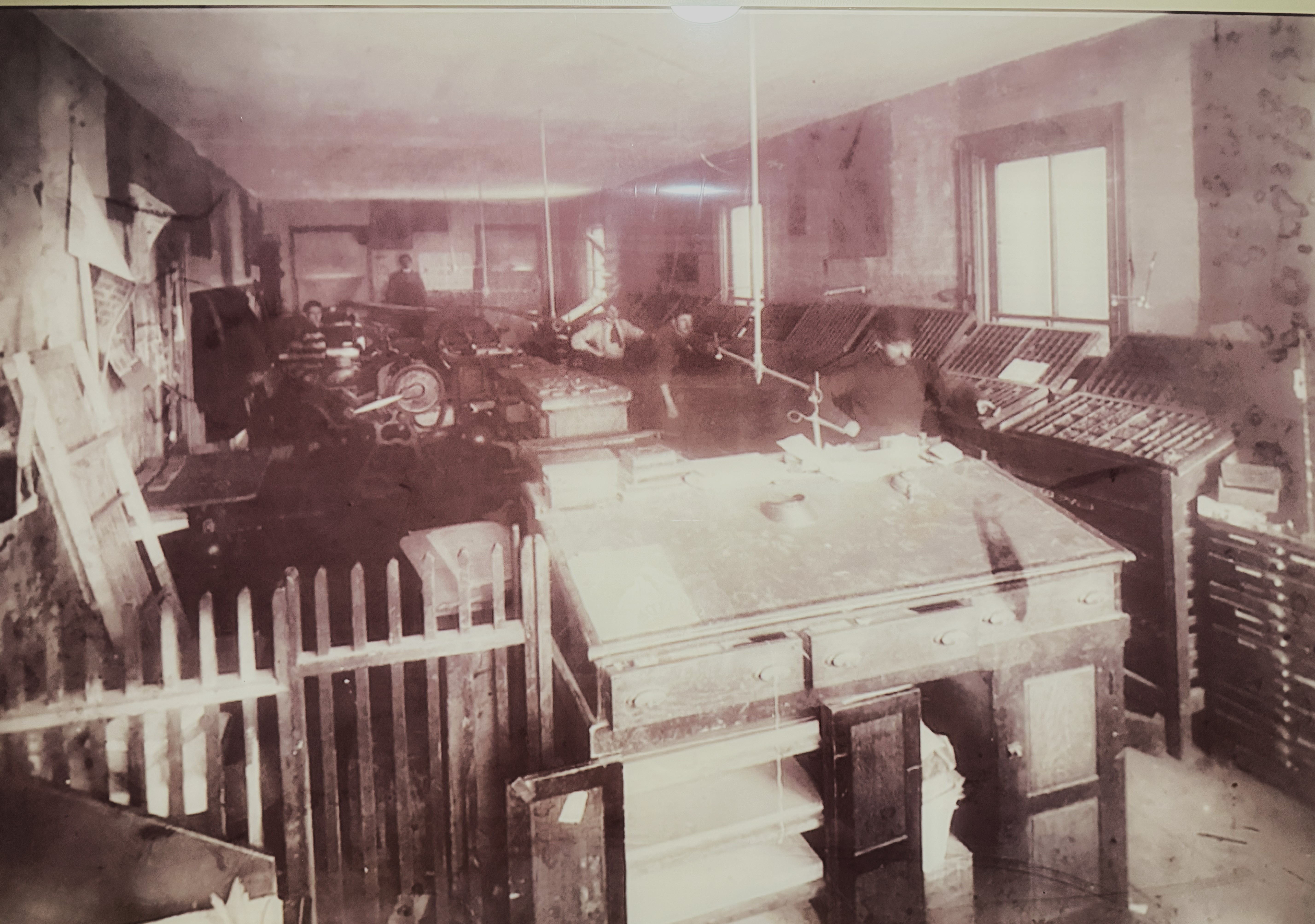
This image depicts an early 20th-century newspaper printing office, likely dating from the 1900s to the 1920s, showcasing the traditional letterpress printing process.
- Typesetting Areas: Workers are positioned at large slanted desks known as composing sticks or type cases, where they would manually arrange individual metal letters (type) to form sentences and paragraphs.
- Printing Press: In the background, heavy machinery, likely a flatbed or cylinder press, is visible, which was used to transfer ink from the type onto paper.
- Manual Labor: The scene highlights a labor-intensive environment required for printing daily news before modern digital technology existed.
- Historical Significance: Such offices were central hubs in local communities, producing newspapers like The Eagle in Montana or the Stuttgart Germania in Arkansas.
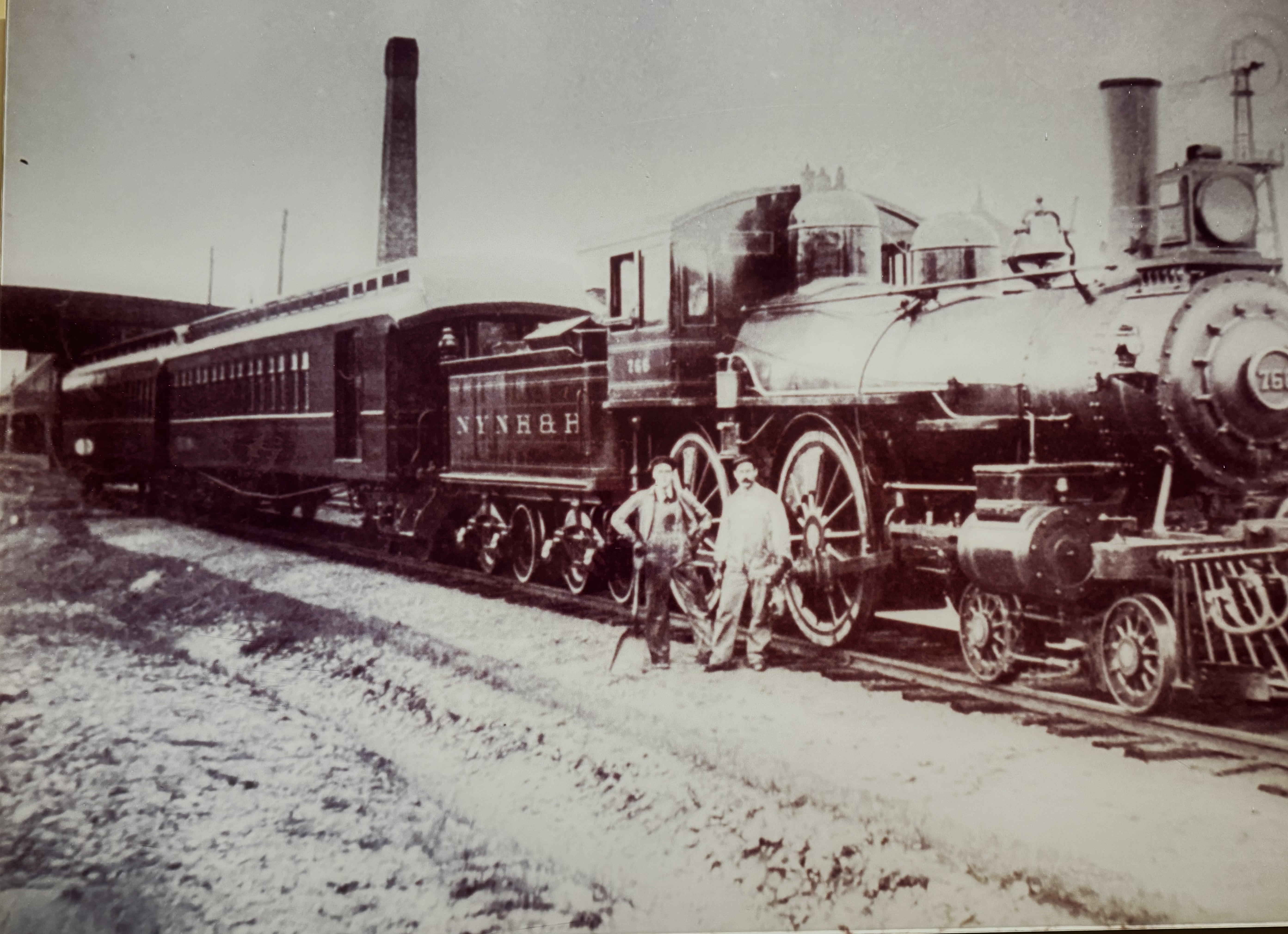
This vintage photograph captures a historic train scene featuring a New York, New Haven & Hartford Railroad locomotive, specifically numbered 76.
- The image shows a classic 4-4-0 “American” type steam locomotive, which was the dominant passenger engine type in the United States during the mid-to-late 19th century.
- Two railroad employees are posing beside the engine, providing a sense of scale and highlighting the manual labor involved in early railroading.
- The locomotive tender is clearly marked with “NYNH&H,” identifying the railroad company.
- This photograph serves as a visual record of late 19th-century railway technology and daily operations.
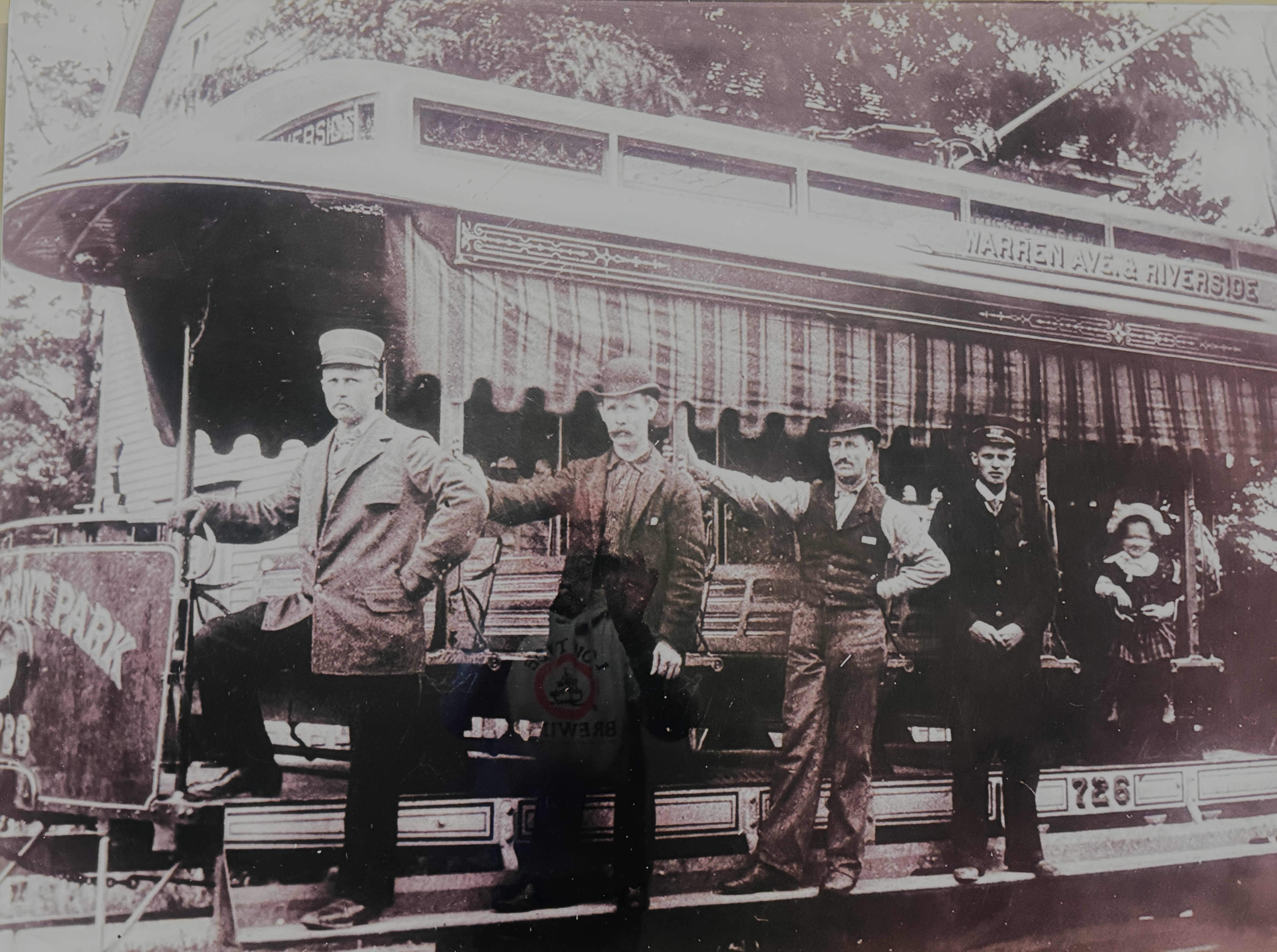
This photograph depicts an early trolley car operating in Rhode Island, likely near the turn of the 20th century, which served as a primary form of public transportation in the state.
- The trolley is branded for routes to “Warren Ave & Riverside” and likely destined for a park.
- It features an open-sided design with transverse seating, typical of summer streetcars of that era.
- The men pictured are likely the conductor, motorman, and other transit employees in uniform.
- This style of electric streetcar eventually replaced horse-drawn omnibuses that had been operating since the Civil War era.
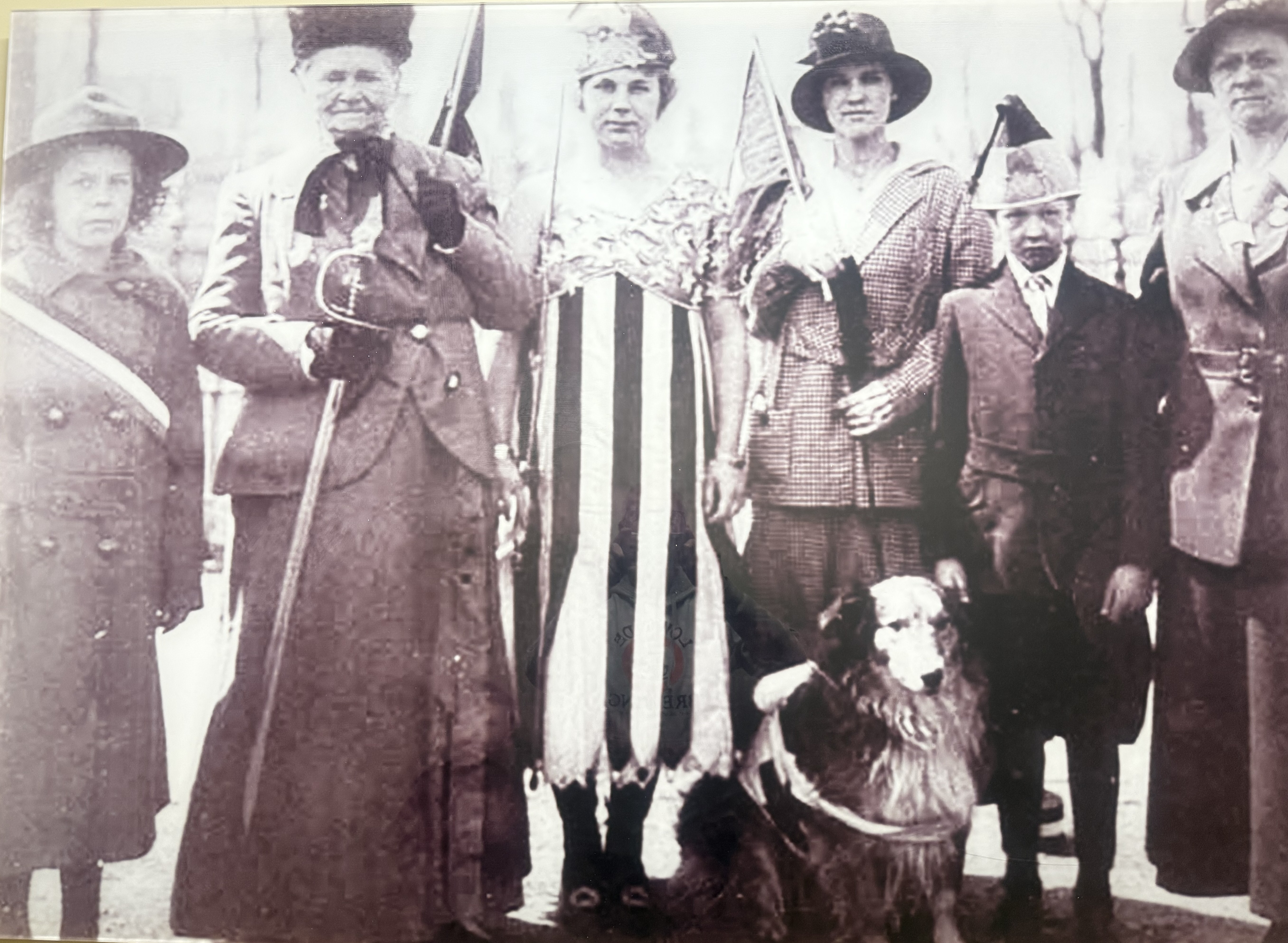
This vintage photograph, likely from the early 20th century, captures a group of people including women in distinctive period attire and a boy with a dog. Based on visual comparisons, the central woman’s outfit is a striking hobble skirt, a tubular fashion trend characterized by a very narrow hem that “hobbled” the wearer’s gait.
Historical Context and Attire
- The Hobble Skirt: This narrow-bottomed skirt was a curious and sometimes scandalous fashion popular between 1908 and 1914. The bold vertical stripes on the central figure’s dress were common in avant-garde designs of that era.
- Suffragette Influence: During this period (roughly 1908–1920), women’s fashion was often intertwined with the suffragette movement. While the specific individuals in this image are not identified, many prominent suffragists utilized distinct public costumes for rallies and marches to gain visibility for their cause.
- Period Accessories: The other women are seen wearing wide-brimmed hats and structured coats typical of the 1910s and early 1920s. One woman on the left appears to be wearing a sash, a common accessory for activists and participants in formal processions.

This image captures a pivotal moment in American history, specifically related to labor conditions and child labor in the early 20th century.
- Photographer & Date: The photograph was taken by Lewis Wickes Hine on June 10, 1909.
- Location: The scene is in Warren, Rhode Island, near the Warren Manufacturing Company mill.
- Context: The image shows young boys arriving for work at 6:00 AM.
- Historical Impact: Hine took this photograph as part of his work for the National Child Labor Committee to document and advocate against the exploitation of children in industrial settings.
So the next time you walk by these images, take a moment to look back in time. You are walking right past history.
 The Writing of Joe Broadmeadow