
If one seeks to be fair in criticizing others, one must acknowledge when you agree with someone as quickly as you are to disagree. To act otherwise is contrary to the spirit of open debate.
While I see little redeeming value in this President’s policies, performance, or persona, sometimes he says something that borders on correctness.
It was during a rambling and wide-ranging interview with the New York Times. Trump waxed on in his customary manner about his rejection of Diversity, Equity, and Inclusion (DEI) and managed to say something quite profound, albeit unintentionally, about the Civil Rights movement.
“Well, I think that a lot of people were very badly treated. White people were very badly treated, where they did extremely well, and they were not invited to go into a university or college.”
He then added,
“I think it was unfair in certain cases. It accomplished some very wonderful things, but it also hurt a lot of people. People that deserve to go to a college or deserve to get a job were unable to get a job. So it was; it was a reverse discrimination…”
Now if you muddle through the poor sentence construction and convoluted logic, there is an element of truth here. And before you take angrily to the keyboard and claim I have joined the opposition, let’s think about what he said.
“White people were very badly treated.” This is a true statement.
They were very badly treated when they marched alongside their black brothers.
They were very badly treated when they fought for the right of blacks to vote.
They were very badly treated when they were killed for supporting actions such as boycotts, voter registration programs, and sit-downs to bring attention to rampant discrimination against minority Americans.
But their treatment doesn’t even approach the level of horrendous treatment afforded minority Americans (and women!) throughout this country’s history. Not even close!
Some argue this level of racism lies in the past, and that is true to some extent. But hidden, less overt, racism is alive and well and we now see evidence of a reemergence of the more overt version.
But this President wants to “whitewash” it.
The best we get from this President is a statement made in support of his disastrous, ill-conceived, and counter-productive attack on DEI that, when examined, shows signs of a truth, by way of his ignorance, not in the way he intended it to be. Many white people were treated badly when they supported civil rights legislation and those who fought against it now seek to repeal the progress.
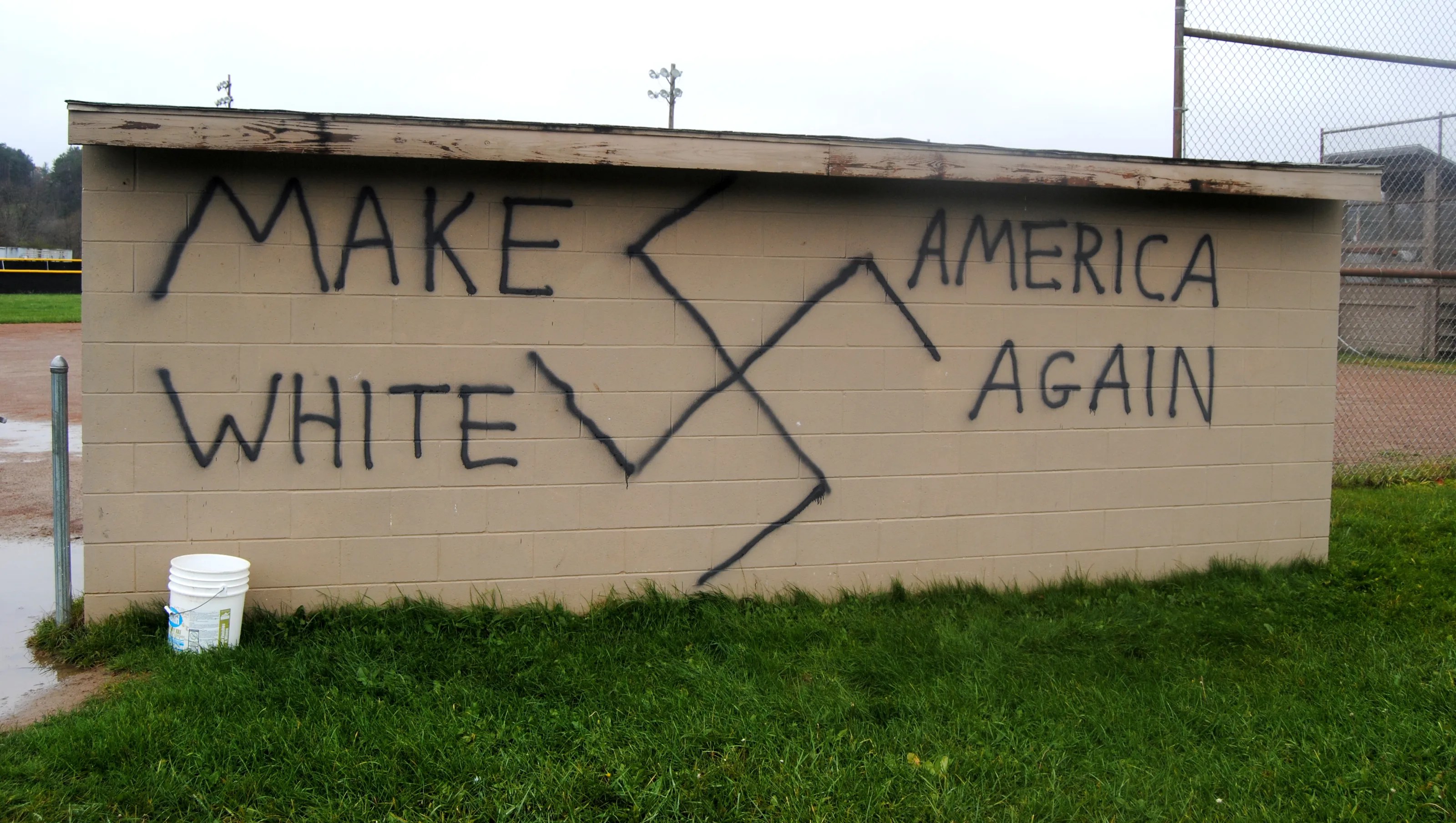
That a sitting President can ignore the history of slavery, Jim Crow laws, segregation, racial violence, denial of basic human right, and reinvigoration of white supremacy movements and claim “whites were very badly treated,” is abhorrent.
The 1964 Civil Rights Act and the Voting Rights Act of 1965 were some of the most effective laws ever enacted to right the wrongs of the past. These equal opportunity laws balanced the inherent unfairness in hiring, housing, voting rights, and educational opportunities seems to have been lost on this man.
Have we made progress? Of course. Have we eliminated the ignorance, inhumanity, and inequity of racism? Clearly not. We may never become color blind, but we can become more aware of our own innate prejudices and work to overcome them.
This President sees a black man placed in a position that once would have been denied that black man and given to a white man because of the color of their skin as unfair. That such discrimination against blacks was acceptable in this country draws no criticism or rational analysis. And his “it did some wonderful things” hardly qualifies as acknowledging both the need and value of the legislation.
His lack of basic historical context and understanding is embarrassing. The fact that any American either supports this or sits idly by and ignores it is tragic. I fear for the very survival of this country.
All you have to do is nothing.
Balancing Equality and Fairness in American Law
Civil rights legislation in the United States has played a pivotal role in promoting equality and protecting individuals from discrimination based on race, color, religion, sex, or national origin. These laws, most notably the Civil Rights Act of 1964, were enacted to address systemic injustices and ensure all citizens have equal access to opportunities. However, as these laws have evolved, so too debates whether certain policies, particularly affirmative action, lead to what some call “reverse discrimination.”
The Civil Rights Act of 1964 is the cornerstone of modern civil rights protections, prohibiting discrimination in employment, education, public accommodations, and more. Subsequent legislation, including the Voting Rights Act of 1965 and the Fair Housing Act of 1968, further advanced the cause of equality by aiming to eliminate barriers to full participation in American society for historically marginalized groups.
To address persistent inequalities, affirmative action programs were developed to proactively seek the inclusion of minorities and women in education and employment. Supporters argue these measures are necessary to correct historical disadvantages and foster diversity. Critics, however, claim that such policies can result in “reverse discrimination,” where individuals from majority groups feel they are unfairly treated or denied opportunities because of their race or gender.
The term “reverse discrimination” refers to the perception or reality that affirmative action or similar policies discriminate against members of a dominant or majority group. Legal challenges have reached the Supreme Court, with notable cases such as Regents of the University of California v. Bakke (1978), where the Court ruled that while affirmative action was constitutional, strict racial quotas were not. The debate continues, reflecting differing views on justice, fairness, and the best way to achieve an equitable society.
Civil rights legislation remains essential for protecting individual freedoms and promoting equal opportunity. The ongoing discussion about reverse discrimination highlights the complexities involved in creating laws that are both effective and fair. As society continues to evolve, so too will the legal and ethical considerations that surround these important issues.
One inevitably sees this attack on DEI and Civil Rights laws as a ploy to return to the good old days when whites weren’t “very badly treated.” All that was missing from his diatribe was “the South will rise again.”
If you’ve ever wondered what happened in Germany that gave rise to Nazism, you are a but a step away from experiencing it. He’s given you an enemy. He’s made you fear them. He’s put the blame for all the country’s problems on them. And he will paint all who oppose his actions to “save” the country as anarchists.
 The Writing of Joe Broadmeadow