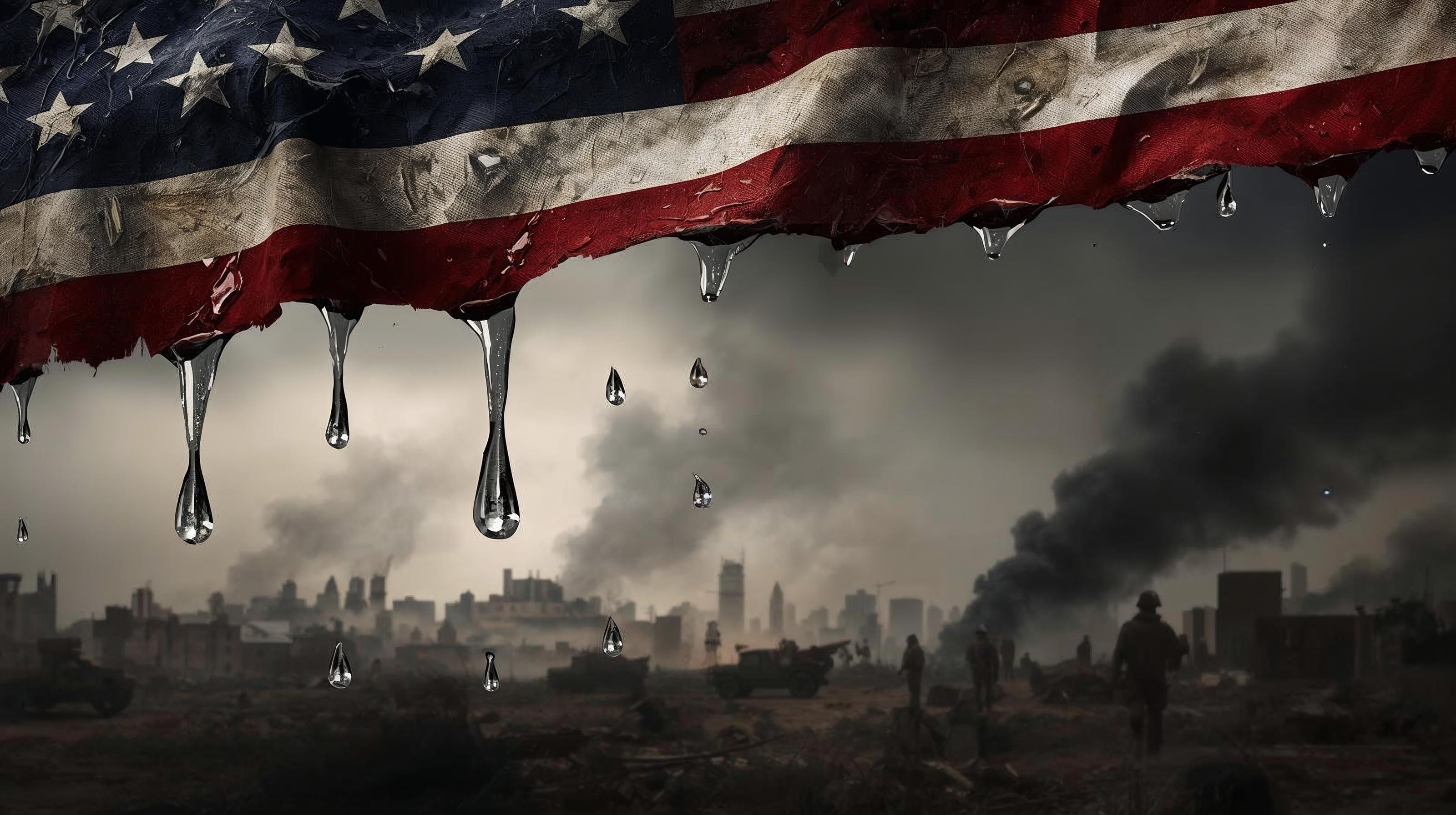
Now the President intends to send the National Guard into Memphis so they can “fix it like we did DC.” This wasn’t his original plan; he did a T.A.C.O. in Chicago, no surprise there. Guys with a brain like J.D. Pritzker scare him.
The “fix it like DC” requires some huge assumptions about the effectiveness of the deployment, but, for the sake of argument, let’s say there’s been a reduction in crime because of the presence of the Guard and additional law enforcement resources.
That would be a positive. But what is the long-term plan? Do we flood the streets of America with military force as our long-term crime reduction strategy?
In 1972-1973, the Kansas City Police Department conducted a landmark study about police deployment. The study had several goals.
- Would citizens notice changes in the level of police patrol and crime?
- Would different levels of visible police patrol affect recorded crime or the outcome of victim surveys?
- Would citizen fear of crime and attendant behavior change as a result of differing patrol levels?
- Would their degree of satisfaction with the police change?
The design took three different police beats in Kansas City and varied patrol routines in them. The first group received no routine patrols. Instead, the police responded only to calls from residents. The second group had the normal level of patrols, while the third had two to three times as many patrols.
The experiment had to be stopped and restarted three times because some patrol officers believed the absence of patrols would endanger citizens. This full study went twelve months, from 1 October 1972 to 30 September 1973.
Victim surveys, reported crime rates, arrest data, a survey of local businesses, attitudinal surveys, and trained observers who monitored police-citizen interaction were used to gather data. These were taken before the start of the experiment (September 1972), and after (October 1973), giving ‘before’ and ‘after’ conditions for comparison.
The results of the study;
- Citizens did not notice the difference when the frequency of patrols was changed.
- Increasing or decreasing the level of patrol had no significant effect on resident and commercial burglaries, auto thefts, larcenies involving auto accessories, robberies, or vandalism–crimes.
- The rate at which crimes were reported did not differ significantly across the experimental beats.
- Citizen-reported fear of crime was not affected by different levels of patrol.
- Citizen satisfaction with police did not vary.
The Kansas City Police Department concluded that routine preventive patrol in marked police cars has little value in preventing crime or making citizens feel safe and that resources normally allocated to these activities could safely be allocated elsewhere.
A significant factor derived from the study was that crime prevention was more highly dependent on the willingness of citizens to report suspicious and/or criminal behavior to police than on the levels or types of patrol.
(Kelling, G.; Pate, A.; Dickman, D.; Brown, C (1974). “The Kansas City preventive patrol experiment: A technical report”. Police Foundation.
Braga, Anthony (27 June 2012). “Hot spots policing effects on crime” (PDF). The Campbell Collaboration. The Campbell Collaboration. p. 23. Archived (PDF) from the original on 11 January 2017. Retrieved 10 January 2017.)
There have been targeted programs of increased police presence (Operation Hot Pipe in San Diego during the crack cocaine epidemic) that have been successful. However, all were characterized by intense planning, officer training, a defined implementation and scope, and a limited duration. (https://popcenter.asu.edu/content/benefits-and-consequences-police-crackdowns)
Both pre- and post-implementation analyses were used to evaluate the process and adjust future projects. None of that is taking place with the deployment of the National Guard.
What does this tell us? A great deal.
Anecdotal data (or more accurately, public proclamations) showing a positive effect on reducing crime with the deployment of National Guard and other resources to aid local law enforcement is incomplete at best and political confirmation bias at worst.
Now I am certain those who support this approach will say it makes people feel better when they see the guard on the street. So does morphine when you break your leg, but the leg is still broken and will take proper treatment and a long time to heal. The morphine eventually wears off.
Deploying the National Guard is an improperly prescribed analgesic applied to a false perception of rising crime. It is a crisis with no basis in fact. And even if it has some positive effect in certain areas, it is not a long-term solution.
Until one is willing to take a three-pronged approach to deterring crime– strong, effective, and equitable enforcement, available economic opportunities, and providing access to solid education and vocational programs –a single-focus approach will not reduce crime in the long run.
But that doesn’t lend itself to as pithy a slogan as “Lock’em up and throw away the key.” We’ve done that to an entire class of individuals (look into minority incarceration rates and US incarceration rates). All that’s accomplished is creating a new (and lucrative) industry of private prisons.
I would argue our abandonment of public education to the false and inherently biased promise of “school choice” is a fundamental cause of inequity in our country and a significant contributing factor to criminal behavior in those who don’t have the luxury to “choose” their school.
None of this is news to anyone with any background in criminal justice. None of this is absent from the mountains of information available to criminal justice agencies and the political entities that control them.
Where it is absent is from the current management team at the Department of Justice and in the Office of the President.
The choice to have National Guard troops patrolling the streets of our cities is optics, pure and simple. And it is a lesson in the propagation of propaganda and unadulterated politics influencing decision-making.
Contrary to all valid measures of crime conclusively showing it is decreasing, the President contends that we are in a tidal wave of violence and criminality. Strange how he focuses on Democratic led cities and ignores issues in the red states.
The reason is apparent and the manner transparent.
Invent a problem, demonize a convenient entity as the cause, focus your solution on those in the political opposition, and declare victory after a few weeks.
All this amounts to wasted resources that could have been used to reduce crime (which already was in decline) in a more effective and lasting manner.
One has to wonder if this is more about making people fearful about turning out to vote in the mid-terms or, more troubling, creating a false crisis, an opportunity to declare martial law, and a suspension of basic human rights than it is about any concern over crime.
Open your eyes, America.
 The Writing of Joe Broadmeadow