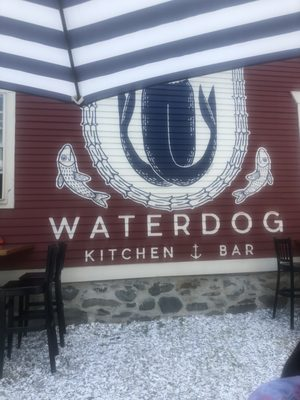
We recently had dinner at the Waterdog Bar in Warren, formerly the Nathaniel Porter Inn. The food and wine, of course, were excellent, but this is not a restaurant review, although it deserves five stars.
The building, built two hundred and thirty-five years ago in 1795, was named for a thirteen-year-old relative who fought at the Battle of Lexington. Read that again, fought at the age of thirteen in the opening salvo of the Revolutionary War. An age where today we might worry about leaving him alone in a house with a security system, cameras everywhere with remote access, and voice-capable devices that can call 911 and report the GPS coordinates of the address.
But that is also not the point of the story.
What struck me was that some of the original windows still adorn the building, Leaded glass windows that distort the view due to the imperfections of the 18th-century process. I wondered, because that’s the way my mind works, whose eyes once looked out over those two hundred and thirty-five years onto the streets I now looked at.
In 1795, Warren was very much involved in the slave trade and other maritime pursuits, both profitable and disastrous, departing from the port. (https://smallstatebighistory.com/caleb-eddy-african-slave-voyage-gone-awry/)
So it is reasonable to assume many a sailor, fat with the profits of their journey, spent time quaffing an ale or rum, trying to charm some buxom barmaid, and looking out on the very same streets. ( I’ve been waiting for the moment when I could include “buxom barmaid” in one of my pieces.)
It would be cool if, by some form of technology, one could look in those windows and behold the scene or look out from the very same windows and see the sights of colonial America and the people who once strode these streets.
Now that would be magic.
 The Writing of Joe Broadmeadowm