“History doesn’t repeat itself, but it often rhymes”
Samuel Langhorne Clemens
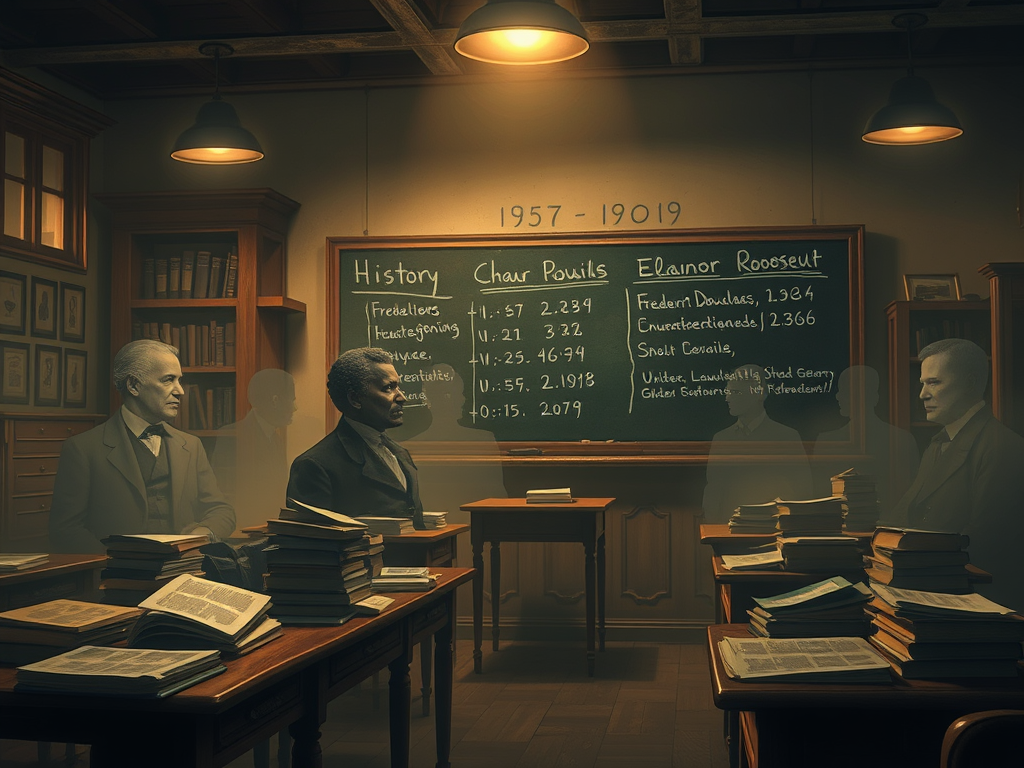
There is a powerful movement in this country to whitewash American history.
Portraying slavery as arguably beneficial to the enslaved.
Claiming the victories and successes of The Civil War, World War I, World War II, Korea, Vietnam, Afghanistan, and Iraq represent the totality of the noble cause without the realities of war.
Proclaiming the scourge of racism and discrimination ended with the surrender at Appomattox and that Jim Crow Laws and other continuing examples of racism were outliers in the road to equality.
Revisionary versions of the destruction and violence of January 6, 2021, portraying the actions of the participants as a peaceful protest to protect the electoral process.
What we now teach as history, or what some would have us teach, is a return to the plain vanilla stories of the cold war told only from our perspective as the victor absent the context of reality.
We seek to embrace a Walt Disney version of our past.
Let me give you an example. In the Disney movie version of Pinocchio, Jiminy Cricket, the deuteragonist of the story, is a happy compatriot acting as Pinocchio’s conscience. Everyone sings and dances and learns to be a better person.
In the original Pinocchio novel by Carlo Collodi, Pinocchio kills Jiminy Cricket with a mallet to shut him up. Cricket returns as a ghost to continue his function as Pinocchio’s conscience.
The story is essentially the same: abiding one’s conscience can be a powerful guide in life. However, one strips away the realities of life and its consequences while the other illustrates them.
And so it is with history.
In 1938, President Roosevelt and the US Intelligence community became aware of the existence of the concentration camps in Germany and the wholesale violence against the Jews. By 1942, they were aware of the systematic annihilation of the Jews.
Many documents and studies show Roosevelt was concerned about taking actions to interdict such pogroms out of a concern that many Americans would rebel against risking the American military to protect Jews. Attacking the German military was acceptable. Stopping the Holocaust was questionable. Anti-semitism was alive and well.
In July 1941, four months before the attack at Pearl Harbor, the United States froze all Japanese assets in the US. In August, 1941 the US cutoff all oil and gasoline exports to Japan. At that time, this accounted for 80% of the amount of oil and gasoline imported by Japan.
The Japanese attack on Pearl Harbor was a failed attempt to force the US to negotiate peace. They hoped by destroying the repair facilities at Pearl and sinking several aircraft carriers, they’d limit the American ability to respond. The goal failed because the carriers were at sea and the repair facility only partly damaged.
The attack is an example of the Japanese miscalculating the US reaction.
One could argue these were acts of war. Or one could argue they were reasonable reactions to Japanese aggression in Indo-China or the aggressive actions by the United States. However one chooses, having an unvarnished understanding of what happened is critical to make an intelligent evaluation. And, most importantly, to learn where the mistakes were made and why.
Why does this all matter? We study history to learn from it, to understand the currents and motivations driving events. Each of these steps escalated this situation in the Pacific and led to war.
By overlooking the full story and just teaching about Pearl Harbor as a totally unexpected attack, we fail to educate our future leaders on the necessity of looking beyond the immediate and evaluating the ramifications of their decisions as best they can.
When we rattle our sabers and point to our successes in these conflicts without recognizing the horrors of warfare, or ignoring the abominations of the Final Solution, or our unlawful internment of American citizens simply because of their lineage, we doom ourselves to repeat these mistakes.
Here’s a quote about the horrors of war. In our own history, no one has killed more Americans than our fellow Americans. Something the study of history illustrates.
“I confess, without shame, that I am sick and tired of fighting — its glory is all moonshine; even success the most brilliant is over dead and mangled bodies, with the anguish and lamentations of distant families, appealing to me for sons, husbands, and fathers … it is only those who have never heard a shot, never heard the shriek and groans of the wounded and lacerated … that cry aloud for more blood, more vengeance, more desolation.
William Tecumseh Sherman, Civil War General.
Abraham Lincoln, in responding to an editorial by Horace Greely in the New York Tribune called “The Prayer of Twenty MIllions” in which Greely criticized Lincoln for not executing the provisions of the Second Confiscation Act which empowered the President to proclaim the freedom of all slaves in area under rebellion, responded with an oft-misunderstood quote.
“My paramount object in this struggle is to save the Union, and is not either to save or to destroy slavery. If I could save the Union without freeing any slave I would do it, and if I could save it by freeing all the slaves I would do it; and if I could save it by freeing some and leaving others alone I would also do that. What I do about slavery, and the colored race, I do because I believe it helps to save the Union; and what I forbear, I forbear because I do not believe it would help to save the Union.”
President Abraham Lincoln
Some claim this as proof Lincoln never intended to free the slaves or didn’t care about slavery. But the truth is more nuanced and complicated. What Lincoln did was offer the priority of saving the union as necessary before any real act to abolish slavery would succeed.
Such background comes from diving in deep, not whitewashing the unpleasant reality of the time.
The future of this country and the republic therein depends on a clear and unmitigated examination of history. We need to appreciate all the nuances and shadows, all the complications and obfuscations. Most importantly, we must remember to always value truth, no matter how painful.
I fear if we allow a Disneyesque approach to history, if we teach everything we did was good and honorable and everything the others did was evil and wrong, we will not only repeat the mistakes of the past but we will exceed them.
“If you tell a lie big enough and keep repeating it, people will eventually come to believe it. The lie can be maintained only for such time as the State can shield the people from the political, economic and/or military consequences of the lie. It thus becomes vitally important for the State to use all of its powers to repress dissent, for the truth is the mortal enemy of the lie, and thus by extension, the truth is the greatest enemy of the State.”
Joseph Goebbels
 The Writing of Joe Broadmeadowm
Important concept which needs to be taught, studied, and learned. Thank you, Joe B.
LikeLike
Ignorance of history is a curse
LikeLike