In 1755, Benjamin Franklin wrote to the Pennsylvania Assembly that “those who would give up essential Liberty, to purchase a little temporary Safety, deserve neither Liberty nor Safety.”
He was arguing about frontier defense and a fight over taxes, not doorbells. Still, he would recognize the transaction we have been making ever since, because we have been making it at scale, one app permission at a time.
Consider how the deal was pitched. Nobody asked us to surrender liberty. We were offered a free service, a faster checkout, and a weather forecast that knows our street.
The price was a single checkbox labeled “I Agree.”
A 2008 study estimated that reading every privacy policy we encounter would take roughly 200 hours a year. Nobody has those hours. Most of us have a Tuesday evening and a glass of wine, so we click, and the fine print does the rest.
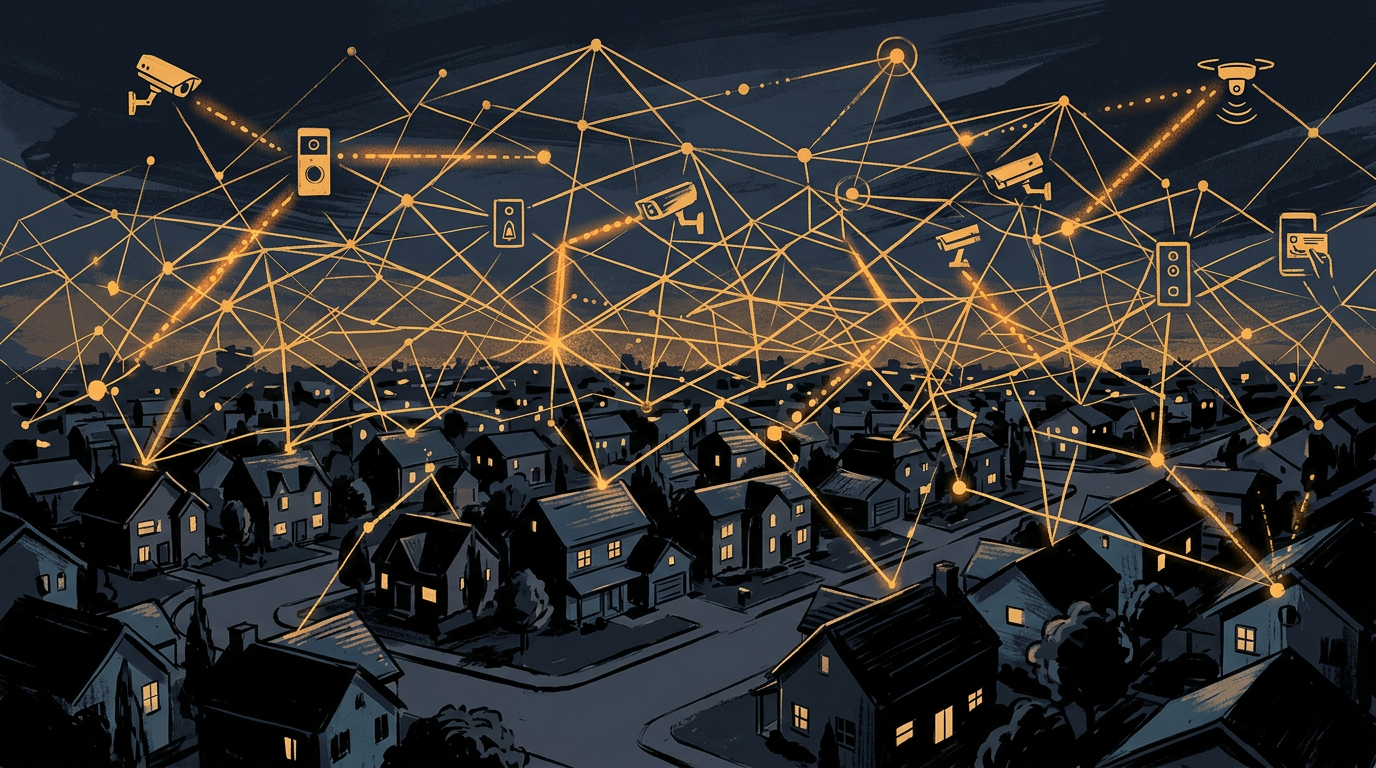
Then came the doorbell. Millions of households now own a camera that films the sidewalk, the neighbor’s driveway, and the mail carrier—not to mention you, your kids, your dog, and your trash can overflowing with Seagrams and Beck’s.
Many of these devices have been connected to local police through partnership programs, and some include facial recognition.
Homeowners bought them to see who was on the porch. Somewhere along the way, the porch became a sensor network, and the neighborhood became a database with a doorbell attached.
License plate readers followed the same arc. Cameras mounted on poles and patrol cars photograph every car that passes, record the plate, time, and location, and store the results.
The vendor markets the system as a crime fighter, and often it is one. But a system that logs where every car goes every day is, by definition, a system that knows where your car was on the morning you visited a clinic, a union hall, or a church that your neighbors might find controversial.
The information does not stay with the police. It gets shared, sold, and searched, often without anyone asking whether the search made sense.
Our forefathers had a word for general searches like this. They called them “writs of assistance,” and they hated them enough to write the Fourth Amendment. Today we call them “data analytics” and install them voluntarily.
The colonists at least had the decency to be annoyed by the king’s men at the door. We invited the vendor in, gave him our location history, and asked him to remember our preferences.
The second great security bargain of this century came after September 11, 2001, when the Patriot Act was passed in a hurry and signed into law that October.
Some of its surveillance provisions were defended as temporary. Temporary things have a habit of getting renewed. In 2013, Edward Snowden disclosed that the National Security Agency had been collecting bulk telephone records from millions of Americans.
Officials argued that the program was lawful, necessary, and carefully limited. Congress and the courts argued about it for years. Most Americans, to their credit, were angry, and then they bought new phones with better cameras and went back to sharing everything.
That is the cruel genius of the arrangement.
Technology does not need to crush liberty in one dramatic act. It only needs to make the surrender feel like an upgrade. The surveillance is wrapped in convenience, so the people most likely to object are the same people who asked for the feature. Dissent starts to sound like nostalgia for the flip phone.
I am not suggesting that police should never use technology, or that a camera has never solved a case. Investigators have identified suspects, cleared innocent people, and found missing children with the help of digital evidence. My concern is narrower and more practical.
Safety tools need rules written before they are deployed, not after the data piles up. Retention limits, audit trails, and independent oversight are not obstacles to public safety. They are how a free society knows that its safety tools are working for it rather than on it.
Franklin’s line also warns about the people who make the trade. “Those who would give up” describes choice, not coercion. We are not losing liberty to an occupying army. We are handing it over, voluntarily, in exchange for a little temporary safety and a lot of convenience.
The uncomfortable part is that the convenience is real and the safety is sometimes real too. That is what makes the bargain so easy to accept and so hard to notice.
So here is my modest proposal, written in a spirit that Franklin would recognize as practical.
Before you accept the next update, read the one sentence that describes what data it collects and who gets it.
Before you install the next camera, ask who else can search its footage, and for how long.
Before you vote for the next surveillance “pilot program,” ask what happens to the pilot after it succeeds—when it becomes permanent.
Technology has fulfilled Franklin’s warning with remarkable efficiency. It gave us the safety, mostly temporary, and it took the liberty, mostly without a receipt. We do not have to accept that outcome. We only have to stop clicking “I Agree” long enough to notice what we are agreeing to.

Leave a Reply