
This Report Defends It With Bad History.
By Joseph Broadmeadow
For twenty years I carried a badge and an oath to the Constitution—the whole document, including the sixteen words of the First Amendment that begin “Congress shall make no law respecting an establishment of religion.”
So I read the Trump administration’s 224-page Religious Liberty Commission report with more than passing interest. Parts of it describe a real problem. Most of it should worry anyone who actually wants religion protected.
Start with what the report gets right. Officials sometimes overreach—telling a child she can’t pray quietly in a cafeteria, wearing a mask that says “Jesus loves me,” or running a Bible study a secular club could run. That is already unconstitutional. Private religious expression is protected, and it should be. Had the commission stopped there, I’d have signed the cover letter.
But it doesn’t stop there. The report sets out to demolish “the wall of separation” as a myth—and to do it, the history gets cooked.
Yes, the phrase isn’t in the Constitution; it comes from a 1802 Jefferson letter. But the report blames modern church-state separation on dead European philosophers—Nietzsche, Foucault, Sartre—even though the Supreme Court decisions it dislikes came down before any of those thinkers had real currency in an American courtroom.
It drags up that a justice who wrote a 1947 opinion had once belonged to the Klan, as though that settles what the Constitution means. And it quietly walks past the founders it can’t use.
Here are the ones it skipped. Article VI of the Constitution bans any religious test for public office. In 1797, a Senate full of founders unanimously ratified the Treaty of Tripoli, which states plainly that the government of the United States is “not, in any sense, founded on the Christian religion.”
It was signed by John Adams—the same John Adams the report is happy to quote when he’s useful. You can’t cite a man as a founding authority on Tuesday and pretend you never met him on Wednesday.
Then there’s the tell. This is a commission of eleven Christians and one Orthodox Jew—no Muslim, no Hindu, no secular American—deciding what “religious liberty for all” means. And sure enough, after 224 pages, nearly every victim shares the authors’ faith. A report that cannot bring itself to name a single Muslim who was denied a prayer rug or a nonbeliever with a stake in a neutral government isn’t holding up a mirror to America. It’s holding up a mirror to itself.
Now look at what they actually want built.
Justice Department “guidance” rewriting the meaning of the Establishment Clause. A religious-liberty task force. Government hotlines to report your neighbors and your school board. Judges chosen for the “courage” to rule the right way.
I spent a career around government offices created to police one kind of grievance. I know exactly what they do: they find that grievance everywhere they look, and they miss everything else. A hotline run by an administration that has already announced which religion is under siege will not protect the inmate denied his Ramadan meal. It will protect the majority and call that liberty.
Real religious freedom is the opposite of a government that picks sides. It’s George Washington writing to the Jewish congregation in Newport, saying this government gives “to bigotry no sanction, to persecution no assistance,” and promising everyone would sit in safety under his own vine and fig tree. Everyone. The fig tree is for all of us, or it’s for none of us.
I learned on the job that the Constitution protects you best precisely when it protects the person you like least. A report that defends only the faith of its authors isn’t defending that Constitution. It’s rewriting it—and asking the rest of us to salute.
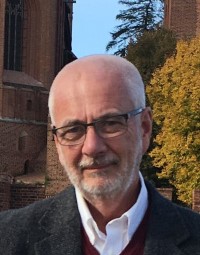
Joseph Broadmeadow is a retired captain of the East Providence Police Department and a novelist and publisher based in Warren, Rhode Island. He writes on law, policing, and public affairs.

Leave a Reply