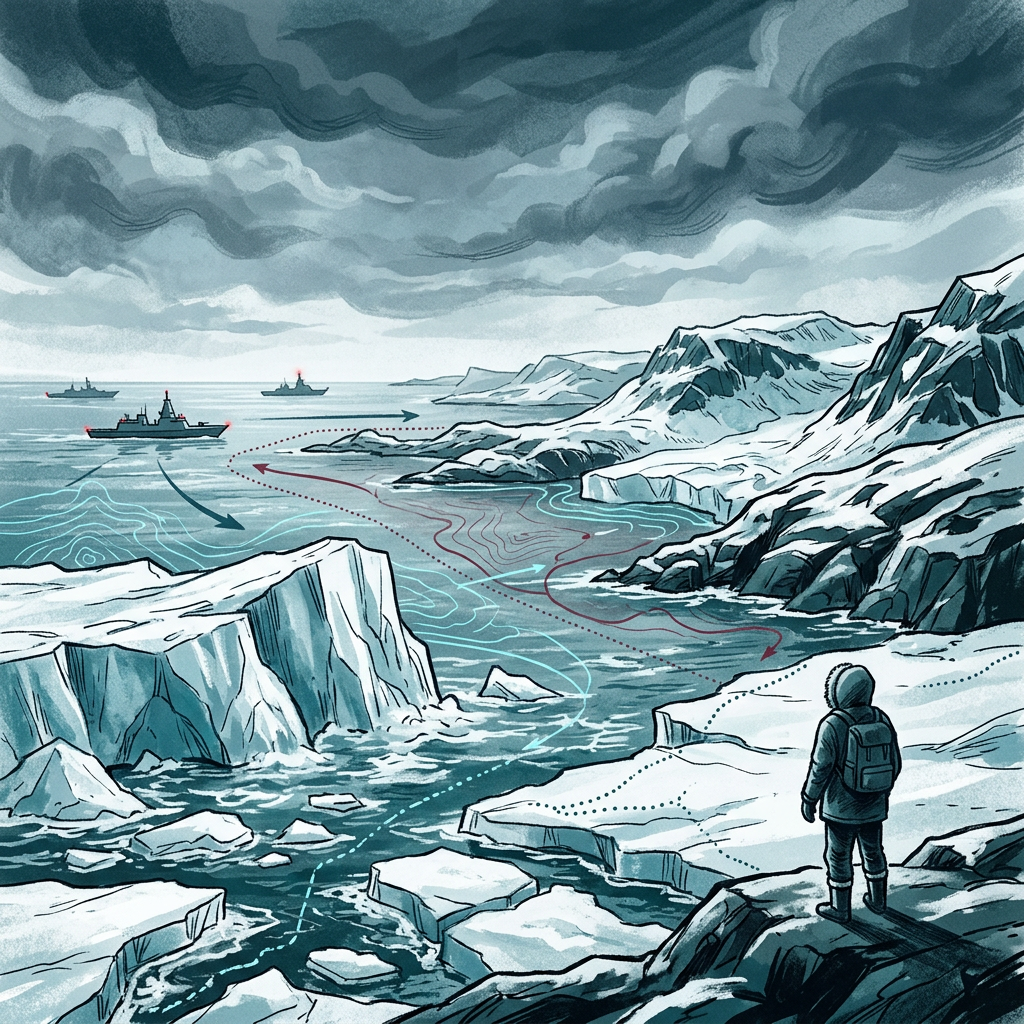
On September 22, President Trump signed a security agreement with Denmark and Greenland at the United Nations and declared that it gives the United States “permanent control over security and all other needs” on the island.
Read the text before you cheer or jeer. The United States already held most of those rights on Monday.
Investigators learn to compare the story with the documents. The story here is a triumph. The document is an amendment to the 1951 defense agreement. The pact already allowed American forces, with Danish agreement, to open new defense areas, move freely between them by land, sea, and air, and fly over and land anywhere in Greenland.
The new text restates those provisions. Washington never needed to own Greenland to defend it.
The 2026 text does add real value.
It opens two new sites, Narsarsuaq in the south and Mestersvig on the east coast, and allows more room at Pituffik Space Base. It names the Golden Dome missile defense system, authorizes American undersea access, bars non-NATO bases, and blocks investors from outside NATO and the European Union from controlling key resources.
It has no end date and survives Greenlandic independence.
Keeping China and Russia out of the Arctic serves American interests, and I will not say otherwise.
Now look at the price.
In January, the president threatened tariffs of up to 25 percent on Denmark and other European allies and declined to rule out the use of force against a fellow NATO member. NATO, for those of you who need to be reminded, is the most successful alliance of nations in the history of the world.
Danish Prime Minister Mette Frederiksen warned a takeover would end the alliance. Denmark sent troops to Greenland; more than ten European countries joined them. NATO launched Operation Arctic Sentry. European Union leaders suspended work on a trade agreement and discussed their Anti-Coercion Instrument.
Reports put Denmark’s new Arctic defense commitments above $13 billion.
Americans did not ask for this fight. A YouGov poll found that 73 percent opposed using the military while only 8 percent favored it. Republican House Speaker Mike Johnson called the threats inappropriate.
Inappropriate? Mocking female reporters for doing their job and disabled individuals for their condition is inappropriate, Mike; this is tantamount to threatening war.
The most serious damage appears in no treaty. I served on a federal task force with the FBI and DEA, and it worked for one reason: officers from different agencies trusted each other. Alliances run the same way. Partners share intelligence, absorb risk, and cover each other’s backs because they believe nobody will turn on them.
Researcher Ulrik Pram Gad warns that leaders in Copenhagen, Nuuk, and other capitals now assess the reliability of the United States, where once they just assumed it to be inviolable.
It no longer is because this administration has gutted it.
Greenland Premier Jens-Frederik Nielsen told his people they could lower their shoulders, then admitted rebuilding trust will take time.
Senator Jeanne Shaheen said the deal essentially returns the relationship to where it stood before the dispute. We spent well over a year applying pressure to get back to the starting line, plus a few bases.
The campaign also backfired in one respect. Nielsen called the signing the first time Greenland entered a binding agreement as a country. A push to draw Greenland closer to Washington gave Nuuk its strongest claim yet to independent standing.
Supporters make a fair argument. They say pressure forced terms that quiet diplomacy never would have. Secretary of State Marco Rubio calls the result a permanent guarantee of American interests at zero cost to the taxpayer.
Nobody can rerun the experiment. But the burden of proof lies with those who chose the harder road, and the record shows that military access was already available under the 1951 pact.
Most experts agree the deal is sound, but the method was a costly detour. Diplomats could have amended the 1951 pact quietly, with Greenland at the table from the start, and skipped the tariff threats and the talk of force.
The next time Washington asks an ally for something, that ally will remember January. Whether the answer comes from partnership or from fear will measure what this deal really cost the United States.
Joe Broadmeadow retired as a captain from the East Providence Police Department after twenty years of service, having commanded the Investigative Services Division and served on the Organized Crime Drug Enforcement Task Force with the FBI and DEA. Since founding JEBWizard Creative Media in 2019, he has written across crime fiction, the Josh Williams and Hawk Bennett series, along with co-authored true crime, YA fantasy, and literary fiction, bringing an investigator’s evidentiary eye to both his novels and his opinion writing. A 2014 Appalachian Trail thru-hiker, a grandfather, and a Cumberland High School graduate with deep roots in the town, he lives in Rhode Island, or wherever his travels take him.

Sources
Big US military buildup coming to Greenland after new deal (Stars and Stripes)
Is the new Greenland agreement really new? (NordiskPost)
Trump signs Greenland deal (CBS News)
Trump’s push to acquire Greenland almost broke NATO (Local10/AP)
Greenland crisis, tariff, polling and spending figures as reported (Wikipedia)
Agreement text (The White House)

Leave a Reply